Kosovo Court Sets October 6 Deadline for Presidential Vote
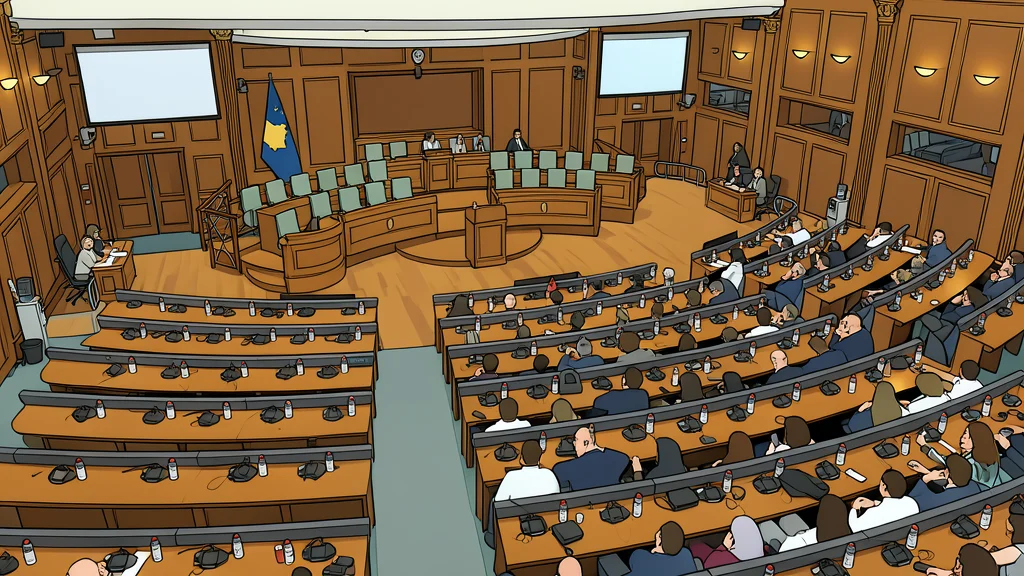
Kosovo’s Constitutional Court has mandated that parliament elect a new head of state by October 6 to prevent a fourth round of snap elections in two years.
Key points
- The Constitutional Court ordered parliament to elect a president by October 6 to avoid snap elections.
- The court rejected the opposition's claim that parliament was not officially inaugurated.
- Bekim Sejdiu withdrew from the presidential race in September due to internal party disputes.
Kosovo’s Constitutional Court has issued a binding order requiring parliament to elect a new president by October 6. This deadline is intended to prevent the country from facing a fourth parliamentary election within two years, a scenario that would further destabilize the region.
The ruling was issued ten days after the opposition Democratic Party of Kosovo, PDK, filed a complaint alleging that the assembly had exceeded its statutory inauguration deadline. According to the court, the sixty-day window for selecting a head of state began on August 8 and expires this month.
Court Rejects Opposition Injunctions
The judicial body rejected the PDK’s request to halt parliamentary proceedings and declared the re-election of Prime Minister Albin Kurti lawful. While the court acknowledged procedural delays, it ruled that the assembly is considered inaugurated and must now proceed with internal elections immediately.
Specifically, the court ordered MPs to elect the fifth and final deputy speaker as soon as possible. The opposition had previously claimed that the assembly could not be considered fully constituted until all deputy speaker positions were filled, a legal interpretation the court has now effectively overridden by setting a firm timeline for presidential selection.
Political Stalemate Over Presidential Candidate
The political crisis stems partly from the withdrawal of Bekim Sejdiu, a former Constitutional Court judge and diplomat, who was the agreed-upon candidate in late August. According to reports, Sejdiu stepped down on September 14 following internal disagreements within the Democratic League of Kosovo parliamentary group regarding his nomination.
Kurti was recently re-elected as prime minister by a narrow majority of 62 out of 120 MPs, a vote that was boycotted by opposition parties. Eight MPs from the Belgrade-aligned Srpska Lista voted against the new cabinet, highlighting the fragmented nature of the current legislative landscape.
Constitutional Constraints on Election Timing
If the assembly fails to meet the October 6 deadline, new elections must be called within 45 days, pushing the date to mid-November. This timeline contradicts earlier opposition claims that the ruling Vetevendosje party was preparing for a December vote, which would have coincided with the return of the diaspora population.
As reported by Balkan Insight, the court’s decision emphasizes that constitutional deadlines cannot be manipulated for political advantage. An MP from the PDK noted that the ruling prevents the government from shifting legal timelines to suit its strategic interests, thereby forcing a resolution to the leadership vacuum before the end of the year.