Seoul Weighs Options for Hormuz Strait Security Contribution
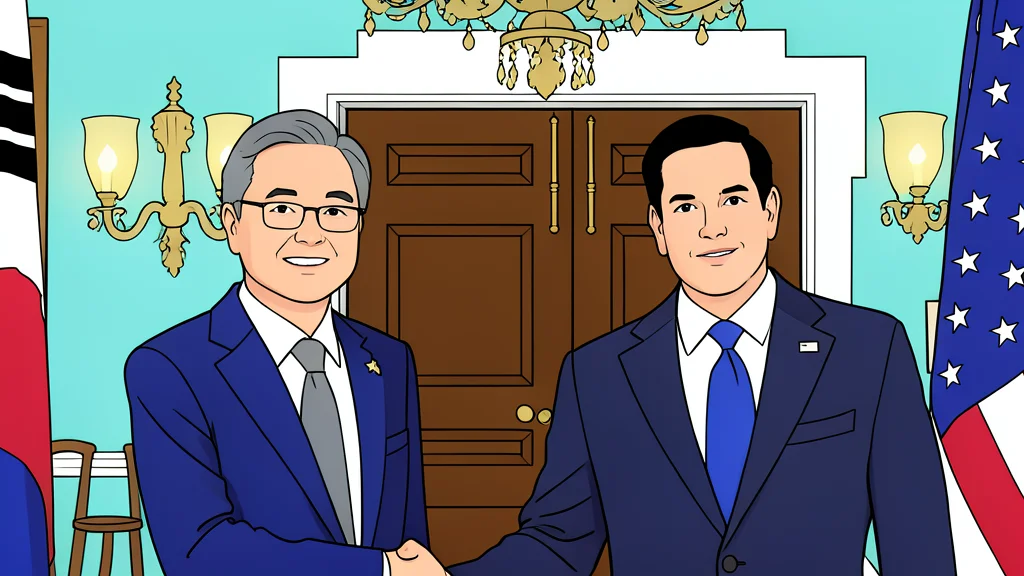
South Korea’s foreign minister engaged with Washington to discuss potential roles in securing vital trade routes, balancing strategic commitments against domestic constraints.
South Korea and the United States resumed high-level diplomatic engagement this week, focusing on the complex security landscape of the Persian Gulf. Foreign Minister Cho Hyun met with U.S. Secretary of State Marco Rubio in a conversation that marked the first formal meeting between the two nations' top diplomats in nearly seven months. According to the Ministry of Foreign Affairs, the discussions centered on broad bilateral relations, the situation on the Korean Peninsula, and regional stability, with a specific emphasis on navigation safety in the Strait of Hormuz.
The talks addressed Washington’s request for Seoul to play a more active role in securing free passage through the strait. While the U.S. has expressed a desire for tangible military or logistical support, South Korea has signaled a cautious approach. Minister Cho indicated that his country is willing to make a substantive contribution to restoring order, yet this position is heavily qualified by the need to maintain domestic legal compliance and preparedness for potential threats on the Korean Peninsula itself.
Balancing Strategic Commitments
President Lee Jae Myung recently outlined the government’s boundaries for such involvement, stating that South Korea will not intervene in ongoing wars. However, he acknowledged the necessity of minimal activities to ensure regional stability, referencing the existing Cheonghae Unit deployed in the Gulf of Aden. According to official statements, the administration is comprehensively reviewing various methods of military contribution, suggesting that any final decision will likely prioritize non-combatant or logistical support roles over direct combat deployment.
This diplomatic exchange occurred against the backdrop of broader strategic investments and security agreements. The two ministers agreed to continue working toward a successful outcome in ongoing consultations on strategic investment projects, though a planned memorandum of understanding was delayed for additional negotiations. The U.S. State Department emphasized the prompt implementation of commitments from the previous year’s summit, including provisions for nuclear-powered submarines, even as the second round of security follow-up consultations remains unscheduled.
Diplomatic Context and Peninsular Focus
Beyond the Gulf, the meeting reinforced shared assessments regarding North Korea. Both sides agreed to maintain close communication on denuclearization and peace, with Minister Cho affirming Seoul’s support for resuming inter-Korean and U.S.-North Korea dialogues. The discussions also touched on U.S. efforts to restore stability in the Middle East, including the recent situation in Iran, where the South Korean minister acknowledged President Donald Trump’s active leadership in resolving regional disputes.
The source material from GN auto geopolitics/asia-pacific: Korea Strait highlights the delicate balance Seoul is striking between its alliance obligations and its primary security focus on the Korean Peninsula. As the two nations continue to refine their cooperative framework, the specific nature of South Korea’s contribution to the Strait of Hormuz remains a subject of ongoing deliberation.
Forward Looking Security Dynamics
The immediate next steps will likely involve technical consultations to define the scope of any South Korean involvement in the Gulf. Observers should watch for clarifications on whether the Cheonghae Unit’s mandate will be expanded or if new logistical mechanisms will be established. Furthermore, the resolution of the delayed investment memorandum and the scheduling of the second security consultation round will serve as key indicators of the depth of the renewed bilateral engagement.