Trump Hosts Gulf and Arab Foreign Ministers on Regional Stability
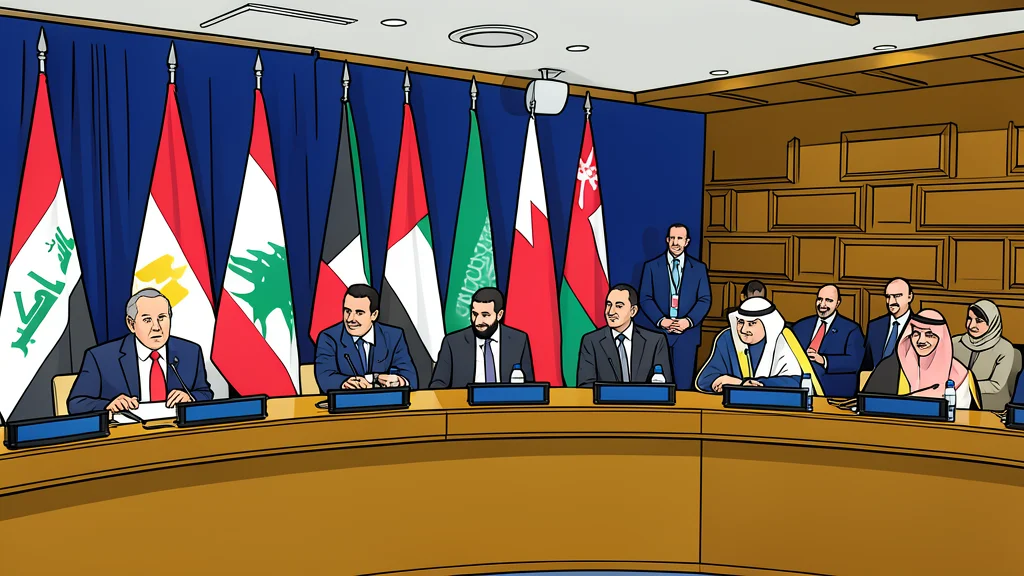
US President met with GCC and Arab foreign ministers in New York to discuss containing Middle East tensions and securing key shipping routes.
Key points
- President Trump met with foreign ministers from GCC states and other Arab nations in New York.
- The session discussed containing Middle East tensions and securing navigation in the Strait of Hormuz.
- Saudi Arabia was represented by Foreign Minister Prince Faisal bin Farhan and other senior officials.
United States President Donald Trump convened a multilateral meeting in New York on Tuesday to review diplomatic efforts aimed at containing regional tensions. According to the Saudi Gazette, the session focused on preventing the current conflict from expanding across the Middle East and strengthening political responses to ongoing crises.
The gathering took place on the sidelines of the High-level Week of the 81st United Nations General Assembly. Delegates from Gulf Cooperation Council states, including Saudi Arabia, as well as representatives from Egypt, Iraq, Jordan, Lebanon, Syria, and Türkiye, participated in the discussions regarding the region's security landscape.
Gulf and Arab diplomats attend summit
Saudi Arabia was represented by Minister of Foreign Affairs Prince Faisal bin Farhan, who attended alongside Princess Reema bint Bandar, the Saudi Ambassador to the United States. The delegation also included Prince Dr. Abdullah bin Khalid bin Saud, Director General of the General Administration for Policy Planning, and Dr. Manal Radwan, a special envoy for negotiations and peace efforts.
Focus on maritime security and navigation
Officials discussed the implications of recent escalations for regional stability, with particular attention to the safety of international shipping. The dialogue addressed challenges related to freedom of navigation in the Strait of Hormuz and the Bab al-Mandab Strait, two critical corridors for global energy and trade.
Diplomatic coordination amid ongoing tensions
The meeting served as a platform for coordinating political and diplomatic strategies among the participating nations. By bringing together key regional actors and the United States, the session aimed to align efforts on managing the broader geopolitical fallout and maintaining stability in a volatile period.