UNIFIL Chief Flags Logistical Challenges in Lebanon Withdrawal
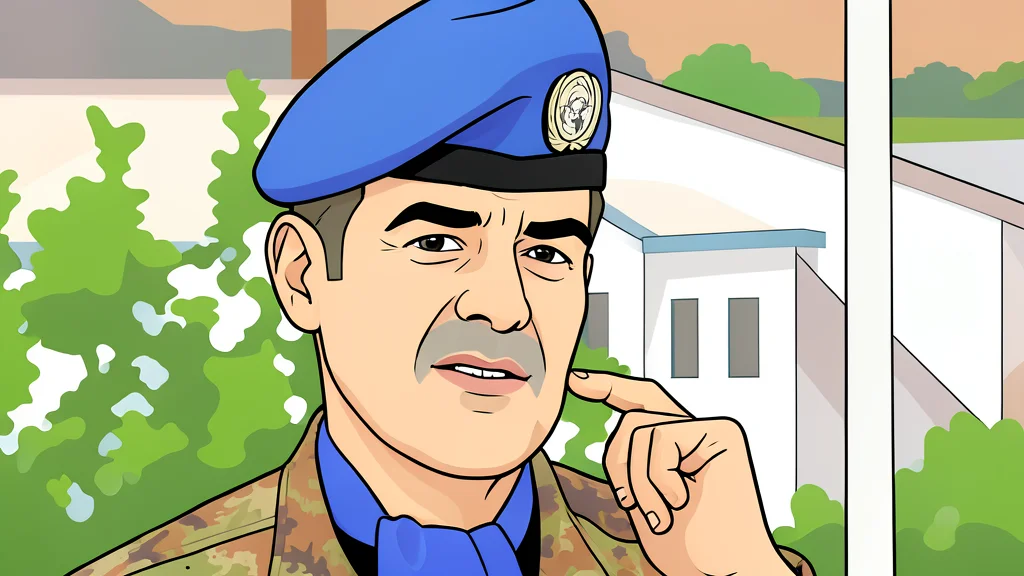
The commander of the UN peacekeeping force in Lebanon has raised serious concerns about the feasibility of handing over security responsibilities to local forces before the mandated end of the mission.
Major General Diodato Abagnara, the head of the United Nations Interim Force in Lebanon, stated on Saturday that ensuring a smooth transition of duties is the priority before the force begins its scheduled withdrawal at the end of 2026. Speaking from a position in southern Lebanon, Abagnara emphasized that other UN agencies and the Lebanese army must be fully prepared to assume the tasks currently carried out by UNIFIL. This transition is considered critical to maintain stability in a region that has experienced renewed hostilities following attacks by Hezbollah earlier this year.
The peacekeeping mission, which has monitored hostilities in the area for nearly five decades, has recently expanded its role to include providing security escorts for humanitarian aid convoys. These efforts are focused on small clusters of towns in the south where Israeli forces are engaged in operations against Hezbollah. According to Abagnara, the force is already coordinating with the UN’s country team to ensure that humanitarian assistance continues and that information sharing with the Lebanese military remains effective, particularly regarding sensitive areas.
Handover Complicated by Ongoing Operations
Abagnara acknowledged that transferring control of certain posts to the Lebanese army could be extremely difficult. More than half of UNIFIL's positions are located within areas where Israeli forces have taken control after clearing what they describe as terrorist infrastructure. The commander noted that the current situation on the ground makes a simple handover logistically complex, requiring careful planning to avoid a security vacuum.
Tensions have arisen over recent demolitions in towns like Mansouri, where residents were ordered to leave in June. Abagnara characterized these actions as violations of UN Security Council resolutions, while the Israeli military maintains that it is destroying infrastructure built by Hezbollah while UNIFIL was stationed in the area. This disagreement highlights the friction between the peacekeeping mandate and the military objectives of the parties involved in the conflict.
Diplomatic Scramble Over Future Mandate
As a US-backed plan for the Lebanese army to disarm Hezbollah and take full control of the south has stalled, diplomats are urgently discussing alternatives. Lebanon is seeking an extension of the current mission, while other nations have floated the idea of a new multinational force. However, it remains unclear what specific mandate such a new entity would hold, leaving the future security architecture of the region in a state of uncertainty.
Abagnara expressed that an extension would be viewed as a great honor for the force, but stressed that without a new decision from the Security Council, operations must cease at the end of the year. He described the presence of the United Nations in the south as essential, arguing that the need for their involvement is greater now than ever before.
Uncertainty Looms Over Regional Stability
Diplomats fear that the departure of UNIFIL could result in the loss of the UN's primary observational capability in southern Lebanon. The force has served as a critical buffer and information hub, and its exit could leave a significant gap in monitoring cease-fire compliance and humanitarian access. According to GN geopolitics/un, the coming months will be crucial as stakeholders attempt to bridge the gap between the mandated withdrawal date and the establishment of a viable security alternative.