Washington and the Limits of Solo Pressure on Tehran
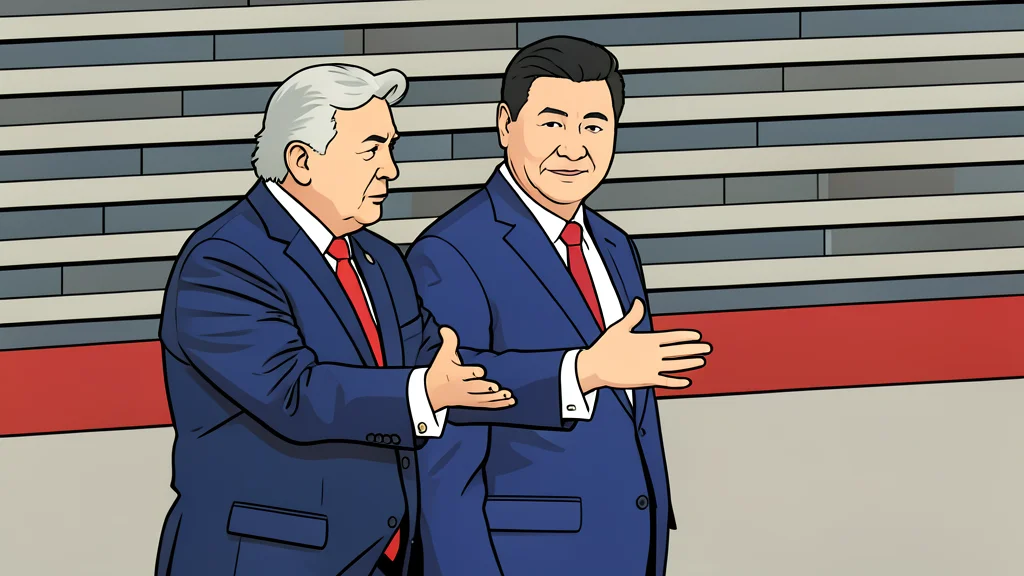
The current US strategy against Iran appears to have reached a plateau, prompting calls for a broader coalition approach involving Beijing.
The United States’ current approach to Iran has encountered significant structural limits, according to recent geopolitical analysis from GN auto geopolitics/middle-east: Iran nuclear. While the administration of President Donald Trump asserts that Iranian nuclear sites have been effectively neutralized and its economy crushed, the on-the-ground reality suggests a more complex picture. Iran’s nuclear capabilities have been delayed rather than destroyed, and its conventional forces, though weakened, retain the capacity to pose serious regional threats. The prevailing narrative in Washington that the United States is winning this conflict through force and sanctions alone may be overstated.
The core issue lies in the divergence between American objectives and Iranian survival instincts. Washington seeks to halt disruptions in the Strait of Hormuz, dismantle the nuclear program, and sever Tehran’s ties with regional militias. For the Iranian regime, these demands are not viewed as negotiable concessions but as existential threats to political survival. Consequently, any agreement that merely restores the status quo without addressing these deeper structural issues risks emboldening Tehran rather than securing long-term stability.
The insufficiency of unilateral force
History offers a cautionary tale for Washington’s current posture. The article draws a parallel to the Iraq conflict, where acting largely without meaningful consultation or a common strategy led to unintended consequences. Today, several Arab partners express alarm that the United States is repeating this mistake by engaging without a unified regional strategy. These nations find themselves trapped in a conflict they did not seek, facing direct threats from Iranian missiles and drones, while Washington proceeds with a unilateral doctrine that fails to account for the collective security dynamics of the region.
Collective pressure as a strategic alternative
The logic of the Cold War suggests that even superpowers require allies to exploit the vulnerabilities of their adversaries. While the United States remains indispensable, the argument is made that it cannot succeed against Iran without broader cooperation. Tehran’s resilience is partly underpinned by external support, specifically China’s economic lifeline and, to a lesser extent, Russian military and intelligence assistance. Cutting off these external supports could significantly weaken Iran’s position, making meaningful concessions more likely.
Therefore, the primary diplomatic effort should perhaps be directed toward Beijing rather than Tehran alone. If China were to withdraw its support for Iran, the latter would face considerably less leverage in negotiations. European allies could also play a supportive role, but the pivotal actor remains China. The challenge for Washington is determining whether the Iran issue is a high enough priority to warrant engaging in negotiations that may come with a steep price from Beijing.
The cost of Beijing’s cooperation
The forward-looking question is not whether the United States can defeat Iran alone, but what price it is willing to pay to secure Chinese cooperation. If the goal is to end Iran’s nuclear program and reduce regional instability, the US must recognize that its unparalleled military power is insufficient without a comprehensive strategy that addresses the economic and diplomatic supports sustaining the Iranian regime. The path forward likely involves difficult calculations regarding broader geopolitical trade-offs with Beijing.
As the situation evolves, observers should watch for shifts in US-China diplomatic engagements regarding the Middle East. Any signs of increased pressure on Chinese trade or investment channels involving Iran could indicate a pivot toward the collective strategy advocated by analysts. The success of this approach will depend on Washington’s willingness to acknowledge its limitations and seek a coordinated response that addresses the root causes of the deadlock.