German Judges Call for Legal Reform to Protect Prosecutorial Independence
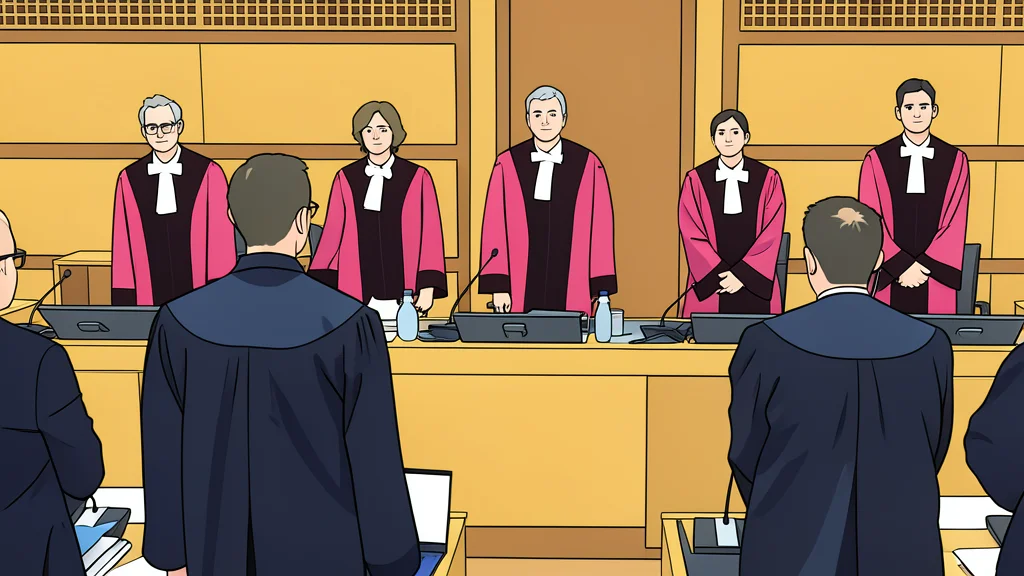
As the AfD prepares to govern Saxony-Anhalt, judicial leaders warn that current laws allow political interference in criminal cases, urging Berlin to tighten protections for the rule of law.
The official association of German judges has issued a stark warning that the federal government must urgently reform laws governing state prosecutors. According to the Deutscher Richterbund, current legal frameworks permit excessive political influence over criminal investigations, a vulnerability that could be exploited by the far-right Alternative for Germany (AfD) as it moves toward its first governing role in the state of Saxony-Anhalt.
The concern is not merely theoretical but rooted in the unique structure of the German justice system, where prosecutors are part of the executive branch rather than an independent body. This arrangement means that state justice ministries retain the power to issue binding directives in individual cases, a mechanism that judicial leaders argue lacks sufficient safeguards against partisan misuse.
Political Influence in the Executive Branch
Unlike in many other European democracies, German state prosecutors operate under the authority of interior and justice ministries. While this structure is historically justified as a form of democratic oversight, it creates a direct channel for political intervention. As reported by Deutsche Welle, the Association’s executive director, Sven Rebehn, emphasized that while a tradition of self-restraint has existed, it offers no legal protection and can be abandoned at any time.
The potential for abuse is particularly acute given the AfD’s stance on domestic intelligence agencies, which the party has frequently criticized as politicized. If the party gains control of a state government, there is a fear that directives could be used to steer investigations away from right-wing extremism or to suppress evidence that contradicts the party’s political narrative.
Historical Precedents of Judicial Erosion
Legal experts point to recent European examples where populist governments undermined judicial independence. In Poland, the ruling party triggered a constitutional crisis by interfering with the appointment of judges, while Hungary faced scrutiny for attempting to control the judiciary. These cases serve as cautionary tales for Germany, illustrating how quickly the rule of law can be eroded when political actors gain unchecked influence over prosecutorial decisions.
Margarete Koppers, the state prosecutor in Berlin, has described the current situation as an acute danger to the rule of law. A spokesperson for Koppers noted that the lack of mechanisms to check ministerial directives leaves the system vulnerable to political abuse, a risk that becomes more tangible as the AfD consolidates its power in state governments.
Urgent Need for Legal Safeguards
The call for reform is specific: the DRB seeks to eliminate the ability of state ministries to issue case-specific directives to prosecutors. By removing this executive leverage, the association aims to ensure that criminal investigations are conducted based on legal merit rather than political convenience. This shift would align Germany more closely with international standards for judicial independence.
As the political landscape in Saxony-Anhalt shifts, the forward question remains whether the federal government will prioritize legal reform before the new state government takes office. The coming weeks will be critical in determining whether Germany strengthens its democratic institutions or allows existing vulnerabilities to be exploited by political actors seeking to reshape the justice system.