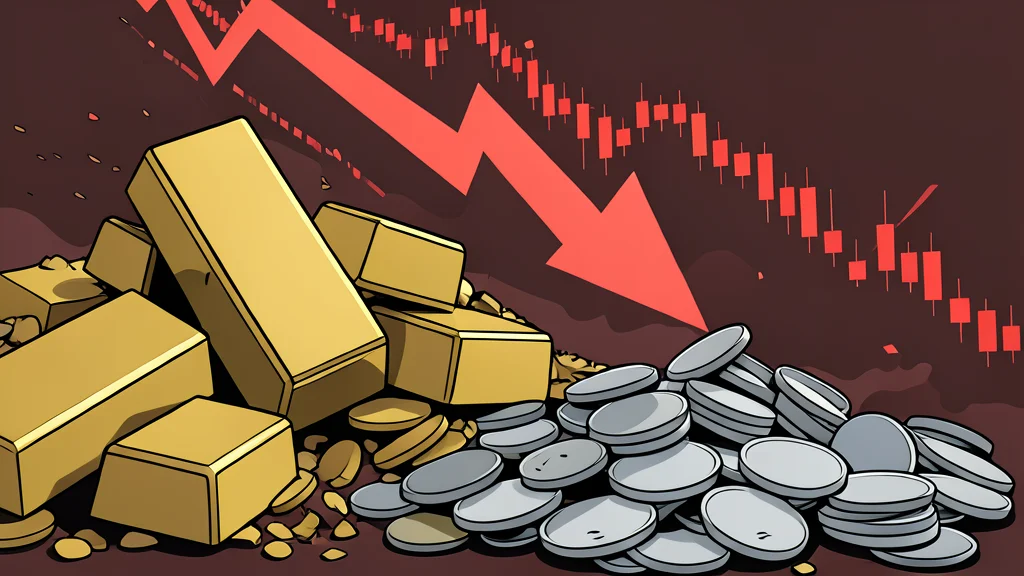
Gold Holds Gains as Fed Hike and 5% Yields Test Recovery

Gold prices advanced 0.82% in recent trading. This move occurred despite a hawkish Federal Reserve decision and rising Treasury yields.
Gold prices advanced 0.82% in recent trading. This move occurred despite a hawkish Federal Reserve decision and rising Treasury yields. Silver also rose 1.05%, showing broad strength in precious metals. The market is absorbing the impact of higher interest rate expectations.
Treasury yields are near the 5% level. This pressure limits the upside potential for non-yielding assets like gold. The Federal Reserve signaled a continued focus on inflation control. Traders are adjusting their positions accordingly.
Fed Decision Drives Market Sentiment
The Federal Reserve maintained a hawkish stance. This decision reinforced expectations for tighter monetary policy. The US dollar strengthened against major currencies. A stronger dollar typically acts as a headwind for gold prices.
Stock markets showed mixed reactions to the news. The S&P 500 fell 0.45%, while the Dow Jones gained 0.34%. Tech-heavy indices faced more pressure from the rate outlook. Investors are recalibrating their risk exposure in equities.
Precious Metals Show Resilience
Gold defended key support levels during the session. Buyers stepped in as prices approached technical floors. Silver outperformed gold with a 1.05% gain. Platinum also rose 0.62%, indicating sector-wide demand.
Technical analysts note a falling wedge pattern in gold. This structure often precedes a breakout in either direction. The current rebound suggests short-term buying momentum. However, the 5% yield ceiling remains a significant constraint.
Oil and Dollar Dynamics
Crude oil prices retreated as supply risks eased. Brent crude dropped 0.64%, and WTI fell 0.11%. Saudi Arabia’s pipeline restart plans reduced geopolitical premiums. Lower oil prices may reduce inflationary pressure, influencing Fed policy.
The US dollar index gained ground ahead of the decision. Currency pairs like EUR/USD and GBP/USD saw slight movements. The divergence between US and UK monetary policies is widening. This divergence continues to drive cross-currency volatility.