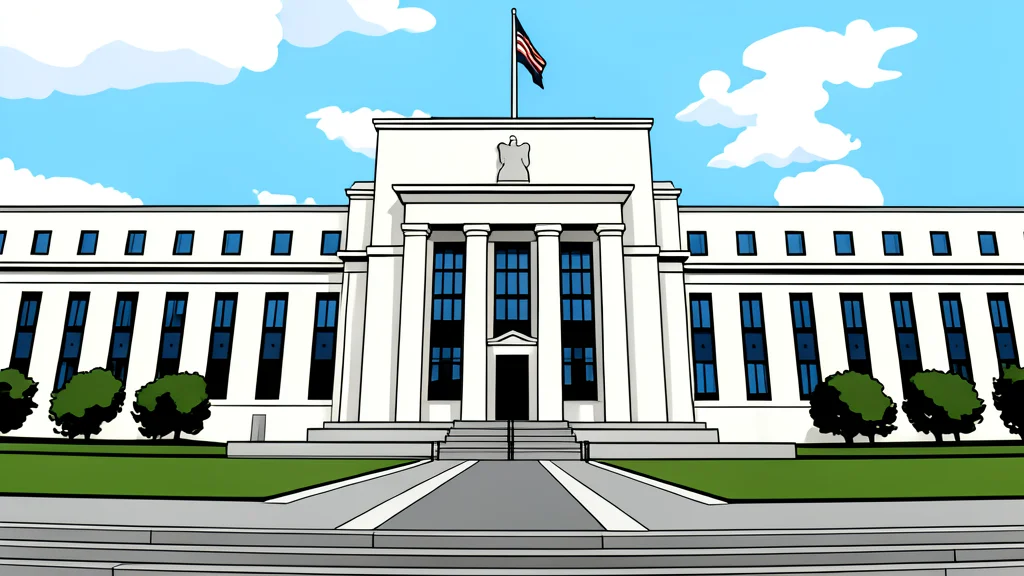
Fed Holds Rates Steady Amid Inflation Pressure

The Federal Reserve kept its benchmark rate unchanged at 3.5% to 3.75% despite political pressure for cuts.
The Federal Reserve maintained its benchmark interest rate at 3.5% to 3.75% ahead of its September policy meeting. This decision stands in direct contrast to the White House demand for the lowest borrowing costs in the world.
Consumer prices rose 0.4% in August, marking the largest monthly increase in four months. Annual inflation reached 3.4%, according to the Bureau of Labor Statistics. These figures reinforced the case for keeping monetary policy tight rather than easing it.
Political Pressure Meets Data Reality
President Donald Trump renewed calls for lower rates during a visit to the Irish Open golf tournament. He argued that the United States should have the cheapest borrowing costs globally regardless of economic indicators. This stance created tension with the central bank’s mandate to control inflation.
National Economic Council Director Kevin Hassett stated that the president would respect the independence of Federal Reserve Chair Kevin Warsh. However, Hassett acknowledged that the administration would be unhappy if the central bank moved to raise rates. This conflict adds uncertainty for financial markets.
Market Expectations Shift Toward Caution
A recent Reuters poll indicated that about 70% of economists expected the Fed to leave rates unchanged in September. A growing minority anticipated a rate increase as economic data remained strong. The shift reflects a move toward tighter policy expectations among professionals.
A potential rate increase could pressure equity valuations and raise borrowing costs. Holding rates steady despite hotter inflation might push longer-term Treasury yields higher. Investors are watching for signals on the central bank’s resolve to combat persistent price pressures.
Inflation Data Drives Policy Stance
Core prices, which exclude food and energy, increased 0.3% for the month. This rise confirms that underlying inflation remains elevated. The data supports the Federal Reserve’s decision to remain cautious on rate cuts.
GN auto markets/bonds: interest rates reported that the conflict between political demands and economic data creates volatility. The dollar and bond markets are particularly sensitive to these diverging signals. Clear communication from the Fed is now critical to stabilize investor expectations.