BRICS Leaders Mandate Faster Local Currency Settlements
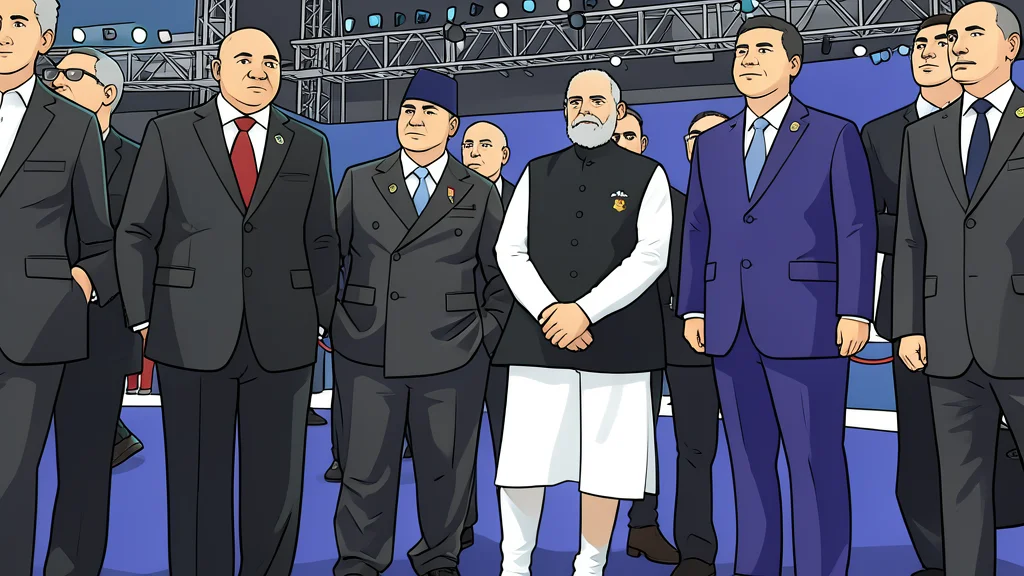
The 18th BRICS Summit in New Delhi produced a declaration demanding lower-cost, faster cross-border payments. The move aims to reduce reliance on dominant global currencies by 2025.
BRICS leaders in New Delhi have issued a formal mandate for faster and cheaper cross-border payments. The 18th BRICS Summit declaration specifically targets the reduction of transaction costs and settlement times. This directive builds on previous agreements from Kazan and Rio de Janeiro. The goal is to make trade settlements more accessible for all member states. The leaders emphasized that the new systems must be efficient, transparent, and safe. This represents a significant shift toward local currency usage in international trade.
The New Delhi Declaration instructs the BRICS Payment Task Force to continue its technical work. The task force is currently studying the interoperability of national payment and messaging channels. A key focus is the promotion of trade settlements using BRICS local currencies. The leaders explicitly rejected a one-size-fits-all approach to financial integration. Each nation will retain sovereignty over its specific monetary priorities. This framework allows for tailored cooperation that respects domestic economic structures.
Reducing Dependence on Dominant Currencies
Iranian President Masoud Pezeshkian called for a structural reduction in dependence on dominant global currencies. He spoke at the BRICS Business Forum in New Delhi. Pezeshkian argued for the expansion of national currency use in member-to-member trade. He proposed specific instruments to manage the associated currency risks. These mechanisms would facilitate reciprocal settlements without third-party intervention. The aim is to create a more resilient financial ecosystem within the bloc.
The Iranian president also advocated for a larger role for the New Development Bank. He suggested the bank should finance infrastructure and energy projects through local-currency guarantees. This approach is designed to attract private capital to BRICS markets. Pezeshkian further proposed the creation of a joint BRICS reinsurance company. The initial capital for this entity would be 10 billion USD. The fund would cover risks linked to major infrastructure and energy projects.
Supporting Small Business Trade Flows
The declaration includes specific measures to support small and medium-sized enterprises. Leaders welcomed guiding principles for the credit assessment of export-oriented MSMEs. A new mechanism called the Jaipur Consensus is under study. This initiative focuses on invoice discounting to help businesses unlock working capital. The goal is to enable smaller firms to participate more actively in international trade. This addresses a historical barrier to entry for non-large enterprises.
Technical work continues on a New Investment Platform for the bloc. Discussions are ongoing regarding settlement and depositary infrastructure. These efforts aim to strengthen BRICS insurance and reinsurance capacity. The New Delhi Declaration outlines a broader strategy for economic integration. It seeks to build resilient and predictable global value chains. Digitization of trade documentation is also a priority area. These combined measures form the backbone of the new financial infrastructure.
Strategic Implications For Global Markets
According to GN markets/fx (en-US), this declaration signals a tangible shift in payment infrastructure. The push for local currency settlements challenges the current dollar-dominated system. Faster and cheaper payments could increase trade volumes among BRICS members. The proposed 10 billion USD reinsurance fund is a concrete financial commitment. It provides a safety net for large-scale cross-border investments. This reduces the perceived risk for private investors. The move toward interoperable payment systems enhances financial sovereignty for participating nations.