Angel Reese’s Eruption Silenced the Rivalry Noise
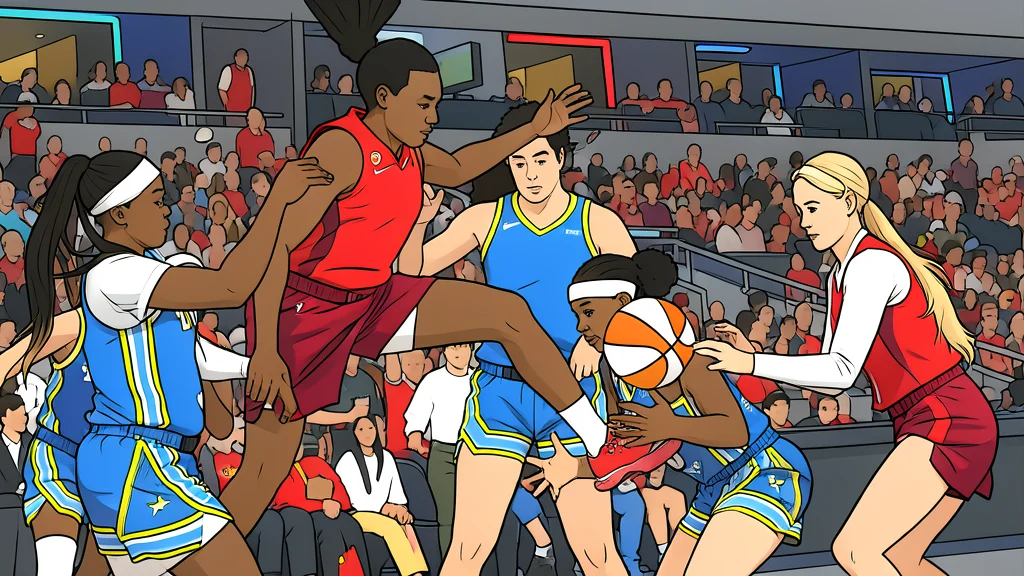
The hardwood trembled as Angel Reese leapt from the bench, a physical rebuttal to the narrative of division.
The air in the arena tasted of electric tension, thick with the static of a World Cup final. With France holding the lead, the clock bled out the second quarter’s final seconds. Jackie Young found Caitlin Clark in the left corner, a pass cut through the defensive web like a blade. Clark released the ball, her wrist snapping with precision just before the horn. The orange sphere sailed high, arcing over the rim, and swished through the net. The scoreboard flicked from deficit to a narrow 45-43 lead. In that instant, the noise of the crowd dissolved into a single, roaring frequency.
Angel Reese did not sit. She exploded. The Atlanta Dream forward launched herself from the bench, her body a blur of motion as she surged beyond the sideline boundary. Her arms flung wide, her voice a raw shout that pierced the stadium’s roar. This was not a polite clap or a nod of acknowledgment. It was a visceral eruption of joy, a physical manifestation of relief and triumph. The moment rippled outward, challenging the rigid script that had long defined the relationship between the two stars. They were not rivals in that second; they were teammates, bound by a shared mission to lift a trophy.
Bench chemistry defies old narratives
The rivalry narrative, built on college turf and media hype, felt heavy and dated in the face of Reese’s spontaneity. Throughout the tournament, the pair demonstrated a different kind of chemistry. In the quarterfinal against Hungary, Clark delivered three precise passes to Reese, setting up easy buckets. Later, Reese returned the favor, finding Clark for a critical basket. Their interactions were fluid, intuitive, and stripped of ego. They accepted reserve roles on a deep roster, bringing fire in limited minutes. This mutual respect was not a performance for cameras; it was the bedrock of their success. As reported by Yahoo Sports, the team’s perfect 6-0 run was fueled by this unspoken bond, a testament to their ability to harmonize their contrasting skills.
Stats reflect shared sacrifice
Clark averaged 7.8 points and led the team with 5.3 assists, her vision opening lanes for others. Reese contributed 7.2 points, five rebounds, and 1.2 steals in just 15 minutes per game. Their efficiency was high, their impact disproportionate to their playing time. Team USA trailed France by as many as 14 points in the final, a deficit that threatened to swallow their momentum. But Clark’s buzzer-beater shifted the emotional tide. The Americans seized control after halftime, their defense tightening, their offense flowing. The final score, 97-79, was a testament to their collective resolve. The victory was not just about winning; it was about playing together, supporting one another, and proving that their individual brilliance could coexist without friction.
Rivalry remains, respect persists
When the WNBA season resumes, Clark and Reese will don opposing jerseys. Indiana and Atlanta will clash on the hardwood, their standings close, their playoff seeds at stake. The rivalry will be sharp, competitive, and intense. But it does not have to be a personal feud. Reese’s celebration on the bench offered a clearer, more honest picture of their relationship. Two young stars, compared at every stage of their careers, found joy in sharing the floor. Their chemistry with Team USA proved that mutual respect and fierce competition can exist simultaneously. The world championship was a symbol of that balance, a moment where the noise of rivalry was drowned out by the clarity of shared success.