Lee Hyun-Jung Wins Asian Games Gold Despite NBA Contract
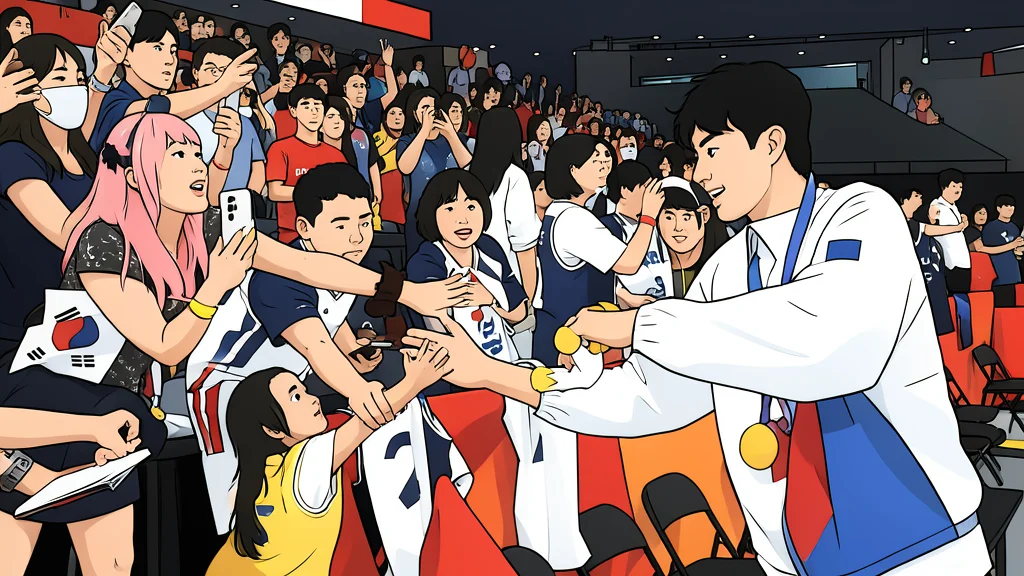
Lee Hyun-jung claimed Asian Games gold for South Korea while balancing his new Portland contract, overcoming military service concerns to secure a historic title.
Key points
- Lee Hyun-jung won Asian Games gold for South Korea, allowing him to avoid immediate military service.
- He signed an Exhibit 10 contract with the Portland Trail Blazers, choosing the NBA over a B.League return.
- His mother, Sung Jung-ah, initially advised a safer domestic path but his obsession with basketball prevailed.
The final buzzer on September 20 did not just end a game; it shattered a sleepless cycle that had plagued Lee Hyun-jung for days. Standing on the court, the 25-year-old guard had just secured gold for South Korea, a victory that came with the weight of a major career pivot. He had chosen the arduous path of an NBA challenge over a comfortable return to the B.League, a decision that left him awake through the nights before the tournament.
Lee signed an Exhibit 10 contract with the Portland Trail Blazers, a move that carried significant risk under South Korea’s military service laws. Had he failed to secure a gold medal, he would have faced immediate conscription, effectively ending his professional window. Instead, he delivered the result that allowed him to keep his dream alive, transforming a potential end-of-career scenario into a new beginning on the global stage.
A mother’s strategic gamble
Sung Jung-ah, Lee’s mother and a former Olympic silver medalist, watched this trajectory unfold with the clarity of someone who knows the sport’s brutal realities. As Director of the Korea Basketball Association, she initially advised him to stay with Nagasaki, a team he had led to victory the previous season. Her logic was cold and practical: win the Asian Games as a domestic player, finish his military service, and then try for the NBA later.
Lee agreed to this plan on paper, but his body and mind rejected the compromise. He told his parents he could not sleep, haunted by the idea of postponing his dream. The tension between strategic safety and personal obsession became the defining dynamic of the tournament. In the end, his refusal to settle for a delayed dream forced the situation into a high-stakes gamble that paid off in gold.
Obsession forged in youth
This intensity is not a sudden development but a lifelong trait. From a young age, Lee was obsessed with the Golden State Warriors, constantly asking to watch their games. He maintained this fixation through middle school, where he balanced a top-eight academic ranking with an unwavering desire to play in the NBA. His mother even sent him to math academies, wondering if a career in medicine might be a safer route.
He answered that question with a simple, unyielding statement: his dream had never changed. His diligence is evident in his preparation, a quality that SK Director Jeon Hee-cheol described as historically unique in Korean basketball. Jeon noted that Lee’s on-court contributions are matched only by his off-court professionalism, a rare combination that sets him apart from previous generations of players.
Physical sacrifice on the bench
Sung described watching her son play for Davidson University and in the Australian league as a painful experience. He played as if sacrificing his body, giving everything he had despite limited recognition. There were moments when he sat on the bench after being substituted, looking at the coach with pleading eyes, begging for another chance to contribute.
That physical and mental resilience is what allowed him to thrive under the pressure of the Asian Games. According to chosun.com, this level of dedication is what separates him from other athletes. He does not take a day off without feeling uneasy, always feeling that he lacks something. This constant self-critique fuels his performance, turning every moment on the court into a testament to his relentless drive.
Hyun-jung secures gold amid career crossroads
Lee Hyun-jung led the South Korean men's basketball team to a gold medal victory, a triumph that came at a pivotal moment in his professional life. By competing in the tournament, he simultaneously fulfilled his national duties and upheld his commitment to his new deal with the Portland Trail Blazers.
The victory was particularly significant given the uncertainty surrounding his future. Lee had to navigate the complex issue of mandatory military service, which threatened to derail his immediate NBA ambitions. His decision to prioritize the Asian Games over a safer domestic path demonstrated a commitment to his long-term goals in professional basketball.