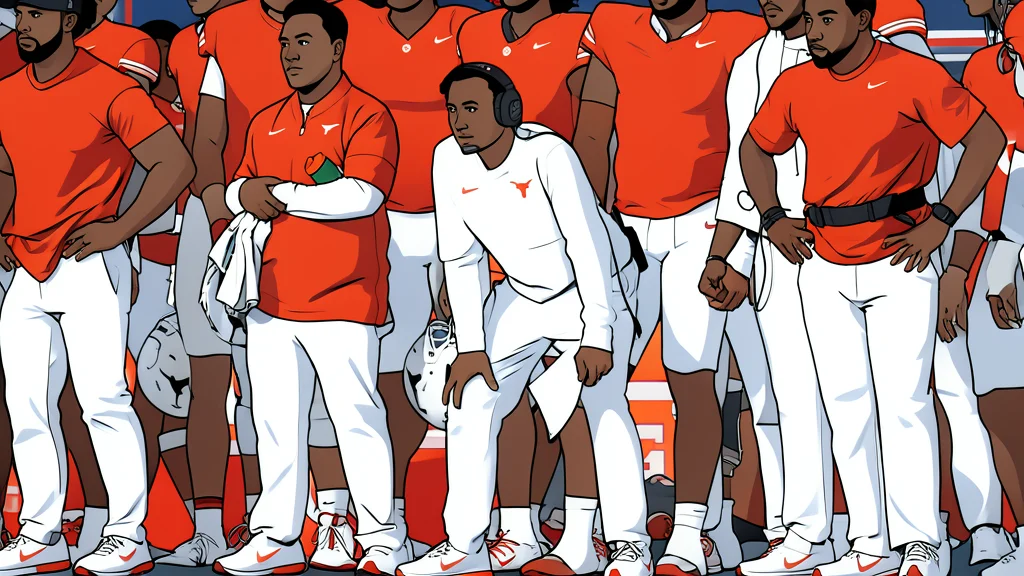
Arch Manning’s Calm: How Patience Beat Ohio State

Trailing 23-3 in the fourth quarter, the stadium air hung heavy with doubt. Then the field goal missed, and the tide turned.
The Texas Longhorns stood on the precipice of defeat, trailing the No. 1-ranked Ohio State Buckeyes by twenty points with the clock winding down. The air in Austin felt thick with the weight of expectation, a silence that pressed against the ears of every fan in the stands. It was a deficit that seemed insurmountable, a chasm that had opened up in the first half and refused to close. Yet, as the fourth quarter breathed its final minutes, the narrative began to shift, driven not by force, but by a quiet, deliberate resolve.
Arch Manning, the quarterback at the helm, did not rush. He did not force the ball into tight windows or chase deep shots that promised glory but carried the risk of disaster. Instead, he leaned into the advice of his uncle, Eli Manning. The former NFL legend’s message was simple, stripped of hype and tactical complexity: stay patient. Do not force things when the defense drops back. It was a directive that cut through the noise, grounding the young signal caller in a reality where timing mattered more than velocity.
A Message of Steadfast Calm
Eli’s text arrived in the pocket of the moment, a digital whisper in a loud arena. "Way to stay patient," it read, "not force things when you're down and they're dropping coverage." The instruction was precise, targeting the exact psychological trap that often swallows young quarterbacks whole. When the defense retreats, the temptation is to strike deep, to try and erase the deficit in a single, heroic throw. But as Eli noted, that path often leads to an interception, a fumble, or a turnover that seals the game.
For Arch, this was not just tactical advice; it was a familial inheritance. Growing up under the gaze of two Hall of Fame quarterbacks, the value of composure was etched into his playbook. The Longhorns had already tasted this dynamic last season, when Arch’s first start as the full-time starter ended in a 14-7 defeat to Ohio State. That loss had left a bitter residue, a reminder of the fragility of high-stakes college football. Now, with the stakes higher and the deficit larger, the same lesson applied, but this time, the outcome was different.
The patience paid off when Ohio State missed a 45-yard field goal with 4:16 remaining. The ball sailed wide, a moment that Arch later described as the turning point. "Once they missed the FG, I knew it was wraps," he said. The confidence surged, not from a spike in adrenaline, but from a sudden clarity. The defense had shown a crack, a hesitation, and the Longhorns were ready to exploit it. The momentum shifted, the air in the stadium changing from tense silence to a low, building hum of anticipation.
The Drive That Defined the Season
What followed was a masterclass in controlled aggression. On a 12-play, 73-yard possession, Manning completed four of five passes, moving the chains with surgical precision. Each snap was a step closer to the end zone, each completion a building block in the architecture of victory. The defense, which had been dropping back, was now scrambling, trying to catch up to a rhythm that had already been established. The Longhorns were no longer reacting; they were dictating.
The final stretch of the drive was a testament to that rhythm. A 19-yard completion to Emmett Mosley moved Texas to the one-yard line, the crowd’s roar swelling into a deafening wave. With 25 seconds remaining, Hollywood Smothers scored the go-ahead touchdown, the ball landing in the end zone with the weight of a season’s work behind it. The 24-23 victory was not a fluke, nor was it a chaotic burst of energy. It was the result of disciplined execution, of staying true to the plan when the pressure was highest.
Manning finished the game 23-of-37 for 196 yards, one touchdown, and one interception. The numbers were solid, but the significance lay deeper. He completed 11 of his final 15 passes, a streak that underscored his ability to perform under fire. The three long scoring drives were not just statistical feats; they were narrative arcs, each one a chapter in the story of a comeback. The biggest fourth-quarter comeback against an AP No. 1 team on record was not just a milestone; it was a statement of intent.
Rising to the Top of the Polls
The victory propelled Texas to the No. 1 spot in the national polls, a position that carried both pride and pressure. The Longhorns had not just beaten a top-ranked team; they had dismantled the narrative that they were the underdogs. The comeback was a rebuttal, a physical argument against the skeptics who had questioned their depth and their resilience. In the post-game analysis, the focus was not just on the score, but on the process. How did they do it? How did they stay calm when the odds were stacked against them?