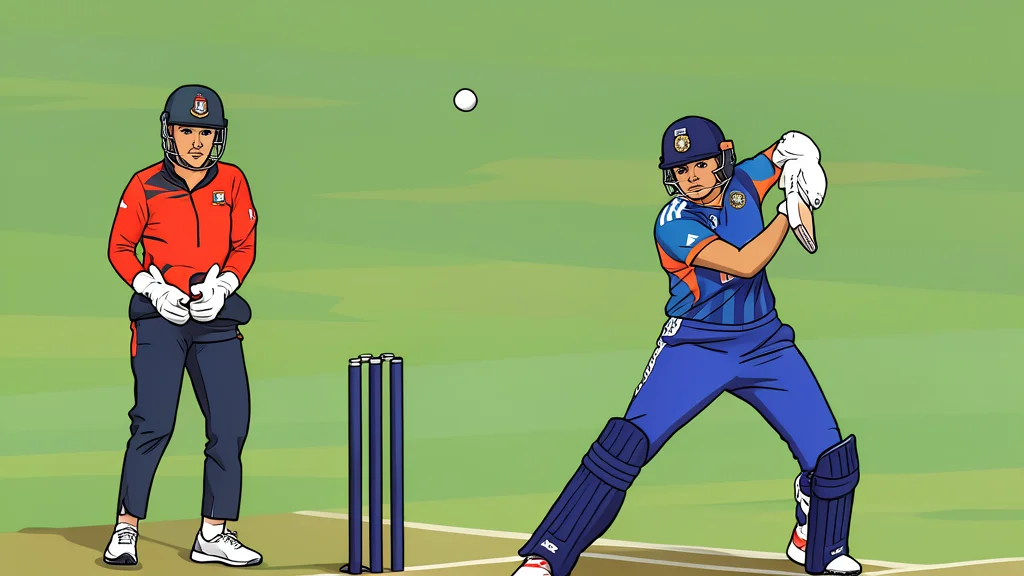
BCCI Bypasses Village Limits for Men's Cricket Squad

In Aichi-Nagoya, the Indian men's cricket team occupies separate quarters, a logistical necessity born of scale rather than status, while the women stay within the official village limits.
The corridor air is cool and still, a stark contrast to the humid heat that will soon rise off the pitch. In the official Asian Games village, the Indian women’s cricket squad settles into their assigned rooms, their contingent fitting neatly within the twenty-member ceiling set by the organizers. Down the street, however, the men’s team occupies a different space entirely. It is not a matter of preference or privilege, but of sheer physical volume. The men’s delegation, swollen with coaches, analysts, physios, and support staff, simply does not fit into the standard accommodation blocks. The BCCI has secured separate housing to keep the full ecosystem intact, a logistical maneuver that prioritizes the continuity of a large support team over the uniformity of the village.
Devajit Saikia, the BCCI secretary, frames the decision as a practical necessity. The headcount of the men’s group exceeds the permissible limit for a single delegation, creating a bottleneck that the official facilities cannot absorb. By moving the men out, the board ensures that no one is segregated or left without essential support during the tournament. The women, whose team size remains under the cap, remain in the official quarters. The distinction is administrative, not hierarchical. Saikia emphasizes that the BCCI trusts the organizing committee to provide quality facilities, noting that he will assess the specific circumstances upon his arrival in Japan on October 1.
Full Strength for Gold Medal Pursuit
This logistical complexity accompanies a significant strategic shift. Unlike the 2023 Hangzhou Games, where India fielded a second-string squad to protect senior players for the ODI World Cup, this cycle sees the full-strength team deployed. Jasprit Bumrah and captain Shreyas Iyer are part of the contingent, signaling that the Asian Games is not a secondary assignment. The overlap with the home ODI series against the West Indies and the start of 2027 World Cup preparations might suggest a compromise, but the BCCI rejects that narrative. The gold medal is the target, and the board believes India can field three strong teams simultaneously without diluting the quality of any one.
Saikia dismisses any notion that the Asian Games is being given lesser importance. An Asian Games gold, he states, carries the same weight as any other major title. The decision to send the best available players is a vote of confidence in the squad’s depth and a clear message to rivals. The tournament is a critical assignment, not a stepping stone. The presence of the core ODI and T20I lineup in Aichi-Nagoya underscores that the board views this championship with the same intensity as a World Cup, refusing to treat it as a minor interlude in a busy calendar.
Schedules Converge in Aichi-Nagoya
The competition begins in earnest with the women’s quarter-final against host nation Japan on September 18. A victory propels them into the semi-finals on September 20, with the medal matches following on September 22. The men’s schedule starts later, entering the fray directly in the quarter-finals on September 28. Their semi-final chance arrives on October 1, coinciding with Saikia’s arrival, before the final medal clash on October 3. The timing is tight, the stakes high, and the accommodation split a quiet testament to the scale of the Indian cricket operation. As reported by GN auto sports/multisport: Asian Games, the logistical details may be dry, but the intent behind them is loud and clear.