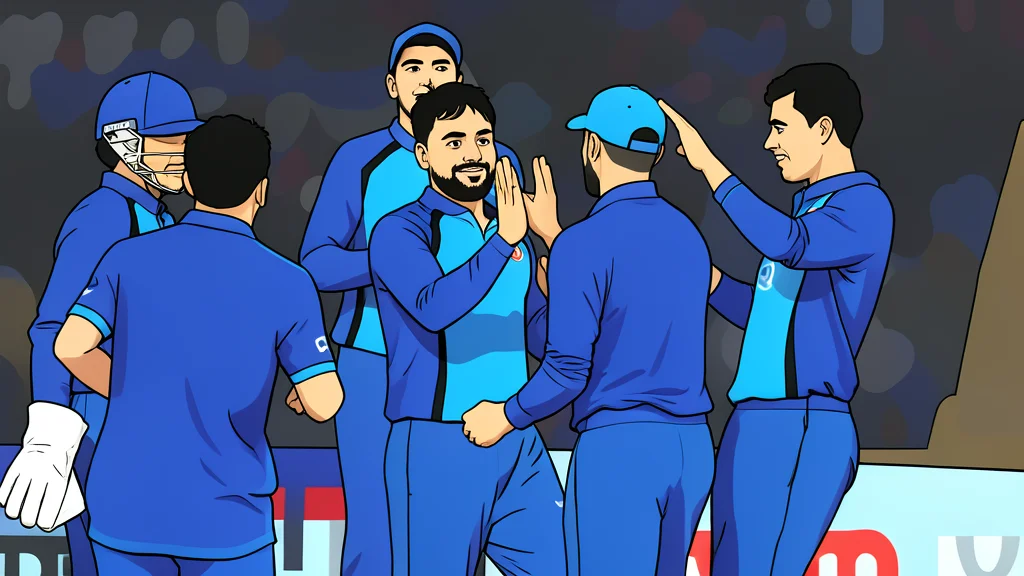
BCCI Splits Accommodation for Men and Women at Asian Games

In Aichi-Nagoya, the logistical reality of a full-strength squad forces a split: men in private hotels, women in the village, driven by headcount limits, not hierarchy.
The air in the Aichi-Nagoya venues carries the scent of fresh turf and anticipation. For the Indian cricket contingent, however, the immediate priority is not just the pitch but the logistics. The Board of Control for Cricket in India has carved out a distinct path for the men’s and women’s teams, separating their living quarters based on a simple, rigid constraint: numbers. While the women’s squad settles into the official Asian Games village, the men’s side occupies separate hotel accommodations, a decision rooted in the sheer volume of support staff accompanying the senior players.
This is not a matter of preference or status, but of capacity. The organizing committee’s facilities are designed to accommodate a maximum of 20 members per delegation. A full-strength men’s cricket team, laden with coaches, analysts, physiotherapists, and trainers, far exceeds this ceiling. To keep the unit cohesive and prevent the squad from being scattered across different wings or buildings, the BCCI secured its own block. The women’s team, operating within the permissible headcount, remains in the official facilities, creating a parallel but distinct operational footprint for India’s cricketing elite.
Support Staff Exceed Official Limits
BCCI Secretary Devajit Saikia clarified that the separation is a logistical necessity, not a reflection of differing standards. The men’s contingent is significantly larger due to the extensive support ecosystem required for a top-tier squad. "We don't want to segregate the men's team during the tournament," Saikia explained, emphasizing the need for a unified environment. By booking separate accommodation, the board ensures that the players, staff, and management remain in close proximity, fostering the communication and routine essential for peak performance.
The women’s team, conversely, fits neatly within the 20-member limit set by the organizers. Their presence in the official Asian Games village aligns with the standard protocol for delegations of that size. This divergence in living arrangements highlights the complex mechanics of managing international sports events, where administrative rules often dictate operational realities. It is a subtle reminder that behind every medal chase lies a intricate web of logistics, staffing, and compliance.
Gold Medal Priority Over Scheduling
The decision to send a full-strength men’s team, including star pace bowler Jasprit Bumrah and captain Shreyas Iyer, signals a major shift in priority. In 2023, India fielded a second-string squad for the Asian Games to prepare for the ODI World Cup. This time, the calculation has reversed. With the 2027 World Cup cycle already underway and a home ODI series against the West Indies overlapping, the BCCI is betting on the Asian Games title as a crucial objective.
"An Asian Games gold is as important as any other big tournament," Saikia stated, dismissing any notion that the event is of secondary importance. The board is confident that India can field three strong teams simultaneously, and they are choosing to invest in the Asian Games with their best available talent. This approach underscores the growing value of multi-sport events in the cricketing calendar, challenging the traditional hierarchy of single-sport tournaments.
Confidence in Organizing Committee
Despite reports from other Asian cricket boards regarding facility quality in Japan, the BCCI maintains a posture of trust. Saikia expressed confidence that the organizing committee will deliver the necessary standards for a major event. "We fully trust the organizing committee to give the best facilities," he said. He noted that he would arrive on October 1 to assess the conditions firsthand, but the board’s stance is one of optimism rather than concern.
The men’s tournament kicks off with quarter-finals on September 28, followed by semi-finals on October 1 and medal matches on October 3. The women’s competition begins earlier, with their quarter-final against host nation Japan on September 18. As the teams prepare for their respective paths, the separation in accommodation serves as a quiet testament to the scale of India’s cricketing ambitions. As reported by Yahoo Sports, this logistical split is a calculated move to ensure that both squads can focus entirely on the game, free from the friction of shared facilities and limited space. The grass in Aichi-Nagoya is ready, and the players are set to make their mark.