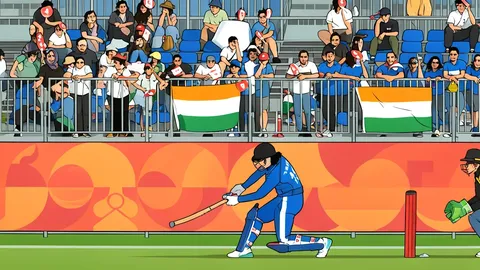
India Defends Asian Games Cricket Title Against Sri Lanka
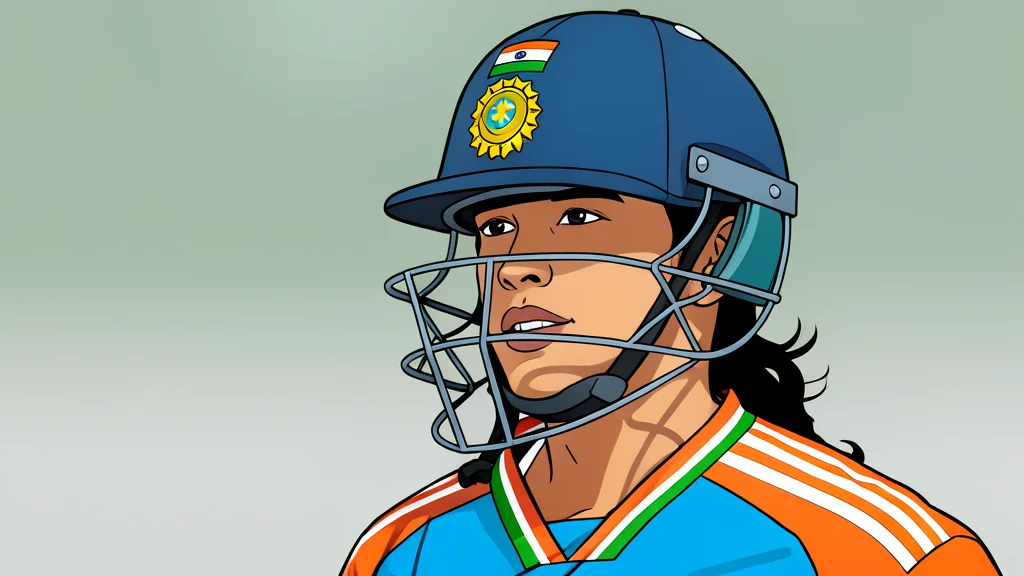
The Aichi-Nagoya 2026 women's final repeats the Hangzhou clash, with India and Sri Lanka meeting again for gold.
Key points
- India and Sri Lanka meet in the women's final at the 2026 Asian Games, a repeat of their Hangzhou 2023 showdown.
- Bangladesh and Pakistan contest for the bronze medal, with both nations sharing the record for most total cricket medals.
- Cricket debuted at the Asian Games in Guangzhou 2010 and has since become a staple of the continental multi-sport event.
The air in Nisshin hangs heavy with anticipation as the defending champions step onto the pitch at Korogi Sports Park. Dust kicks up under the stumps, a fine powder that settles on the grass, marking the start of a contest that has become a fixture of the continental calendar. The stands are packed, a sea of noise that vibrates through the ground, signaling that this is no ordinary match. It is a repeat of a recent final, a rematch that carries the weight of history and the urgency of the present moment.
India and Sri Lanka meet once again, their rivalry sharpened by the memory of Hangzhou 2023. The crowd’s roar is a physical force, pressing against the players as they take their positions. This is not just a game; it is a continuation of a story that began in Guangzhou in 2010, where cricket first found its voice in the Asian Games. The stakes are high, the atmosphere electric, and every ball carries the weight of expectation.
A Legacy Forged in Guangzhou
Cricket’s entry into the Asian Games was a deliberate move to capture the passion of South Asia. The Olympic Council of Asia gave the sport its first nod in 2010, introducing Twenty20 as a bridge to a massive fanbase. The response was immediate and overwhelming. Smaller nations saw a platform to shine, while the regional giants found a new arena for their rivalry. The sport’s presence in Incheon in 2014 confirmed its appeal, even as it faced an unexpected pause in Jakarta-Palembang in 2018.
The return to Hangzhou in 2023 was a statement of permanence. Venues were full, broadcasts were extensive, and the level of competition reached new heights. India emerged as the dominant force, sweeping both the men's and women's titles. That victory set the stage for Aichi-Nagoya, where the Indian teams now enter as the ones to beat. The sport has grown from a novelty to a cornerstone of the Games, a testament to its enduring appeal in the region.
Contenders for Bronze and Silver
While the spotlight is on the final, the battle for the remaining medals is equally intense. Bangladesh and Pakistan prepare for a third-place playoff, a contest that could see either nation add to their medal haul. These two countries share a record for the most total Asian Games cricket medals, a distinction that reflects their consistent presence on the podium. Their rivalry adds another layer of drama to the tournament, ensuring that every match carries significance.
The silver medal will go to the runner-up in the India-Sri Lanka final, a prize that is almost an afterthought in the shadow of the gold but no less meaningful to the players involved. The men’s competition has not yet begun, leaving room for further surprises and upsets. The stage is set, the players are ready, and the history of Asian Games cricket continues to unfold, one match at a time.
A Record of Consistency
Pakistan’s women’s team established early dominance, winning back-to-back gold medals in 2010 and 2014. Their success laid the groundwork for a strong tradition in the women’s format. Bangladesh, meanwhile, claimed the inaugural men’s title in 2010 and has consistently finished on the podium in both competitions. Their longevity in the sport is a testament to their dedication and skill, making them a constant presence in the Asian Games narrative.
Afghanistan has emerged as a reliable force, particularly in the men’s tournament, where they have reached the final in multiple editions. Their ability to compete at the highest level is a source of pride for the nation and a reminder of the sport’s growing reach. As the Aichi-Nagoya Games progress, the legacy of these teams will be tested once more, with every ball and every run adding to the rich tapestry of Asian Games cricket.