Medinah's New Fence Forces Risky Lines for Presidents Cup Start
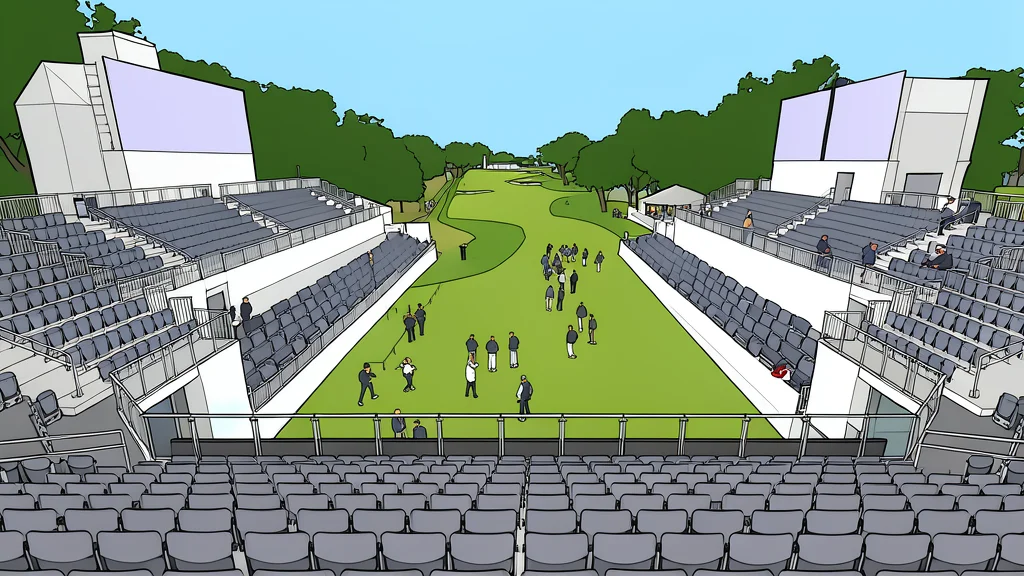
A wooden split-rail fence now defines the opening stretch at Medinah, creating a high-stakes trade-off between aggressive angles and safety.
Key points
- A wooden split-rail fence now marks the out-of-bounds limit on the opening holes, replacing a busy road and creating a strategic trade-off for players.
- The 12th hole is a 402-yard par-4 inspired by C.B. Macdonald’s cape hole, requiring a diagonal carry over Lake Kadijah with variable distance based on aim.
- Recent heavy rainfall has left the course soft, contradicting the design intent for firm conditions that would allow slopes and angles to work effectively.
The first tee shot at the Presidents Cup carries weight, but at Medinah’s No. 3 Course, it carries a new physical edge. A wooden split-rail fence now runs along the left side of the opening holes, replacing a busy road that once served as the out-of-bounds marker. This change transforms the start of the match into a tactical gamble, where the line to the green is dictated by how close a player dares to hug the boundary.
Geoff Ogilvy, the International team captain and one of the architects behind the course’s recent redesign, calls the setup "incredibly interesting." The philosophy is stark: play near the fence for a superior angle into the green, or stay wide and face a tougher approach with mounding ready to repel any imperfect strike. The fence is not just a boundary; it is a strategic tool in a layout that demands precision from the very first swing.
Fence replaces road as primary hazard
During the two-year redesign completed in 2024, Ogilvy and his partners at OCM Golf moved the holes inward to accommodate increasing traffic on the adjacent thoroughfare. The wooden fence now serves the same function as the road did, marking the out-of-bounds limit for the par-4 fifth, sixth, and seventh holes. These holes, which serve as the opening stretch for this week’s matches, feature significant widening and tree removal, offering players a choice between safety and strategic advantage.
The strategic decision is immediate. Hugging the fence provides a better angle into the green, while playing away from it introduces more out-of-bounds risk and difficult pin positions. The design forces a quick calculation: does the player seek the easier shot by playing near the hazard, or do they accept a harder approach to avoid the penalty? This dynamic sets the tone for the entire match, rewarding boldness while punishing hesitation.
Lake Kadijah defines the tipping point
Beyond the opening stretch, the course features a "tipping point" around Lake Kadijah, specifically holes 12 through 14. The 12th hole, a 402-yard par-4, is a modern interpretation of C.B. Macdonald’s original cape hole at National Golf Links of America. Players must carry a hazard that runs diagonally along the lake to the right, with the carry distance increasing the further right they aim.
Ogilvy notes that the hole "always sucks you into driving it closer to the green than you would otherwise normally do." The setup team may adjust the tees to make it drivable for some sessions, while keeping it a traditional two-shot hole for others. The tension between risk and reward is palpable, with the lake acting as a silent judge of every decision. Bailing left is possible, but the wedge shot becomes increasingly awkward the further left a player goes.
Rain complicates intended firmness of greens
Despite the strategic depth of the layout, both captains acknowledge a significant environmental challenge. Recent heavy rainfall has kept the course soft, undermining the design intent for firm conditions. Ogilvy prefers a firmer setup, noting that angles and slopes are more effective when the ball rolls upon landing. The current softness dampens the natural movement of the terrain, altering the way the course plays.
Brandt Snedeker, the U.S. captain, agrees that the rain has posed a difficult problem. He describes the situation as a "really hard barometer" of how difficult the course can play, noting that it would take a drastic dry-out to see the design’s intention fully realized. The soft conditions may neutralize some of the strategic advantages Ogilvy designed, leveling the playing field for the U.S. team. As the week progresses, the battle will be as much against the weather as it is against the opponent.