Liddell Condemns Positional Stalling in Modern MMA
Chuck Liddell criticizes fighters who use wrestling solely for control, arguing that bottom-position stalling is a failure of skill rather than strategy.
Key points
- Chuck Liddell criticizes fighters who use wrestling primarily to control opponents without attempting to finish.
- Liddell argues that bottom-position fighters share the blame for failing to develop escape skills.
- The critique highlights a broader debate in MMA about scoring control time versus damage.
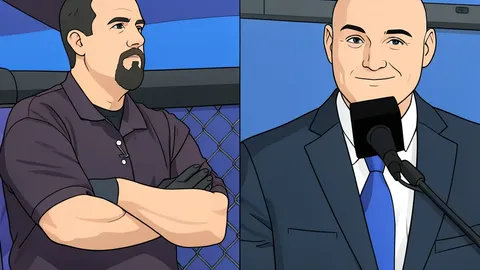
The air in the room feels heavy, charged with the friction of a long-running debate. Chuck Liddell, the Hall of Fame heavyweight and light heavyweight, does not mince words. He points a finger at a specific shadow in the cage: the fighter who locks in a grip and waits. It is a style that frustrates him more than any single opponent currently on the roster. He does not hate the takedown. He hates the silence that follows it.
Speaking on N3on’s livestream, Liddell drew a sharp line between grappling and stalling. He clarified that his issue is not with the art of wrestling itself, but with competitors who lean on positional stalling rather than ground strikes or submission attempts. The rhythm of the fight stops. The clock ticks. The opponent on top holds. The one on the bottom waits. Liddell calls this out as a failure of will, a lack of desire to finish.
Control Without Finish
“I don't like the guys who try to wrestle and hold,” Liddell stated, his voice carrying the weight of a former champion who knows the cost of inactivity. “They're not trying to finish.” He praised good ground and pound, calling it great. The distinction is subtle but critical. One side seeks damage. The other seeks time. Liddell’s critique targets the latter, a trend that has become increasingly common at the highest levels of the sport, particularly among wrestlers transitioning from collegiate programs.
Blame the Bottom Position
Liddell did not place all the blame on the top fighter. He pointed a finger back at the one trapped beneath. “But the guys that are just sitting there trying to win by just holding a guy [I don't like it],” he continued. “It's the guy on the bottom's fault for not getting better at getting up, too, right? He's kind of causing some of the problems.” It is a harsh assessment. The escape artist is missing. The bottom fighter is not solving the puzzle. They are merely enduring it.
This criticism reflects a long-running debate in MMA over whether control time should carry the same weight as damage when judges score rounds. The style Liddell described has become a fixture. It is a calculated risk, or perhaps a calculated reward, depending on who is holding the scorecard. As reported by boxingnews.com, Liddell’s stance remains unchanged: wrestling is a tool, not a shield. When it becomes a shield, the fight dies.