Baku's F1 Race Shifts to Saturday for National Remembrance
The 2026 calendar bends around a day of mourning, moving the Grand Prix from Sunday to Saturday to honor a recent and heavy history.
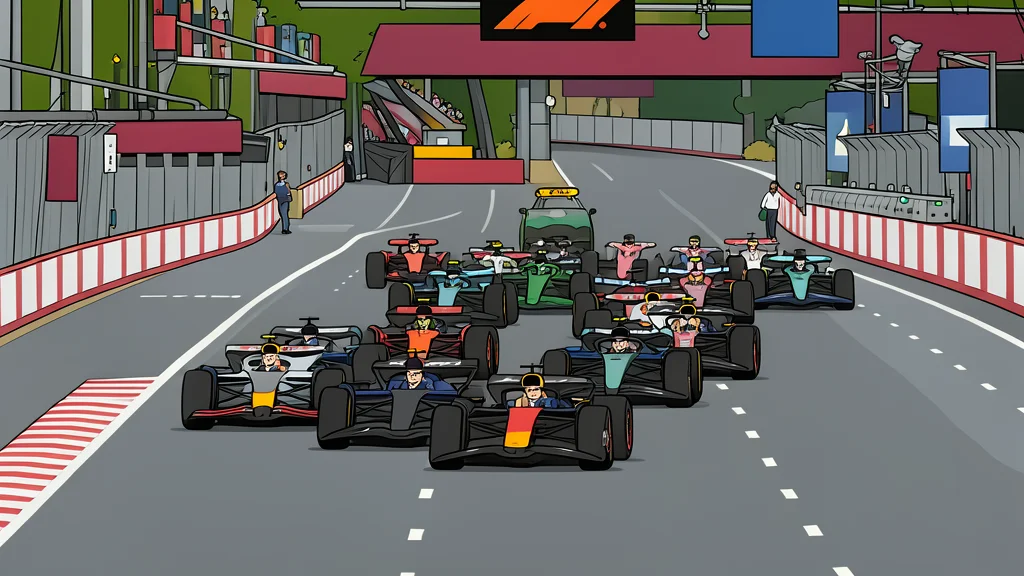
The asphalt in Baku hums with a different rhythm this year. While the rest of the grid prepares for the long haul across Asia and the Americas, the European leg of the 2026 Formula 1 season has just closed its books. Kimi Antonelli claimed the chequered flag in Madrid, cementing his lead, but the next stop is not where the calendar traditionally places it. The Azerbaijan Grand Prix is set for Saturday, September 26, a deliberate shift that ripples through the entire weekend schedule.
It is a move driven by respect, not logistics. The date originally sat on Sunday, September 27, but a request from local stakeholders forced a one-day retreat. This change honors a specific day of mourning that has become deeply embedded in the national identity of the Euro-Asian country. The racing weekend compresses, with media day landing on Wednesday and the 51-lap contest concluding on Saturday, clearing the Sunday for solemn reflection.
Honoring a recent national tragedy
The reason for the shift is the Azerbaijan Remembrance Day. It marks the anniversary of the Second Nagorno-Karabakh War, a conflict that erupted on September 27, 2020. The war, also known as the Patriotic War, lasted 44 days and ended with an Azerbaijani victory, though the cost was steep. According to government figures, 2,783 soldiers lost their lives during the fighting, leaving scars that the nation still bears in memory.
As noted by Motorsport.com, the move reflects a sensitivity to these recent events. The people of Azerbaijan dedicate this day to their military personnel and those who perished in the dispute over the Nagorno-Karabakh region. By moving the race to Saturday, the F1 calendar aligns with the country's need for a quiet Sunday. It is a rare instance where a sporting event yields to a national duty, ensuring the day remains focused on remembrance rather than the roar of engines.
A rare deviation from Sunday tradition
Sunday races are the bedrock of the sport, but they are not the only option. History shows that Formula 1 has hosted events on every day of the week. The 1950 British Grand Prix at Silverstone was a Saturday affair, a practice that continued until 1975. Even the Indianapolis 500, when it was part of the calendar, often raced on the day after its traditional May 30 date if that fell on a Sunday.
In recent years, the norm has been reinforced, with the 1985 South African Grand Prix serving as the last non-Sunday race until Las Vegas re-entered the scene in 2023. Since then, the American city has held its race on Saturdays. Bahrain and Saudi Arabia also joined the Saturday club in 2024 due to Ramadan. Baku’s 2026 schedule joins this small but growing list of exceptions, proving that while the sport is global, it must also be local.
A compressed weekend in the capital
The shift creates a tight, intense rhythm for teams and drivers. Media day starts the clock on Wednesday, followed by the first two practice sessions on Thursday. Friday is packed with the third practice session and qualifying, setting the stage for the main event on Saturday. This compression leaves no slack for error, demanding a level of precision that matches the narrow streets of the Baku City Circuit.
With 14 of the 23 scheduled rounds complete, the stakes are higher than ever. Kimi Antonelli leads the drivers' standings with 292 points, a significant gap over George Russell and Lewis Hamilton. The Baku race, with its unique mix of high-speed straights and tight corners, will be a crucial test of strategy and nerve. The weekend is short, but the implications for the title fight are long.