India's Asian Games Debut: Teqball Pair Chases History in Nagoya
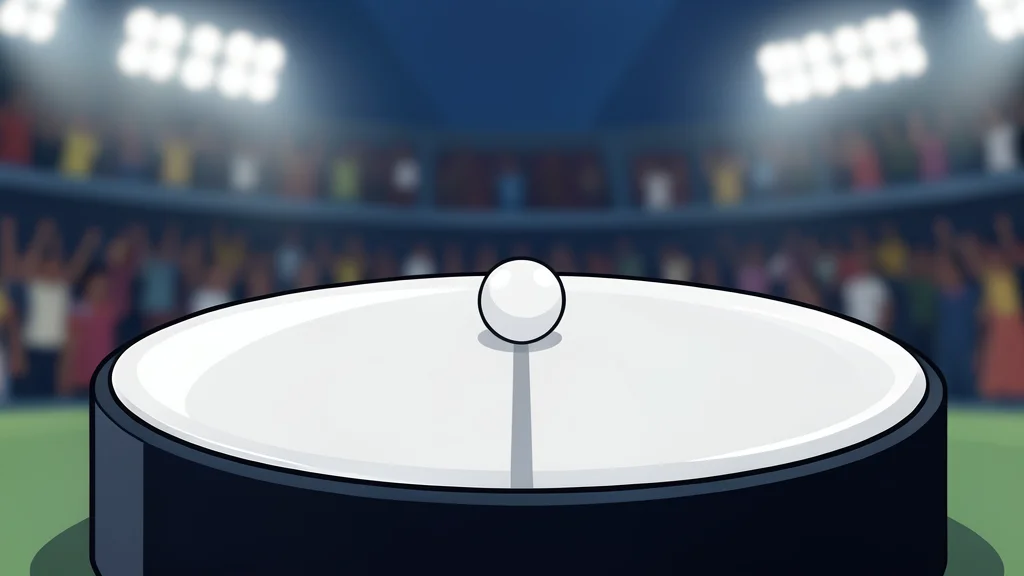
In Nagoya, the campaign kicks off not with a march, but with a kick on a curved surface as Gonsalves and Beg step onto the pitch for India's first match of the 2026 Asian Games.
The air in Nagoya hums with the low static of anticipation, two days before the official opening ceremony lights up the Aichi-Nagoya skyline. On Thursday, the rhythm of the Games shifts from ceremonial to kinetic as India’s campaign ignites on a curved, table-tennis-style surface. This is not the roar of a stadium crowd waiting for a flag parade, but the sharp, focused silence of athletes preparing for the first strike.
Declan Marshall Gonsalves and Mohamed Anas Imran Beg stand as the vanguard, their boots laced tight against the synthetic turf. They are the first Indian athletes to break the seal on the continental Games, stepping into the spotlight for a sport that blends the fluidity of freestyle football with the aerial precision of sepak takraw. The ball rests on the curve, a white sphere poised for the initial kick that will set their journey in motion.
A Curved Stage for Global Debut
Teqball arrives at the Asian Games for the first time, a Hungarian invention that defies the flat geometry of traditional soccer. It is a sport of angles and arcs, where the ball bounces off a concave surface, demanding a different kind of reflex. From September 17 to 20, five medal events will unfold, from singles to mixed doubles, each match a test of spatial awareness and creative footwork. The surface curves inward, pulling the play into a tight, dynamic center where every touch matters.
For Gonsalves and Beg, this debut is a culmination of past triumphs. They carry the weight of India’s first-ever teqball medal, a bronze secured at the 2024 World Championships in Vietnam. That moment in Hanoi marked their arrival on the world stage, but Nagoya offers a different canvas. Here, the stakes are continental, the rivalry fierce, and the audience vast. They are not just playing a match; they are defining a new chapter for Indian sport.
Group B Battles Begin at Noon
The clock starts at 12:30 PM IST, with Gonsalves and Beg facing Vietnam’s Truong Giang Ba and Anh Khoa Le. The opponent is familiar, a reminder of the bronze medal earned in 2024, but the context has shifted. The match is a test of nerve, a chance to prove that their form has held up against the passage of time. The ball flies, the bodies twist, and the curve of the table dictates the trajectory of every pass.
Less than an hour later, at 1:00 PM IST, the challenge escalates. They face the Republic of Korea’s Junsuk Lee and Taebeen Lee, a pairing known for technical discipline. This is the decisive hurdle in Group B, a match that could determine their path into the quarter-finals. The pressure is palpable, a physical weight in the air, as they navigate the group stage with the knockout rounds looming in the distance. A repechage route remains, a safety net for a second chance, but the primary focus is on clearing the immediate obstacle.
Chasing Medals in a New Era
As the 2026 Asian Games unfold, India eyes a hundred-medal haul, a target that demands depth and diversity in its athletic lineup. Teqball, with its unique blend of skills, adds a new dimension to that pursuit. Gonsalves and Beg are not just participants; they are pioneers, carving a path for the sport in a region where it is rapidly gaining traction. Their performance in Nagoya will echo far beyond the sports center, signaling a shift in how Indian athletes engage with emerging disciplines.
The campaign begins with a kick, a moment of pure physicality in a complex geopolitical and sporting landscape. As per reports from GN auto sports/multisport: Asian Games, the focus is on the medal, on the precision of the strike, and on the legacy they leave on the curved surface. The ball is in play, the crowd is watching, and the history is being written in real time, one bounce at a time.