Kabaddi Star Pawan Sehrawat Takes over as India's Male Flag-Bearer

A last-minute shift in Nagoya saw kabaddi star Pawan Sehrawat step into the spotlight to lead the Indian contingent, replacing shot putter Tajinder Toor due to technical hurdles, while Manu Bhaker remains the women's flag-bearer.
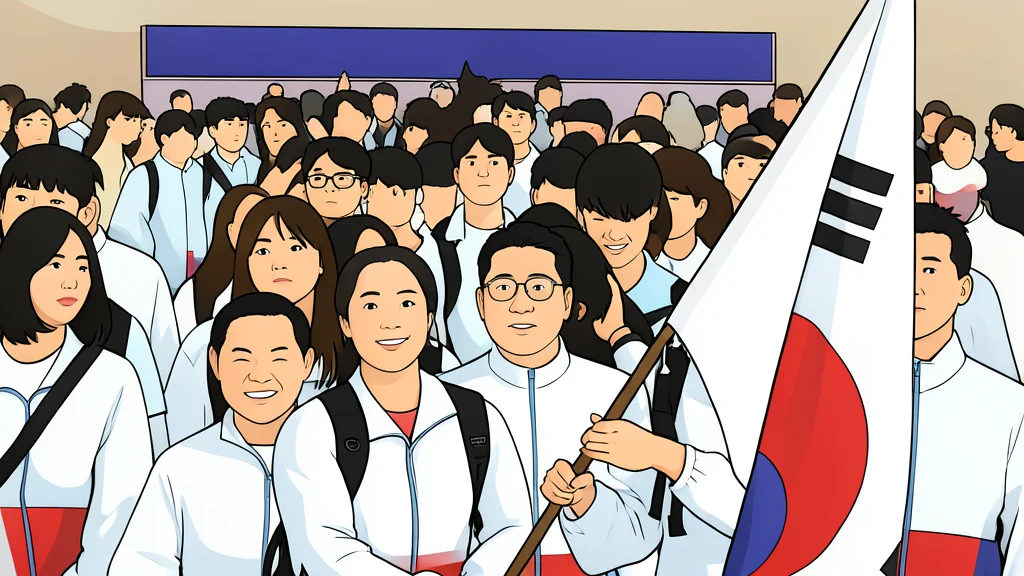
The stadium air in Nagoya hums with the electricity of the opening ceremony, but the focus of the Indian team has just shifted. Pawan Sehrawat, the kabaddi specialist, now grips the flag, replacing Tajinder Singh Toor in a sudden change announced by the Indian Olympic Association. Technical issues forced the swap, pulling the two-time Asian Games champion out of the ceremonial role and pushing the Pro Kabaddi League star into the vanguard.
Beside him, Manu Bhaker holds the line as the women’s flag-bearer. The shooting star who etched her name into history in Paris remains steady, her presence a quiet anchor in the shifting narrative. The change is abrupt, a logistical hiccup in a grand production, but the athletes march forward, their eyes fixed on the competition ahead rather than the ceremony that brought them there.
Bhaker’s historic dual medal run
Bhaker’s path to this moment is etched in Olympic bronze. At the Paris 2024 Games, she became the first athlete from independent India to win two medals in a single edition, a feat that reshaped the nation’s sporting expectations. Now in Nagoya, she targets the women’s 10m air pistol, the 25m pistol, and the mixed team event, carrying the weight of that historic achievement into a new arena. Her composure on the firing line contrasts with the chaotic energy of the stadium, a stillness that defines her approach to the sport.
The change in flag-bearers does not diminish the significance of the Indian contingent. Both athletes bring distinct legacies to the field, their individual journeys converging on this single Saturday morning. The technical glitch that prompted the swap is a minor footnote in their larger stories, a logistical detail that fades as the competition begins in earnest.
Kabaddi’s dominant Asian pedigree
Sehrawat steps into a role with immense historical weight. Since kabaddi entered the men’s team competition in 1990, India has claimed gold in eight of the nine editions. The only blemish on that record is a bronze medal finish in Australia in 2018. In Hangzhou 2022, the Indian team dismantled Iran 33-29 to secure the title, a performance that underscored their dominance in the sport.
Now, Sehrawat aims to lead that same dominance in Nagoya. His role is not just ceremonial but symbolic, representing a sport that has become a pillar of Indian sporting identity. The flag he carries is a banner of consistent excellence, a testament to a team that has rarely allowed its rivals to catch up over the past three decades.
Toor’s pursuit of a third gold
Tajinder Toor, though no longer carrying the flag, remains a focal point of the Indian bid for glory. He seeks a third consecutive Asian Games gold in the men’s shot put, a chase that has defined his career. His victories in Jakarta 2018 and Hangzhou 2023, where he recorded a throw of 20.36 meters, have established him as a consistent force in the discipline.
The technical issues that sidelined him from the ceremony are a distant echo now. His focus is singular, locked onto the circle and the heavy ball. The narrative of his campaign is one of precision and power, a stark contrast to the rapid, tactical bursts of kabaddi. Both men, separated by their different roles in the ceremony, are united by the singular goal of adding another gold to India’s collection.