South Korea's Delegation Marches into Nagoya's Asian Games Spotlight
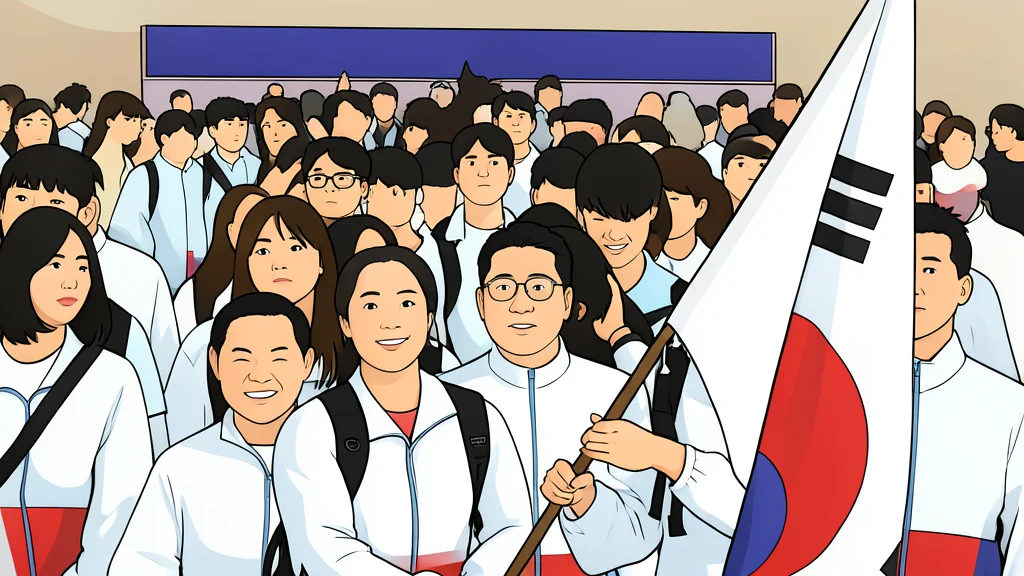
The Mizuhō Park stadium hums with electric anticipation as the South Korean delegation prepares to take the field, carrying the weight of a historic moment in a nation that has not hosted such a spectacle in three decades.
The air in Nagoya hangs heavy with the scent of cut grass and the low thrum of 15,000 athletes waiting in the wings. It is 6 p.m., and the Mizuhō Park Athletics Stadium, a sprawling concrete beast under the Japanese sun, holds its breath. This is not just a parade; it is the ignition of 469 gold medals, a six-day marathon of sweat and strategy that will stretch until October 4. The slogan 'Imagine One Asia' floats above the crowd, a quiet promise of unity that feels fragile against the roar of the spectators. The ground trembles slightly as the first nations step onto the track, their shoes scuffing the red clay with a gritty, rhythmic crunch.
Then, the familiar blue and white of the South Korean flag cuts through the sea of colors. Sixteenth in the alphabetical order, the delegation enters with a synchronized, sharp step. There is no hesitation in their stride, a physical manifestation of the 792 athletes who have already arrived in Japan, their bags unpacked, their minds locked on the target. The moment is sharp, brief, and electric. It is a snapshot of a campaign already in motion, a visual declaration that the battle for supremacy has begun in earnest.
A Historic Return to the Host Nation
Japan has waited 32 years for this specific kind of pressure to land on its shoulders. The 2026 Aichi-Nagoya Asian Games are more than a sporting event; they are a national test of endurance and organization. With 43 sports and 71 sub-events on the line, the scale is massive. The stadium is not merely a venue but a stage for a continental gathering, where the air itself seems to vibrate with the potential energy of 45 National Olympic Committees. The weight of history is palpable, a heavy, golden dust that settles on the shoulders of every competitor who steps onto the pitch.
The Korean delegation arrived on September 17, bypassing the usual ceremonial delays to dive straight into the logistics of war. They moved through the village with the efficiency of a well-oiled machine, their focus already shifted from the present to the future. The team sports, including soccer and basketball, have already begun their qualifying rounds, their clocks ticking independently of the opening ceremony. This is a delegation that has not merely arrived; it has activated.
Flag Bearers Lead the Charge
At the front of the line, Kim Dong-yong of rowing and Shin Yu-bin of table tennis hold the flag high. Their selection was not arbitrary; it was a calculation of schedules, transportation, and readiness. They are the physical anchors of the moment, their faces set with a calm intensity that belies the chaos of competition ahead. Behind them, 50 athletes from nine different sports follow, a diverse cross-section of the team that includes surfers, boxers, and wushu practitioners. They move as one unit, a tide of ambition flowing toward the heart of the stadium.
The choice of flag bearers reflects a pragmatic reality: only those who had already entered the village and could manage their training schedules were considered. It is a decision rooted in the soil of logistics, yet it carries the symbolic weight of leadership. The crowd’s roar is a physical force, a wave of sound that crashes against the stadium walls. In this moment, the distinction between the individual and the team dissolves, replaced by a single, unified pulse.
A Continental Gathering of Rivals
The parade is a mosaic of national identities, each nation carving its own space in the narrative. The North Korean delegation, entering eighth, moves with a distinct, solemn gravity, a stark contrast to the exuberance of other groups. At the very end, the host nation Japan makes its entrance, the final act of a choreographed sequence that brings the ceremony to a close. The order is alphabetical, a neutral arbiter in a contest that is anything but neutral. The tension in the air is thick, a tangible substance that clings to the skin.
As reported by GN auto sports/multisport: Olympic Games, the scene is one of controlled chaos, a beautiful, terrifying spectacle of human ambition. The stadium lights blaze like stars in a twilight sky, casting long, dramatic shadows across the track. The athletes are not just participants; they are the protagonists of a story that is being written in real-time, their every movement a brushstroke in a larger, more complex painting. The games have begun, and the world is watching.