Lee Jun-Suk Claims Teqball Gold in Asian Games Debut
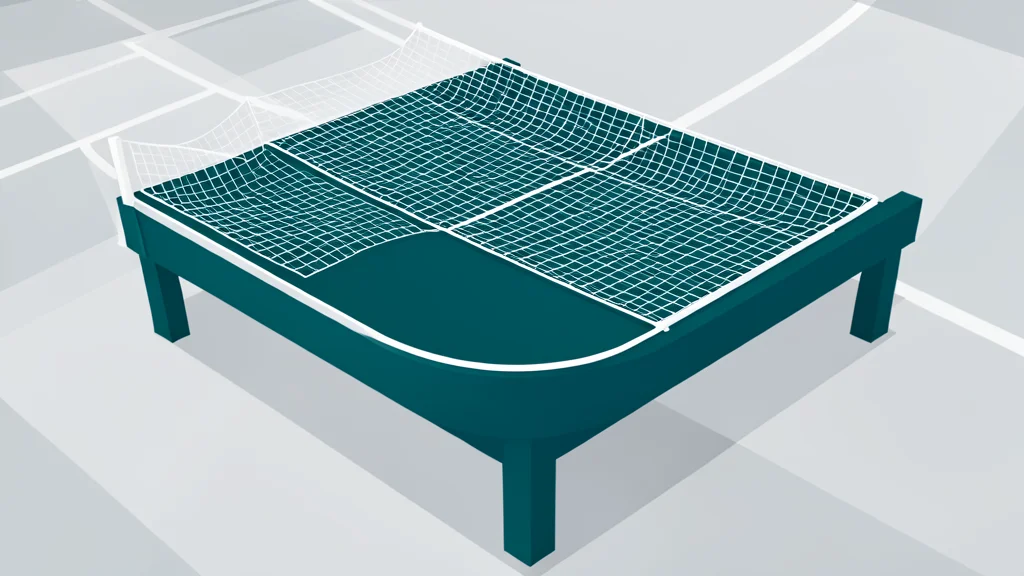
Korean athlete Lee Jun-suk secured the first-ever Asian Games teqball title in Nagoya, overcoming early nerves to defeat Iraq in straight sets.
Key points
- Lee Jun-suk defeated Iraq's Ali Jalil Mezher Alelayawi 2-0 to win the first Asian Games teqball gold medal.
- The 27-year-old quit his production job to train full time, relying on his mother's financial and emotional support.
- Lee called for better training conditions and corporate support for teqball players, who currently lack stable resources.
The curved table hums with tension in the Nagoya arena. Lee Jun-suk strikes the ball with his foot, sending it arcing over the net. It is a dance of feet and head, a sport born in Hungary but finding its first Olympic-stage moment here. He wins 12-11, then 12-5, and the gold medal is his.
"Mom, I won a gold medal!" he shouts, voice cracking with relief. The 27-year-old has just etched his name into history as the first men's singles teqball champion at the Aichi-Nagoya Asian Games. Tears mix with the sweat on his brow. It is a moment he has chased through years of doubt and limited resources.
From factory floor to national stage
Lee’s path to the podium was not paved with institutional support. He played in the K4 League, the tier just below professional soccer, before pivoting to jokgu, Korean foot volleyball. Teqball was not yet an Asian Games sport when he discovered it. He passed the national team trials, and the event was added to the schedule. He quit his job at a large production company to train full time.
Without access to the Jincheon National Training Center, Lee rented a jokgu court in Icheon, Gyeonggi. He also traveled to Hungary, the sport's birthplace, to refine his technique. His mother, Yoon Seon-jeong, backed his choice. She spent over 2 million won ($1,400) on a teqball table for him. "Do it. But you have to give it your best," she told him. That trust became his anchor.
Nerves fade under the final's pressure
The final did not start smoothly. The crowd at Higashi Sports Center was larger than in previous rounds. Lee felt the weight of the moment. He made early mistakes, his rhythm disrupted by the noise. "I was very nervous," he admitted. But he remembered his coach’s advice: settle down and chase. The turning point came early in the first set. He found his footing.
In the second set, his celebrations grew louder. He roared after every point, refusing to let the momentum slip. "I did a slightly over-the-top celebration because I felt I couldn't let the momentum slip," he said. Reaching 11 points first gave him the certainty he needed. The scene he had dreamed of was finally real.
A plea for stable training conditions
Despite the gold, the infrastructure remains fragile. The teqball team had to source its own meals after the organizing committee’s lunches proved inadequate. They stayed in a cramped business hotel. Lee highlights the precarious existence of many players in the sport. "Teqball players train in very poor conditions," he noted. There are no corporate teams to provide stability.
Many athletes put aside their livelihoods to pursue this reckless challenge. Lee hopes his victory will change that. He wants corporate teams to form, allowing players to train in a stable environment. His story, reported by Korea JoongAng Daily, is a testament to resilience in the face of systemic gaps. The gold medal is a start, not an end.