Nagoya’s Floating Castle and the Empty Stands of the 2026 Asian Games
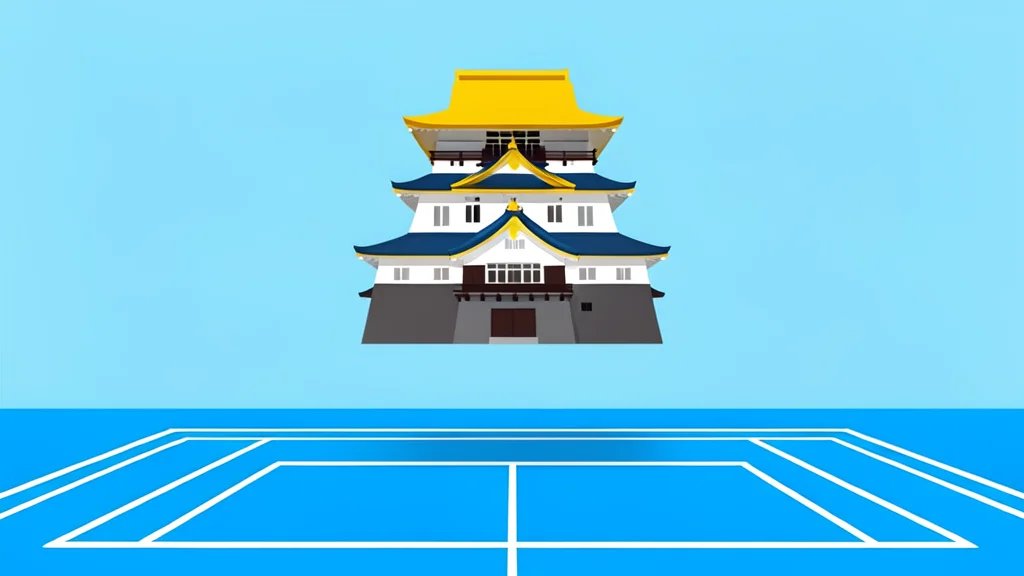
Golden roofs hang in the air above a stadium where silence fills the seats, marking a start that is equal parts theatrical precision and logistical friction.
The castle did not sit on the ground; it floated. Slowly, the golden-roofed structure of Nagoya Castle lifted above the stage, suspended in the dark air like a dream held in place by invisible threads. Below it, the stadium lights cut through the night, illuminating a stage that promised a fusion of ancient ritual and modern spectacle. The air hummed with anticipation, a physical weight that pressed against the chest, ready to explode into sound and motion.
Then the music struck, a sharp, percussive beat that shattered the stillness. Nakamura Kankuro, the Kabuki actor, moved with the fluid precision of a dancer who has spent a lifetime mastering the geometry of movement. His performance of Renjishi was not merely a display; it was a declaration. For a city defined by the craft of making things, this moment was the ultimate product: theatre forged from history, light, and skill.
Precision in Aichi’s Industrial Soul
Aichi is a region built on the concept of monozukuri, the Japanese philosophy of crafting objects with obsessive attention to detail. The names that echo through its valleys—Toyota, Denso, Aisin—are not just brands but testaments to a culture that values perfection in every joint and gear. This instinct for precision runs deep, a cultural bedrock that has supported the region since the era of warlords like Oda Nobunaga and Toyotomi Hideyoshi. The samurai may be gone, but the drive to construct, to refine, and to perfect remains the heartbeat of the land.
Yet, this week, the region’s reputation for order faced a stark test. The opening ceremony served as a counterpoint to the logistical chaos that had plagued the build-up. Where there were delays in room allocations and transport hiccups, the stage offered a controlled environment. The juxtaposition was sharp: a city that builds machines with microscopic accuracy struggled to manage the basic movements of its athletes. The beauty of the performance stood in relief against the friction of the infrastructure, a reminder that even the most meticulous systems can fray under pressure.
A Flag Carried by Substitution
The athletes’ parade brought the focus back to the human element. One by one, the flags of Asia circled the track, their colors vivid against the grey of the stadium interior. When India’s procession arrived, the mood shifted from cultural display to competitive spirit. Manu Bhaker, the Olympic shooting medallist, walked with a steady gaze, her posture reflecting the focus that has defined her career. Beside her was Pawan Sehrawat, the kabaddi captain, his presence a testament to improvisation in the face of error.
Sehrawat was not originally the flag bearer. Tajinderpal Singh Toor had been named for the role, aiming for a historic golden hat-trick. But his ceremonial kit never arrived in time. Trapped by a logistical failure, Toor was left waiting for a delivery that would miss the window, forcing a last-minute change. Sehrawat stepped in, taking the weight of the flag and the expectations of a nation that had broken the 100-medal barrier in Hangzhou. The substitution was a small, human detail in a large event, highlighting the fragility of plans when faced with the rigid reality of time and distance.
Silence in the Empty Stands
For all the light and motion on the field, the stands told a different story. Rows of vacant seats stretched into the distance, a sea of empty plastic that swallowed the sound of the crowd. The silence was not peaceful; it was a void. It was difficult to ignore, particularly during moments designed to convey the scale and spectacle of the Asian Games. The emptiness hung in the air, a visual echo of the logistical struggles that had marred the week.
The vacant seats were a stark reminder that the games are more than just competition. They are a complex machine of hospitality, transport, and coordination. As the ceremony ended and the athletes prepared for the first day of competition, the shadow of those empty rows remained. The beauty of the floating castle had faded, leaving behind the tangible reality of the event: a mix of high art and human error, where the promise of excellence is constantly tested by the mundane failures of organization.