Chiefs Revive 1936 Play for Ken Walker Touchdown
Andy Reid’s Chiefs dug up a grainy 1936 trick play, turning history into a touchdown for Kenneth Walker in a Week 1 rout.
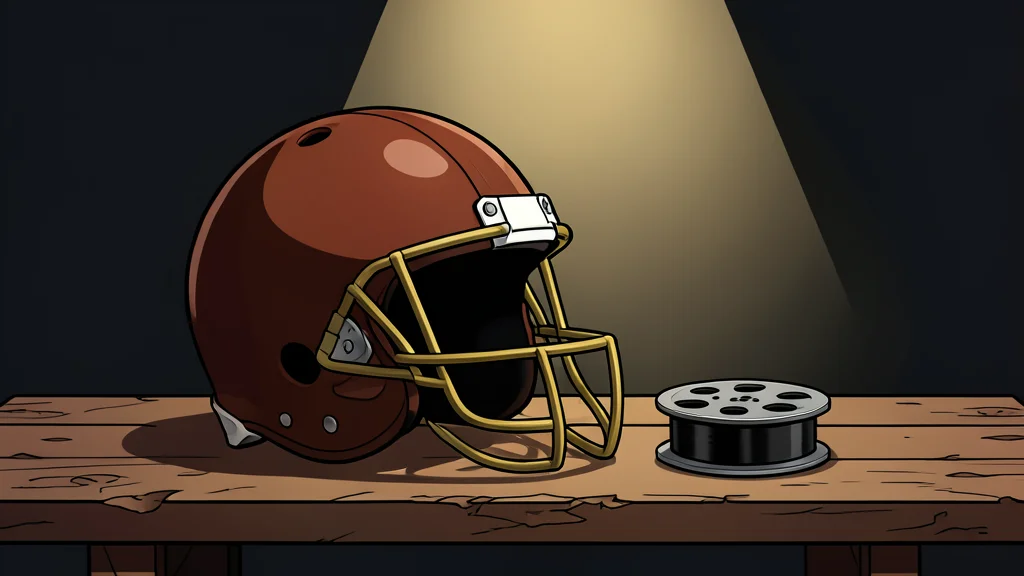
The film is scratchy, the edges frayed, the players blurred into ghostly shapes by eighty years of decay. On a wooden table in the Chiefs’ film room, that vintage reel sits beside a leather helmet, a silent testament to the past. Andy Reid has long believed that football’s best secrets are not buried in modern spreadsheets but etched into the muscle memory of history. This week, in a 30-10 dismantling of the Denver Broncos, he proved the point. The play, dubbed “Heisman,” was not a product of the current era’s algorithmic precision. It was a relic, pulled from a 1936 game, refined in the mud of training camp, and executed with a smoothness that silenced the skeptics who wondered if Reid’s mind had finally drifted out of the game.
The moment landed like a hammer blow. Kenneth Walker, the running back, caught the pass for a two-yard score. It was a small distance, but the significance was monumental. The alignment was a puzzle: Patrick Mahomes, Justin Fields, and Travis Kelce all clustered in the backfield, a one-point stance that defied conventional logic. The defense, expecting a standard handoff or a deep shot, was left staring at the empty end zone as the ball sailed into Walker’s hands. It was a display of trust, a visual declaration that the Chiefs still possess the joy of the unexpected.
Dusting Off the 1936 Script
Reid’s playbook has always been a museum as much as a manual. Fans remember “Shift To Rose Bowl Right Parade,” a play stolen from the 1948 Rose Bowl, which sent Damien Williams for a touchdown in Super Bowl LIV. That was a masterclass in misdirection. “Heisman” is its older, rougher cousin. According to GN sports/nfl (en-US), the inspiration came from an unlikely source: broadcaster Chris Berman. “Chris Berman sent me that play, so that’s a 1936er right there,” Reid said, his tone light but his intent clear. The coaching staff treated the clip with reverence, watching the static-filled footage over and over until the movements were etched into their minds. It was not about copying the past; it was about understanding the geometry of deception that has remained unchanged for a century.
Mahomes Sees the Future in the Past
Patrick Mahomes, the quarterback who usually dictates the tempo of the game, played a supporting role in this particular act of theater. He acknowledged the play’s roots with a mix of amusement and respect. “I can’t remember who exactly ran it because it was black and white,” Mahomes admitted, describing the visual noise of the archive. Yet, there was a certainty in his voice. “I just knew it was going to score.” The play was a test of chemistry, a way to see how the new roster, with Fields and Kelce in unusual positions, could mesh with the old guard. It was a statement that the Chiefs are not afraid to be strange, to be playful, to be dangerous in ways that do not fit on a whiteboard.
Walker’s Trust in the Chaos
For Kenneth Walker, the play was a leap of faith. He admitted the film was nearly indecipherable, a visual struggle against time. “The film we watched was probably from 1900, so you know it was hard to see,” he joked, downplaying the difficulty. But the repetition in practice transformed the confusion into confidence. The play was not just a trick; it was a validation. In a league where players are often measured by their efficiency, Walker was given the freedom to be a part of a moment that was purely about artistry. It was a highlight reel moment, yes, but more importantly, it was a reminder that in Kansas City, football is still a game of joy, of surprise, of finding the beauty in the obscure.