Robinson's Hybrid Dominance Echoes Faulk's Legacy

Bijan Robinson’s seamless blend of rushing power and receiving precision has redefined the running back position, mirroring the all-around threat of NFL icons.
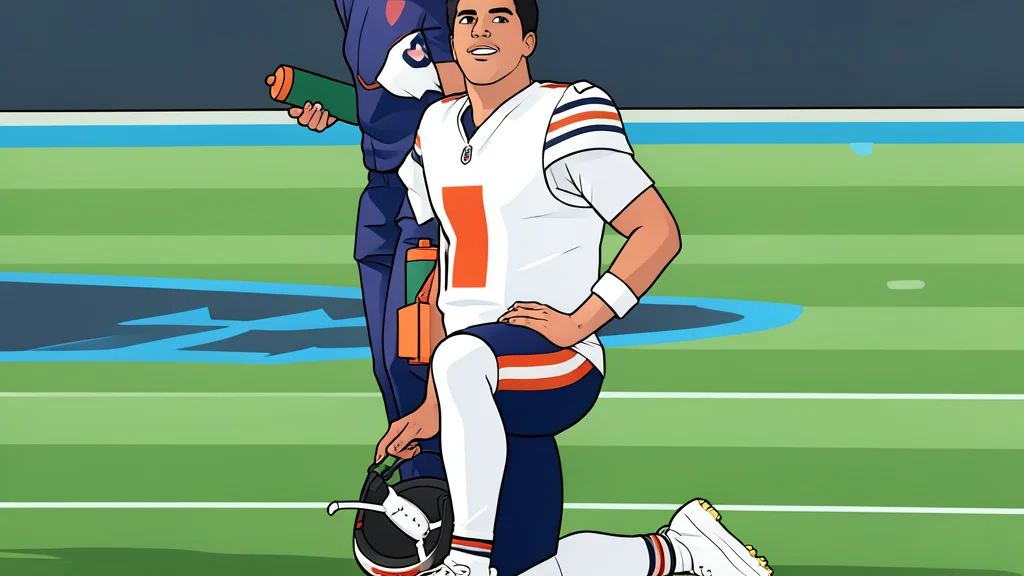
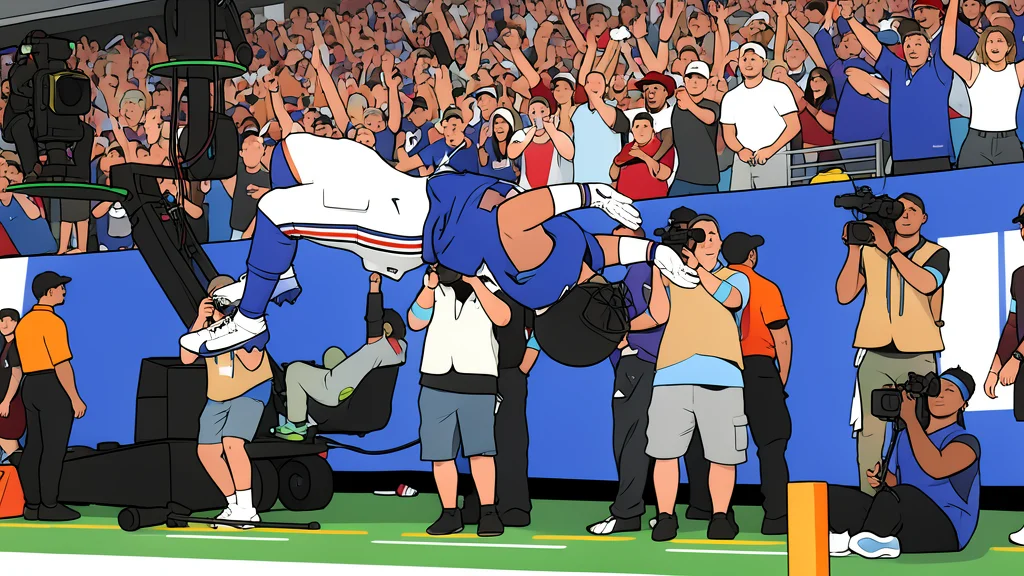
The artificial turf under Bijan Robinson’s cleats felt like solid ground, a neutral stage for a performance that defied traditional positional boundaries. In the humid air of Atlanta, he did not merely participate in the game; he dictated its rhythm. When Cooper Rush needed an outlet against the Pittsburgh Steelers, the answer was immediate and obvious. Robinson caught eight passes for 90 yards and a touchdown, his body moving with a fluidity that suggested the ball was an extension of his own limbs rather than a separate object in space.
The numbers from that Week 1 struggle for the Falcons tell a different story of individual dominance. Targeted ten times, he accounted for 173 of the team’s 263 yards from scrimmage. That is more than two-thirds of the offense’s total production, a statistical anomaly that places him in rare company. According to NFL data cited by Yahoo Sports, this share of scrimmage yards in a season opener has not been matched since Eric Dickerson’s historic 1986 campaign. The gap between him and the rest of the roster was not a difference of degree, but of kind.
A Lifetime of Catching Instinct
This dual threat did not emerge overnight; it is the product of years spent in 7-on-7 flag football, where the line between runner and receiver is blurred by the necessity of versatility. Robinson describes the act of catching as a natural gift, a skill that has never felt foreign to him. While running with the ball remains his primary priority, his comfort in the passing game allows him to occupy spaces that confuse defensive coordinators. He is a threat at every point of attack, forcing opponents to commit to one aspect of his game while he exploits the other.
Last season, he broke historical barriers by finishing with 1,478 rushing yards and 820 receiving yards. No player in NFL history had previously combined those two totals in a single year. His ability to process routes and secure the ball in traffic is not a learned trick but an ingrained reflex. This consistency has made him a central figure in Atlanta’s offensive strategy, a player who can generate momentum whether he is breaking a tackle or finding the soft spot in a zone coverage.
Patterned After the Prototype
When asked about the legend who shaped his approach, Robinson pointed directly to Marshall Faulk. Faulk, a Hall of Famer, set the standard for the hybrid running back, catching 87 passes for 1,048 yards in 1999 alone. Robinson sees in Faulk’s style the blueprint for his own game: a seamless integration of speed, agility, and hands. He also cites Barry Sanders, LaDainian Tomlinson, and Adrian Peterson as influences, but Faulk remains the prototype. The comparison is not just stylistic; it is functional. Both players forced defenses to respect their receiving ability, opening up the running game by creating mismatches that are difficult to solve.
Sustaining the Offensive Workload
Head Coach Kevin Stefanski has made it clear that this usage will continue. After 29 touches in the opener, the Falcons are likely to lean on Robinson again against the Carolina Panthers. The physical demands of such a workload are immense, requiring a player who can recover quickly and maintain focus across both phases. Robinson’s ability to handle this volume while maintaining high efficiency suggests a resilience that goes beyond physical fitness. It is a mental and physical synergy that allows him to perform at a high level consistently, week after week.
As the season progresses, the focus will remain on how much more of this dominance he can extract from the game. The Falcons’ offense found rhythm in his hands and legs, and that connection is unlikely to fade. Whether he is lining up in the backfield or out in the slot, the expectation is clear: he will be there, ready to make a play. The legacy he is building is not just about statistics, but about redefining what a running back can be in the modern NFL.