Dugarry Calls De Zerbi's Tottenham Deal a Robbery

Christophe Dugarry has fired a broadside at Roberto De Zerbi, labeling the Italian's five-year contract at Tottenham a heist that lacks the necessary finesse for such a high-pressure environment.
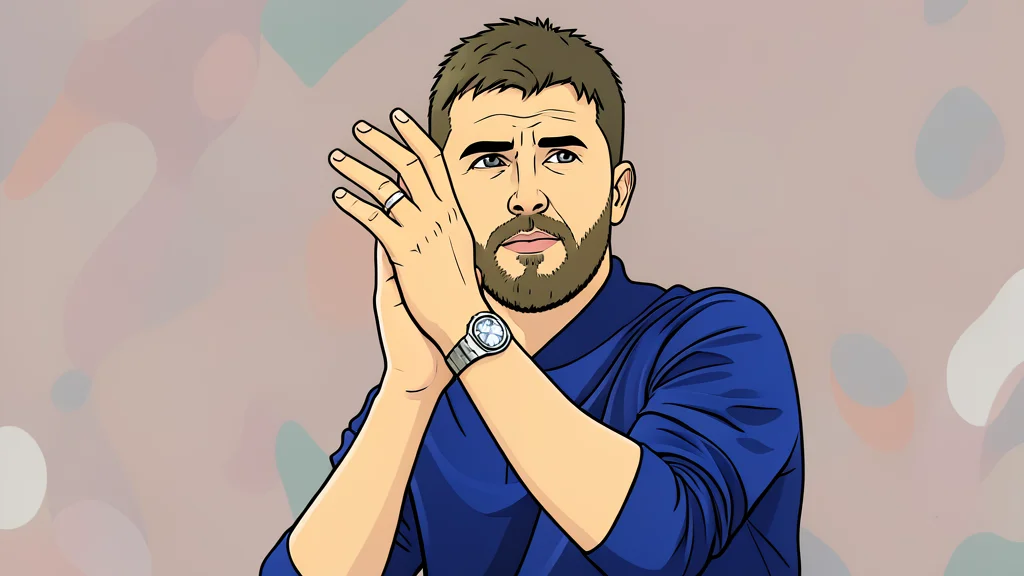
The air in the dugout feels thin, the kind of silence that presses against the eardrums before a storm breaks. Christophe Dugarry, a forward who knows the weight of expectation from his days at Milan and Barcelona, sees that weight now crushing Roberto De Zerbi. The French legend does not mince words when speaking to RMC Sport, dismissing the Italian’s tactical pedigree as insufficient for the scale of Tottenham. To Dugarry, the manager is not an absolute guarantee, a fragile link in a chain that needs to hold under the glare of the Premier League lights.
The contract itself becomes the centerpiece of the controversy. Dugarry calls the five-year deal a genuine robbery, a heist executed without the need for a mask. It is a vivid image of audacity, suggesting that the club has been stripped of its assets by a manager who has not yet proven he can guard them. This critique, reported by Yahoo Sports, lands with the force of a heavy boot striking a stationary ball, echoing through the corridors of the club where patience is a scarce resource.
A Silence That Defies Explanation
The numbers on the board are stark and unyielding. Tottenham has collected only two points from four Premier League matches, a drought that stretches beyond four hundred minutes of goalless football. The silence is deafening, punctuated only by the booing of the home crowd as the final whistle blows against Everton and Nottingham Forest. The players walk off to jeers, the sound a sharp reminder of the gap between ambition and reality. The lack of goals is not just a statistical anomaly; it is a physical weight hanging over every pass, every touch, every moment of possession.
This sterile record sits uncomfortably against a summer expenditure of roughly €350 million. The money was spent with the intent of buying dominance, of buying goals that never materialized. The scrutiny falls not just on the players, but on the architect of this vision. De Zerbi’s teams at Sassuolo and Brighton were known for their patience, their slow-burning intensity, but the Premier League offers no such luxury. The crowd at the stadium does not wait for the ideas to settle; they demand immediate gratification, a strike that shatters the tension.
Patience Worn Thin in London
History suggests that De Zerbi’s style requires time to bloom, that the intricate web of his tactics needs seasons to weave. But Tottenham is a club that has changed managers with the frequency of the seasons, a place where job security is a myth. The current run of form has eroded the last shred of goodwill. The booing at full-time is not just noise; it is a verdict, a collective rejection of the status quo. The manager stands in the middle of the pitch, the tactical board in his hand, the whiteboard marker resting on the surface, a symbol of plans that have yet to translate into results.
The pressure is a physical entity, pressing against the chest, making every decision feel heavier. Dugarry’s comments, while harsh, reflect a sentiment that is growing louder in the capital. The question is no longer about potential; it is about present capability. Can a manager who has never won a major trophy at the elite level handle the suffocating atmosphere of a top-four club? The silence of the fans says one thing, the stats say another, and the manager’s future hangs in the balance, poised on the edge of a knife.
The Weight of Expectation
The narrative is shifting from hope to doubt, a subtle but crucial change in the air. The five-year contract, once a sign of trust, now feels like a burden, a chain that binds the club to a project that may not deliver. Dugarry’s analogy of a robbery without a mask captures the essence of the situation: a bold move that may have been poorly executed. The manager is now in a position where every mistake is magnified, every failure dissected. The tactical board, with its markers and diagrams, offers little comfort in the face of a goalless drought that seems to have no end.
As the season progresses, the pressure will only intensify. The fans are watching, the media is waiting, and the manager is isolated in his thoughts, trying to find the spark that will ignite the team. The silence on the pitch is a challenge, a test of nerve and skill. Whether De Zerbi can overcome this hurdle remains to be seen, but the time for excuses is over. The only thing that matters now is the next goal, the next win, the next moment that can silence the critics and restore the faith of the fans.