Liverpool’s Home Stagnation: Is Iraola’s High Intensity Costing Points?

Two home games, two draws. The Anfield crowd watched as Liverpool’s high-octane style faded into a flat, goalless stalemate against Fulham, raising questions about sustainability under Andoni Iraola.
The roar of the Anfield crowd usually shakes the foundations, but on Saturday, the energy was a hollow echo. Two Premier League matches, two draws. For just the third time in 63 years, Liverpool have failed to win both of their opening home games of a league season. It is a statistical anomaly that stings, a quiet failure for a new boss who arrived with a promise of relentless urgency.
The contrast was stark. Midweek, against Atletico Madrid, the Reds moved with a sharp, predatory edge. Saturday, against a Fulham side lacking in confidence, that edge dulled. The match was a flat follow-up, a goalless affair where the Cottagers, despite conceding seven goals in their previous three league games, kept the Reds at bay. Liverpool looked physically and mentally drained, resembling an entirely different team to the one that had just pushed a semi-finalist to the brink.
A Pattern of Stalemate
Former manager Jurgen Klopp often spoke of identity and intensity, not just colors. Andoni Iraola shares that philosophy. He wants players to burn out, to give everything for 55 minutes. But the reality of the current schedule is grinding. Six points from four games is a disappointing return, especially with draws at home to Nottingham Forest and Fulham. The only win came at Ipswich, a solitary victory in a run of heavy draws.
Goalkeeper Alisson was blunt in his assessment. "We are not happy at all with the draw," he told Sky Sports. "To be unbeaten, but with three draws, is not something to celebrate too much with this shirt." The keeper emphasized the need for a specific mental state to cope with the Wednesday-Saturday-Tuesday cycle. The energy was there inside the squad, he said, but it failed to manifest on the pitch.
Struggling for Offensive Spark
The attacking trio of Alexander Isak, Bradley Barcola, and Florian Wirtz started together for the first time in a league game. The £364 million investment was visible, yet ineffective. Isak had just 16 touches in 90 minutes, the second fewest for an outfield Reds player on record. Wirtz, who had been terrific against Atletico, looked like a shadow of his midweek self. The partnership needs time, Iraola admitted, but the lack of freshness was a visible weakness.
"I only remember one clear chance for Fulham," Iraola noted, acknowledging the structural integrity but the offensive void. The team kept its shape, but the final product was missing. The creation of chances was the primary issue, a gap that left the supporters with little to cheer about.
Substitutions Fail to Shift Momentum
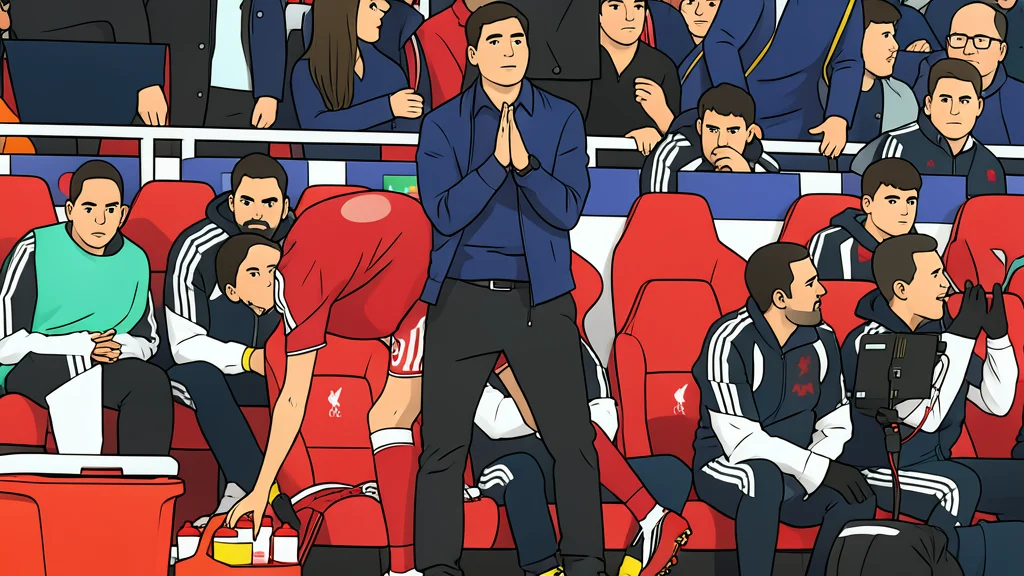
By the hour mark, Iraola had made his three changes. Kostas Tsimikas came off at half-time, while Ryan Gravenberch and Victor Munoz were replaced after 60 minutes. Milos Kerkez, Cody Gakpo, Alexis Mac Allister, Rio Ngumoha, and Jeremie Frimpong all touched the grass. None of them shifted the balance. The injections of pace and creativity were absorbed by a Fulham defense that had found its rhythm.
The scene at Anfield was one of frustration. The grass was green, the lines white, the sky cloudy. But the football was gray. Liverpool remains unbeaten, a fact that offers some comfort. Yet, for a club of this stature, stagnation is its own kind of defeat. The question lingers: is this the cost of Iraola’s intensity, or is the foundation yet to be laid?