Alcaraz's US Open Exit Was Physical, Not Mental

Serena Williams' former coach argues that wrist fatigue, not tactical error, ended Carlos Alcaraz's run in the quarterfinals.
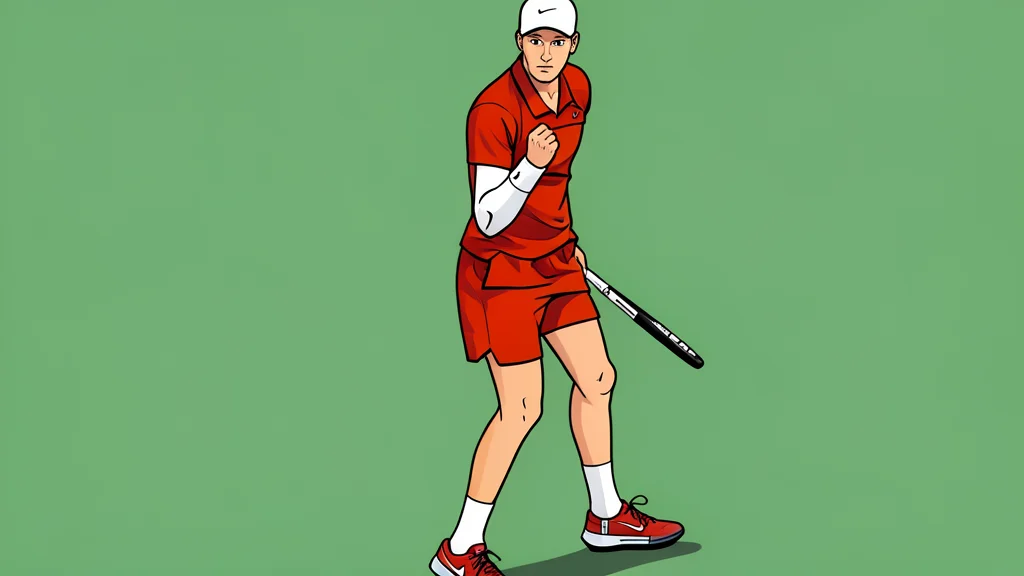
The air in Arthur Ashe Stadium hung heavy with the scent of crushed red clay and exhaustion. Carlos Alcaraz stood at the baseline, his body a map of four months' worth of silence broken by weeks of relentless motion. He had vomited at the start of the final set, a visceral warning that his engine had stalled. Yet he kept moving, chasing every ball with the same ferocious grace that had carried him through four rounds, dropping only one set en route. It was a performance that defied the expectations of a player returning from a concerning wrist injury, a silent testament to his competitive fire.
Ben Shelton, however, was a different story. The American arrived with the cold precision of a man who has nothing to lose and everything to gain. Their match stretched into the small hours of the morning, ending at 3:33 am in the latest finish in US Open history. Shelton dethroned the world number three in a five-set thriller that left both men drained. The final set tiebreak, won 10-7, was not a display of superior tennis, but a battle of endurance where Alcaraz’s physical limits finally asserted themselves over his technical brilliance.
Wrist Fatigue Defined The Collapse
Patrick Mouratoglou, the former coach of Serena Williams, identified the root cause of the Spaniard's exit. Speaking on Instagram, Mouratoglou dismissed the idea that Alcaraz was mentally checked. "Tennis-wise, amazing. Physically, no," he stated bluntly. The former coach pointed to the nine consecutive games Alcaraz lost after taking the first set as evidence of a physical breakdown rather than a strategic one. In the early rounds, matches are won on mental resilience, Mouratoglou argued, but in the second week, against the game’s best, the body becomes the bottleneck.
Alcaraz had not played a tune-up event before Flushing Meadows. He jumped straight into best-of-five-set play, a decision that rewarded his skill but punished his recovery. Mouratoglou emphasized that the intensity required to sustain such a high level for five sets exposed the lingering effects of the injury that had sidelined him since the Barcelona Open in April. The ups and downs Alcaraz experienced were not the usual tactical fluctuations; they were the tremors of a body pushing past its safe threshold.
Immediate Return To Team Europe
There is no rest in sight for the seven-time major champion. Alcaraz is set to re-emerge at the Laver Cup on September 25th, a rapid turnaround from his US Open exit. The exhibition event, which pits Team Europe against Team World, offers a different kind of pressure. Unlike the solitary grind of a Grand Slam, the Laver Cup is a team affair, a three-day festival of doubles and singles where camaraderie often outweighs individual perfection.
Alcaraz made his debut at the event in 2024, helping Team Europe claim the title. However, last season, his loss to Taylor Fritz contributed to Team World’s victory. This year, the stakes remain high. Team Europe, featuring Alexander Zverev, Rafael Jodar, and Casper Ruud, faces a formidable Team World roster that includes Shelton, Alex de Minaur, and Learner Tien. The dynamic shifts from the solitary battle of the clay to the collective energy of the team, a change that may suit a player still finding his physical rhythm.
Shelton's Career-Defining Victory
For Ben Shelton, the quarterfinal victory is a landmark. Dethroning the world number three in a five-setter at the US Open is the biggest win of his career to date. His performance was not just about winning points, but about sustaining pressure over an extended period. He weathered the storms of Alcaraz’s aggressive baseline play, waiting for the cracks in the Spaniard’s physical foundation to appear. As reported by Yahoo Sports, Shelton’s red-hot form in the second week was the decisive factor, turning a potential upset into a statement of arrival on the biggest stage.