The Five Men Who Outlasted New York
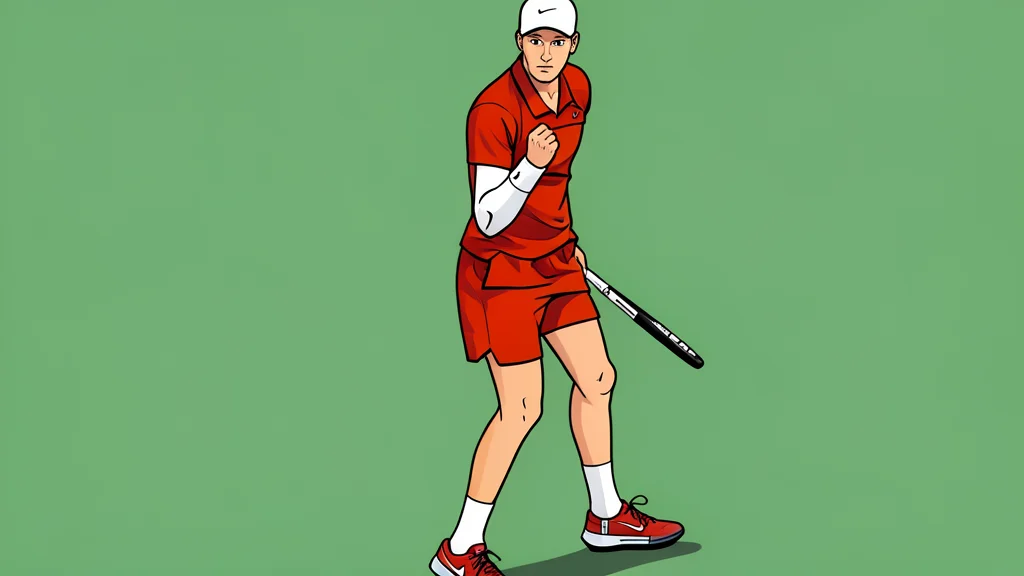
Five different champions have lifted the US Open trophy since 2020, yet their games share no common stroke. The thread binding them is not technique, but the capacity to survive the moment when the match turns uncomfortable.
The blue hard court absorbs the thud of the ball, a flat, dull sound that repeats with mechanical precision. Dust rises from the sneakers, hanging in the humid air that clings to the skin. In this environment, the differences in style between the last five champions become almost irrelevant. Daniil Medvedev’s low, defensive counterpunching has little in common with the explosive, high-arcing shot-making of Carlos Alcaraz. Novak Djokovic’s clinical baseline control and Jannik Sinner’s mechanical precision are distinct, yet neither is a copy of the other. Their games look nothing alike, but a single thread runs through all five title runs, visible only when you look past the strokes.
This is not a story about who hit the ball hardest. It is a story about who held the line when the body began to fail. New York’s heat and the grueling five-set format strip away the prettiness of the game. They reward the player whose mind and body hold up the longest. The pattern is consistent: the winner outlasts the opponent physically and mentally at the precise moment the match tips into danger. It is a testament to resilience, where the title is won not by out-hitting, but by out-surviving.
Composure Under Pressure
In 2025, Carlos Alcaraz faced his greatest test against Jannik Sinner. The Spaniard had lost the second set, the rhythm broken, the crowd noise swelling. Yet he reasserted control with a cold, calculated 6-1 third set. It was the first time in the Open Era that the same two men met in three consecutive Grand Slam finals in a single season. Alcaraz did not unravel; he reset. He shut the door before a decider could materialize, proving that his ability to respond to adversity was sharper than Sinner’s precision.
A year earlier, Sinner faced his own wobble against Taylor Fritz. The Italian had dominated for two sets, but Fritz found an opening in the third, breaking serve to lead 5-3. The moment was a rare stumble, a crack in the armor. Sinner’s response was immediate. He won four straight games to close out the match, refusing to let the momentum shift. This was not just skill; it was a refusal to break. The composure under pressure was the deciding factor, a mental steel that outlasted Fritz’s surge.
Surviving the Marathon
Novak Djokovic’s 2023 final against Medvedev was a different kind of endurance test. The Serbian established control early, but Medvedev turned the second set into a marathon, setting the record for the longest set ever played in a singles US Open final. The air was thick, the rallies endless. Djokovic, at 36, did not rely on youth or power. He relied on experience. He survived the tiebreak, knowing how to navigate the moments when a match turns uncomfortable. His victory was not a burst of brilliance, but a slow, deliberate survival of the storm.
Alcaraz’s 2022 run against Casper Ruud highlighted the physical toll of the tournament. The Spaniard had just finished a historic five-set quarterfinal late at night, his body drained. Yet against Ruud, he still had enough left in the tank. He won a four-set battle, his legs heavy but his will unbroken. The physical cost of the run made the final remarkable before it even began, a testament to the sheer volume of effort required to reach the end of the line in New York.
Denying the Rhythm
In 2021, Daniil Medvedev faced a different kind of challenge: the weight of history. Novak Djokovic arrived one win away from the calendar Grand Slam, emotionally and physically charged. Medvedev’s strategy was not to overpower, but to deny. He absorbed the occasion and Djokovic’s pace, holding his nerve through long, grinding rallies. He never let the match become the comeback story the crowd wanted. By closing it out in straight sets, he stripped Djokovic of the momentum needed to make history, a quiet, effective dismantling of the favorite.
Dominic Thiem’s 2020 victory remains the ultimate proof of resilience. Trailing by two sets, outplayed for long stretches by Alexander Zverev, the Austrian clawed back from the brink. He forced a decider and won it in the first fifth-set tiebreak in US Open final history. It remains the only men’s final in the Open Era won by a player rallying from two sets. Thiem’s title was not won on skill alone, but on the sheer refusal to quit. It was a victory for the body that held on when the mind wanted to let go.
As Yahoo Sports notes, the common thread is not technical. It is the ability to outlast. Alexander Zverev, battling through two five-set matches in the opening rounds, now faces Ben Shelton in a final that will test this pattern again. Shelton, chasing his first Grand Slam and aiming to become the first American man to win a Major since Andy Roddick in 2003, brings a different energy. But the court remains the same. The heat remains the same. The question is not who hits the prettiest ball, but who survives the longest.