The Rhythm of the Bounce: Zverev and the Serve Controversy
On the red clay of memory and the hard courts of New York, the tennis ball’s thud against the surface has become a focal point of debate, echoing from Djokovic’s 2021 reflections to Alexander Zverev’s recent US Open performance.
The dust settles on the baseline, a fine powder suspended in the afternoon light. Alexander Zverev stands poised, the ball rising and falling in a rhythmic loop, each bounce a deliberate pulse in the quiet tension of the court. This is not merely a warm-up; it is a ritual that has drawn sharp criticism in recent days. Opponents and observers alike have noted the duration of his pre-serve routine, arguing that the interval between points stretches uncomfortably long. The complaint is physical as much as it is temporal. Standing at the other end, waiting in a static, coiled posture, becomes a test of endurance rather than a moment of anticipation.
Ben Shelton voiced this frustration after the US Open final, describing the waiting period as a
Djokovic Finds His Rhythm in Pressure
This is not a new friction. Novak Djokovic faced similar scrutiny years ago, offering a glimpse into the mental architecture behind the act. In a 2021 conversation with Mats Wilander, as reported by Yahoo Sports, Djokovic admitted that the number of bounces is not a fixed metric but a variable response to internal state. He described the process as a search for the correct tempo, a synchronization of the first step and the swing. When the pressure mounts and the muscles tighten, the ball bounces more. It is a way to wait for the right moment, a mechanical buffer between the chaos of the previous point and the precision required for the next.
Djokovic recalled a former habit of ending bounces on even numbers on the deuce side and uneven on advantage, a superstitious anchor to a routine. He noted that this structure has dissolved over time, replaced by a more fluid, if sometimes frustrating, improvisation. The ball becomes a metronome for the mind, ticking away the seconds until the toss feels inevitable rather than forced.
Historical Criticism of Pre-Serve Rituals
The criticism of long routines has a deep lineage in tennis history. Rafael Nadal was perhaps the most prominent figure in this tradition, known for a meticulous sequence of actions before every serve. He would adjust his shorts, wipe his nose, and brush his hair, a series of small, precise movements that left little room for haste. This attention to detail, while a hallmark of his competitive focus, often led to time violations. The court felt like a stage where the actor needed an extended moment to settle into the role, leaving the audience and opponents in a state of suspended animation.
Pat Cash, the 1987 Wimbledon champion, offered a pointed critique in 2009, arguing that such practices showed contempt for the receiver and bored the fans. He described the ball bouncing as
The Physics of Waiting on Court
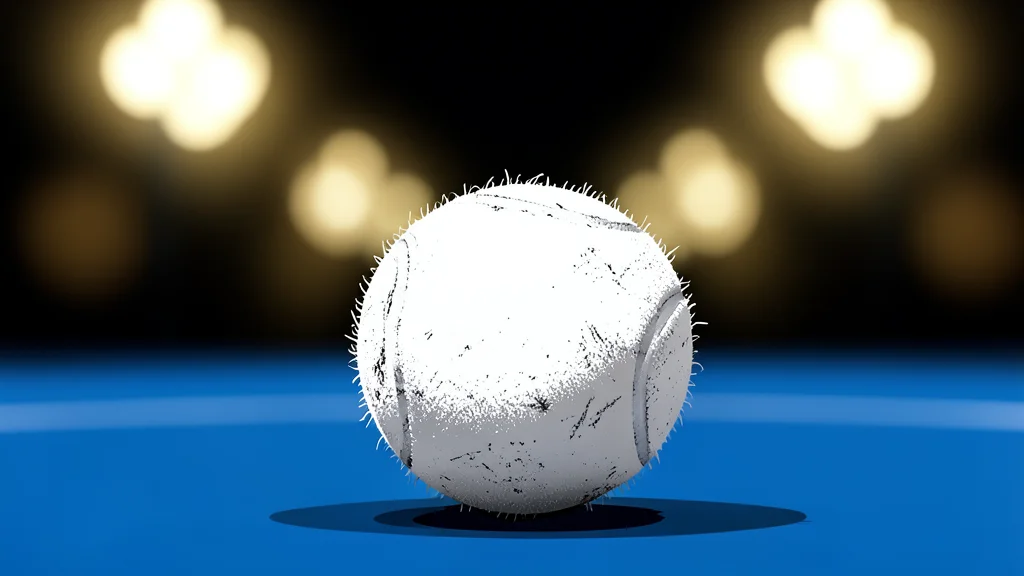
The debate ultimately circles back to the physics of the game. The ball is a simple object, a sphere of felt and rubber, yet its interaction with the court surface carries significant weight in the narrative of a match. Each bounce is a sound, a visual cue, a marker of time. For players like Zverev and Djokovic, the ritual is a way to manage the unpredictable variables of high-stakes competition. It is a private negotiation with the moment, a way to find a pocket of control in an environment that demands constant adaptation. The criticism, while understandable, often overlooks the internal landscape these routines serve to navigate.
As the sport evolves, so do the expectations of pace and flow. The tension between the need for mental preparation and the desire for continuous action remains a central theme. The ball continues to bounce, a steady, rhythmic reminder of the time that has passed and the point that is yet to come. It is a simple act, but in the hands of these players, it becomes a complex language of rhythm, pressure, and intent.