Thiem's Empty Court and the Weight of Silence
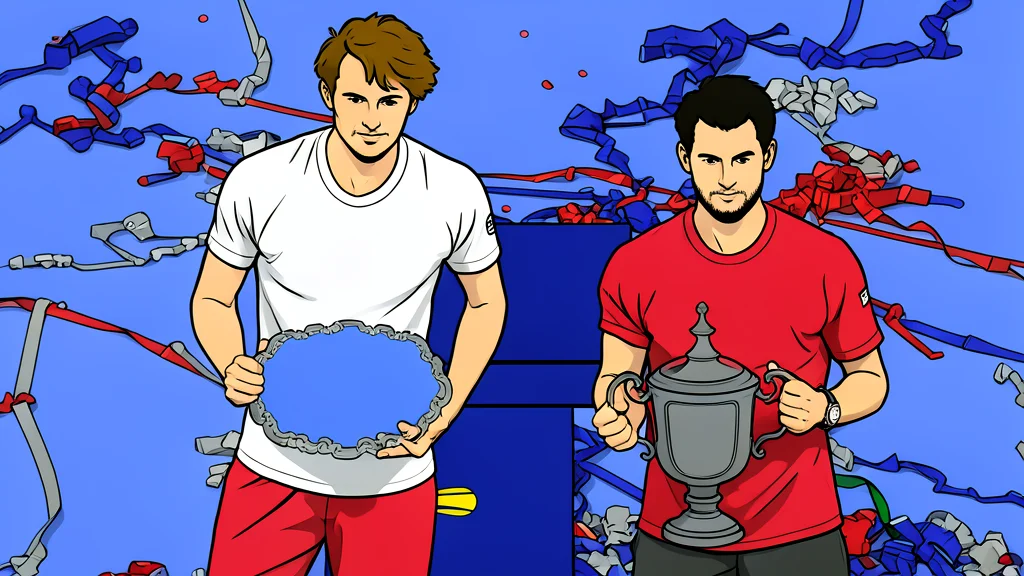
Six years ago, Dominic Thiem collapsed on the empty clay of New York, his Grand Slam triumph echoing in a stadium stripped of fans. The joy was real, but the silence that followed proved far more deafening than the applause could ever be.
The hard court of the Arthur Ashe Stadium is silent save for the thud of a body hitting the surface. Dominic Thiem lies flat on his back, legs splayed, staring up into the empty stands of the world’s largest tennis arena. Seconds earlier, a backhand from Alexander Zverev drifted wide, ending a five-set war that defied history. There are no fans to roar, no confetti to fall, only the stark white lines of the baseline framing a moment of pure, unadulterated triumph. It was September 13, 2020, and for that brief, suspended instant, the Austrian had conquered the US Open, breaking a curse no other player had ever broken: turning a two-set deficit in a Grand Slam final into a victory.
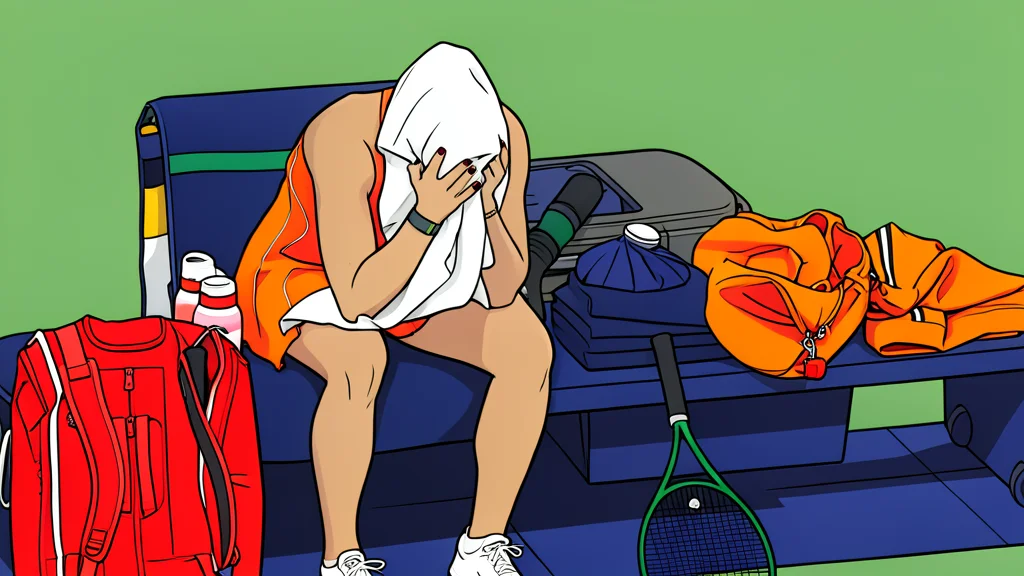
The pandemic had hollowed out the stadium, turning a spectacle into a solitary performance. Thiem rose slowly, his chest heaving, the adrenaline still vibrating in his limbs. He had not just won a title; he had rewritten the script of the tournament. For Zverev, who would later find his own redemption, it remained one of the bitterest nights of his career. For Thiem, it was the peak. He described the match as pure drama, a rollercoaster of emotion that mirrored his entire life up to that point. Little did he know, the descent was already beginning, waiting just beyond the baseline.
The Silent Descent Begins
The fall did not start immediately. In the weeks following New York, Thiem maintained his momentum, reaching the ATP Finals final. The world assumed the American Open was the launchpad for a new era of dominance. Instead, it was the high-water mark. By 2021, a deep void opened beneath his feet. The motivation that had driven him to conquer the Big Three began to evaporate, replaced by a psychological fog that clouded every return and every serve. He was winning matches, but the joy had drained out of the game, leaving only the mechanical repetition of points.
Injury and Internal Struggle
The mental break was compounded by physical pain. In June 2021, during a tournament in Mallorca, Thiem injured the joint in his right hitting hand. It was a small wound that bled into a nine-month absence. When he returned in March 2022, the mechanics of his forehand had shifted, warped by months of caution and rest. The ball felt heavier, the timing off. He struggled to find the rhythm that had once allowed him to dismantle the world’s best. The injury was not just a physical setback; it was a symbol of the fragility that had taken root in his game.
Unfulfilled Potential and Exit
Desperate to reignite his career, Thiem cycled through coaches, seeking a spark that never came. He reached the final in Kitzbühel, a rare flash of brilliance, but it was an isolated incident in a season of disappointment. He lost to lesser-known players on the Challenger Tour, his confidence eroding with every defeat. After a first-round exit at the 2024 Australian Open, he parted ways with his coach, acknowledging it was his last chance. By spring, at just 30 years old, he announced his retirement. The history books will remember him for defeating Nadal, Djokovic, and Federer at least five times each, a feat shared only by Andy Murray. But the silence of that empty stadium in New York remains the loudest part of his story.