Chevron Expands Global Gas Portfolio to Meet Rising Demand
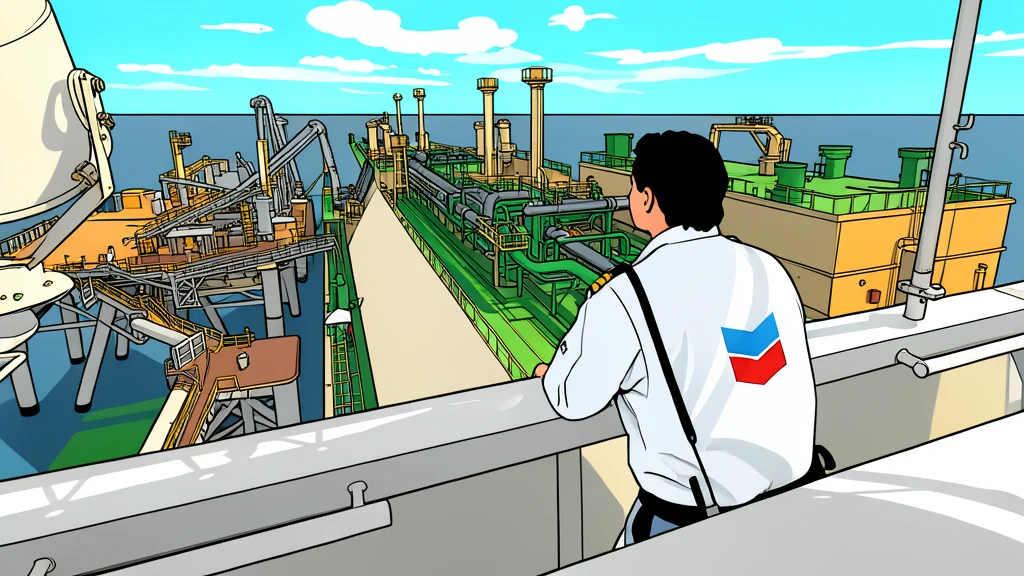
Chevron is scaling its integrated LNG portfolio to address rising global energy demand, prioritizing reliable supply and infrastructure investment across Asia and the US Gulf Coast.
Chevron is expanding its integrated liquefied natural gas portfolio to address a structural increase in global energy demand. The company’s strategy moves beyond simple fuel substitution, focusing instead on system expansion through sustained capital allocation across the entire value chain. This approach is designed to balance affordability, reliability, and lower-carbon intensity in a market characterized by elevated geopolitical risk and rising consumption from industrial and data-center growth.
The firm’s operational footprint spans key supply regions including the US Gulf Coast, the Permian Basin, and the Eastern Mediterranean. By maintaining long-standing partnerships with governments and customers, Chevron aims to provide resilient energy delivery that responds to volatile market conditions. The core objective is to meet scale-driven demand in Asia and other emerging markets while maintaining operational excellence in logistics and downstream integration.
Global Gas Portfolio Expansion
Chevron’s gas assets are positioned to serve regions where population growth and industrial expansion are accelerating energy requirements. The company identifies Asia as a primary driver of this demand, noting that reliable supply is critical for maintaining economic stability. By diversifying its supply sources, Chevron reduces exposure to single-point failures in the global energy network, ensuring that supply can continue to meet demand even during periods of geopolitical disruption.
The integration of upstream production, liquefaction, shipping, and regasification allows for a flexible commercial model. This vertical structure enables the company to adapt to changing customer needs and market prices more effectively than fragmented supply chains. The focus on operational resilience is a direct response to the lesson that energy security cannot be assumed in a volatile environment, requiring continuous investment in infrastructure and logistics capabilities.
Integrating Lower-Carbon Solutions
Chevron is advancing lower-carbon technologies alongside its core gas business to reduce the environmental footprint of its operations. This includes the deployment of carbon capture and storage, initiatives to lower methane intensity, and the adoption of digital technologies that enhance efficiency and transparency. These measures are not treated as standalone projects but are integrated into the broader energy delivery system to support a transition toward lower emissions while maintaining firm, dispatchable power.
The company emphasizes that LNG serves a dual role in this transition. It facilitates a shift away from higher-carbon fuels and supports the integration of renewable energy sources by providing stable baseload power. This approach aligns with the broader goal of meeting climate targets without compromising the reliability required by industrial and residential consumers. The integration of these technologies is designed to improve the overall carbon intensity of the energy supply chain.
Strategic Partnerships and Policy
Chevron highlights that meeting global demand at scale requires collaboration across the value chain. The company is focused on building partnerships with governments and customers to develop solutions that can be deployed and sustained over time. These collaborations are essential for unlocking the investment needed for long-term infrastructure projects and emerging technologies, which often require stable and predictable policy frameworks to proceed.
Clear regulatory environments are identified as a critical factor in enabling long-term capital investment. Chevron’s strategy relies on aligning its operational experience with customer needs to create durable commercial models. The company views these partnerships as the foundation for progress, asserting that no single entity can meet the scale of global energy demand alone. This collaborative approach is central to the firm’s plan for sustained growth and market resilience.