Hyundai Backs CFS's $4B Virginia Fusion Plant
Hyundai Motor Group joins Commonwealth Fusion Systems' latest funding round, reinforcing the $4 billion capital base required for the ARC commercial fusion facility in Virginia.
Commonwealth Fusion Systems has secured additional industrial backing as Hyundai Motor Group participated in the company's July 2026 equity financing round. This investment contributes to CFS’s total capital raised of $4 billion, a sum dedicated to advancing the development of the ARC fusion power plant. The facility is slated for construction in Chesterfield County, Virginia, marking a significant step toward grid-scale nuclear fusion deployment.
The partnership extends beyond financial support, creating a framework for engineering and industrial cooperation. Hyundai brings experience in infrastructure and power-plant construction, areas critical for the commercialization of fusion technology. CFS stated that this collaboration aims to accelerate the industrialization of its reactor designs, which are targeted to begin generating electricity in the early 2030s.
ARC Design Validates Physics
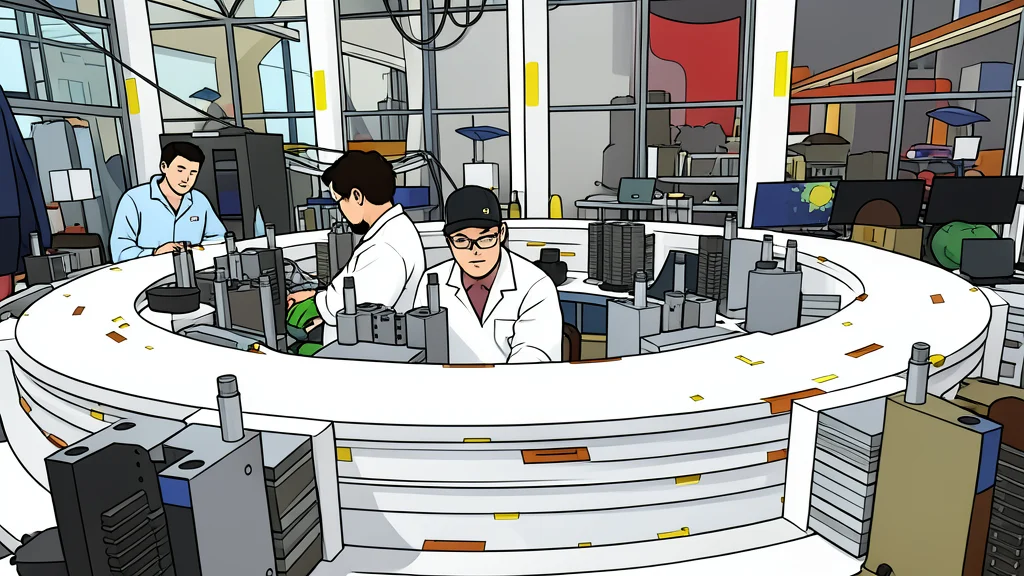
The ARC facility utilizes a tokamak system with high-temperature superconducting magnets derived from the SPARC program. These magnets enable stronger magnetic fields within a compact toroidal chamber, confining plasma to achieve controlled nuclear fusion. In June 2026, CFS published peer-reviewed research that validated the core plasma-physics assumptions underpinning the ARC design.
The projected output for the ARC plant is approximately 1.1 gigawatts of fusion power. CFS estimates that this generation capacity will translate to roughly 400 megawatts of net electricity delivered to the grid. While the specific construction costs have not been disclosed, industry reports describe the project as a multi-billion-dollar endeavor.
Grid Interconnection and Offtakers
CFS has submitted an interconnection application to PJM Interconnection, the operator of the largest wholesale electricity market in the United States. This application is a critical infrastructure milestone, positioning the Virginia facility for integration with existing high-voltage transmission networks. Dominion Energy is currently supporting the site development for the project.
Commercial demand for the facility's output is already secured through binding agreements. Google has signed a contract for 200 megawatts of ARC’s planned electricity. Separately, Italian energy company Eni has committed to an offtake agreement valued at more than $1 billion. These deals provide the revenue foundation necessary for the project's financial viability.
Industrial Context and Demand
The ARC project aligns with a broader US effort to develop new nuclear technologies to meet rising electricity demand. Hyundai views fusion as a strategic response to this growing energy need. The company’s involvement signals a shift toward treating fusion as a viable industrial sector rather than solely a research endeavor.
CFS has raised $4 billion since its formation in 2018, with previous investors including Bill Gates through his 2021 Series B round and 2025 financing. The company continues to focus on transitioning from demonstration to commercial scale, with the SPARC machine in Massachusetts serving as the technical foundation for the larger ARC deployment. This progression supports the long-term goal of carbon-free power generation.