Carbon Nanotube Polymers Face Industrial Expansion
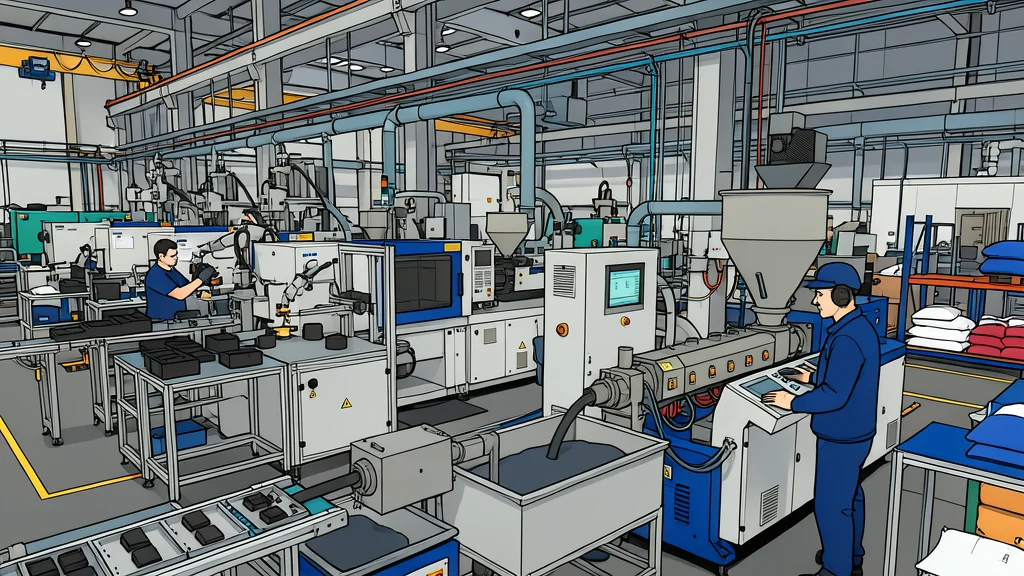
The market for carbon nanotube-reinforced polymers is set to double from $3 billion in 2025 to $6 billion by 2033. This growth is driven by specific functional requirements in electronics and energy sectors.
The global market for carbon nanotube-reinforced polymers is projected to double its size over the next eight years. Valued at approximately $3 billion in 2025, the sector is expected to reach $6 billion by 2033. This trajectory implies a compound annual growth rate of roughly 9 percent from 2026 through 2033. The expansion reflects a shift in industrial demand toward materials that combine low weight with electrical conductivity and thermal efficiency.
Industry data cited in GN auto stocks/industrials: industrial production reports highlights that this material class is moving beyond niche applications. Manufacturers in electronics, automotive, and aerospace are adopting these polymers to reduce component weight while enhancing performance. The core value proposition lies in the ability to embed functional properties directly into molded parts, eliminating the need for separate shielding or conductive elements.
Electronics drives current revenue share
The electronics sector remains the primary driver of near-term demand. It accounts for 39.3 percent of total market revenue in 2025. Companies in this space utilize carbon nanotube-reinforced polymers primarily for electromagnetic interference shielding and electrostatic discharge protection. These functions are critical for maintaining reliability in connected devices and high-tech components.
Supply chain dynamics in electronics are shifting as a result. Buyers prioritize consistent material performance and predictable processing over raw technical specifications. Suppliers must ensure high dispersion quality and purity to meet industrial standards. A material that performs well in laboratory tests often fails in production if it cannot be processed uniformly at scale. This requirement for consistency is now a key differentiator for polymer compounders and component makers.
Energy sector leads future growth
While electronics holds the largest current share, the energy sector is expected to be the fastest-growing application area. This growth is driven by the need for better thermal management and conductivity in batteries, supercapacitors, and fuel cells. As the global push for electric vehicles and energy storage systems accelerates, the demand for lightweight, thermally efficient materials is rising.
The Asia-Pacific region leads the market with over half of current revenue. Rapid industrialization and a strong manufacturing base in this region contribute to the high adoption rate of advanced polymers. Energy applications in this area are particularly significant due to the scale of local battery production and automotive manufacturing. This geographic concentration reinforces the region's role in shaping global supply chains for these materials.
Manufacturing constraints define adoption pace
The transition from specialty material to industrial standard is constrained by processing challenges. Suppliers must balance nanotube content with compatibility with existing manufacturing methods. Inconsistencies in dispersion can lead to product failures, making qualification and testing critical steps in the adoption process. Companies that can guarantee uniform performance at scale will capture a larger share of the expanding market.
The overall growth trajectory depends on the ability of manufacturers to meet these industrial standards. The market’s expansion to $6 billion by 2033 assumes that these technical hurdles are overcome. As demand from both electronics and energy sectors increases, the focus will shift from material discovery to reliable, large-scale production. This shift marks a maturation of the industry and a deeper integration of these polymers into core industrial processes.