IMC Rare Earths Reports 73% Recovery via In-Situ Wells
Lab tests show acidified magnesium sulphate can extract rare earths from Itarantim clay, potentially bypassing open-pit excavation.
Key points
- IMC Rare Earths achieved a 73% recovery rate for total rare earths using acidified magnesium sulphate in lab tests.
- The in-situ recovery method could reduce capital costs by eliminating the need for open-pit excavation and tailings storage.
- Downstream processing yielded a mixed rare earth oxide with approximately 41% total rare earth content.
IMC Rare Earths Ltd reported that laboratory tests achieved a 73% recovery rate for total rare earth elements at its Itarantim project in Brazil. The results, published by Stock Titan, indicate that the company’s clay deposits can be processed using an in-situ recovery method rather than traditional open-pit mining.
The metallurgical tests, conducted with the University of Cape Town, utilized acidified magnesium sulphate to leach rare earths from the clay. This approach allows the company to potentially reduce capital expenditure by eliminating the need for large-scale excavation and tailings storage facilities.
Laboratory tests confirm high extraction rates
The specific recovery figures highlight the efficiency of the magnesium sulphate process. The tests yielded a 71.4% recovery of terbium and a 70.5% recovery of dysprosium, both high-value elements used in permanent magnets. These results outperformed ammonium sulphate, which achieved a 70% recovery rate under identical conditions.
Column leaching produced solutions with total rare earth concentrations between 4,000 and 8,000 mg/L. Downstream processing of these solutions resulted in a mixed rare earth carbonate with an 86.6% recovery rate from the liquid. This intermediate product was further processed into a mixed rare earth oxide containing approximately 41% total rare earths.
In-situ method reduces infrastructure needs
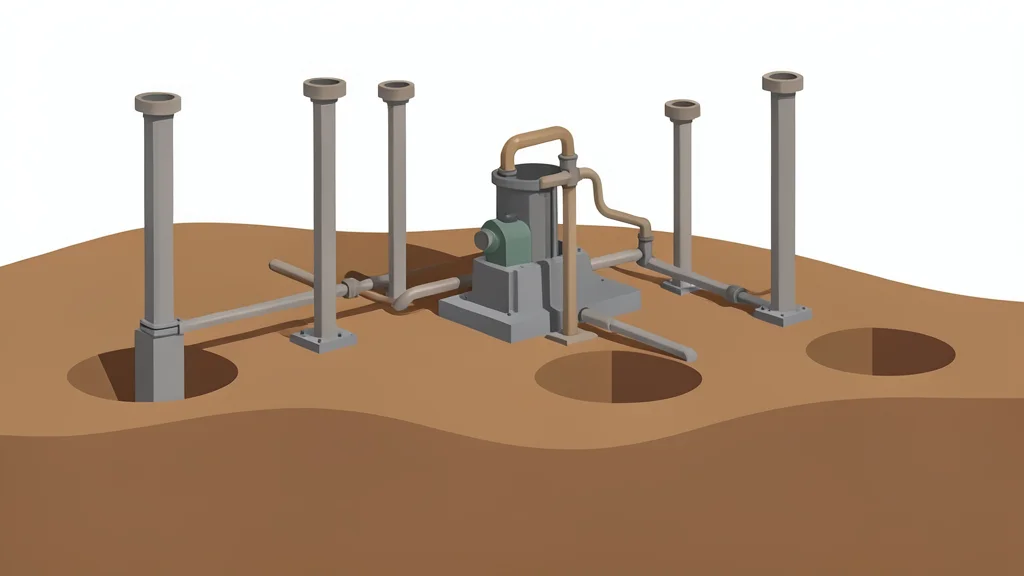
The in-situ recovery concept involves injecting leaching solution through wells into the rare-earth-bearing clay. The solution absorbs the rare earth elements and is then pumped back to the surface for processing. This method aims to minimize surface disturbance and reduce the volume of material that must be moved and processed.
CEO Frank Scolaro stated that the results support a development path that is both simpler and more environmentally conscious. By avoiding large-scale excavation, the project could require less infrastructure and generate lower capital costs compared to conventional mining operations. However, these potential benefits remain subject to further field-scale validation.
Next steps require field validation
While laboratory results are promising, the company must now conduct field testing to confirm that fluids can be effectively injected, controlled, and recovered at scale. Engineering studies and permitting processes are also required to validate the technical feasibility of the in-situ recovery model.
IMC Rare Earths is positioned to provide a more secure supply of rare earths if the field tests succeed. The company’s strategy relies on the specific geology of the Itarantim project, which may allow for a lower-cost and lower-impact production method. Investors will watch for updates on the field trial results in the coming quarters.