Saudi Arabia Identifies 110 Million Tonnes of Mineralized Rare Earths and Uranium

Saudi Arabia has quantified a vast deposit of mineralized material in the Medina region, aiming to diversify its energy portfolio and secure domestic supply chains for critical minerals.
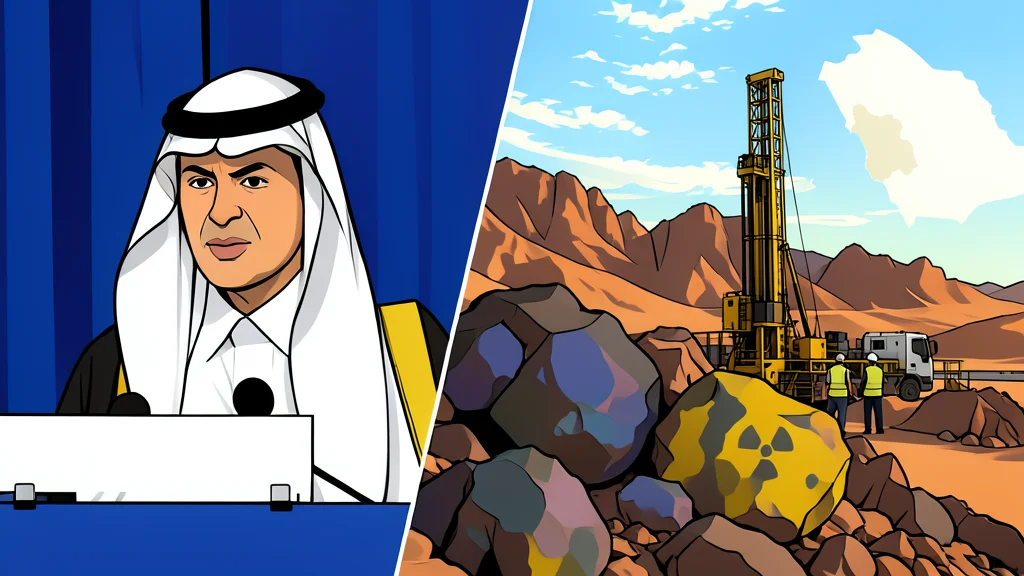
Saudi Arabia has identified approximately 110 million tonnes of mineralized material containing rare earths and uranium in the Medina region. Energy Minister Prince Abdulaziz bin Salman disclosed the estimate during the International Atomic Energy Agency’s 70th General Conference in Vienna. The kingdom is leveraging this geological find to support its strategic pivot toward nuclear power generation and to reduce reliance on imported critical minerals.
The announcement signals a significant shift in the Kingdom’s resource strategy, moving beyond hydrocarbons to secure domestic inputs for advanced industrial and energy applications. While the tonnage is substantial, the economic viability of extracting these metals remains dependent on detailed grade assessments that have not yet been made public.
Uranium grade details remain undisclosed
Minister Prince Abdulaziz confirmed the presence of high concentrations of heavy rare earth elements and promising uranium levels but did not specify the uranium grade or total contained tonnage. This lack of technical detail prevents investors from immediately calculating the potential revenue or capital expenditure required for commercial recovery. Without confirmed grades, the deposit represents a resource potential rather than a proven, economically viable reserve.
Phosphoric acid offers secondary uranium source
Beyond direct mining, Saudi Arabia is exploring the recovery of uranium from phosphoric acid produced during fertilizer manufacturing. A 2024 study estimated that 447 to 596 tonnes of natural uranium could theoretically be recovered from 2021 production volumes using existing technologies. This byproduct recovery stream provides a lower-cost alternative to primary extraction, potentially stabilizing domestic supply without the need for large-scale new mine infrastructure.
Strategic partnerships drive nuclear expansion
The domestic discovery aligns with broader diplomatic efforts to integrate Saudi Arabia into the global nuclear supply chain. In July, the Kingdom signed a peaceful nuclear cooperation agreement with the United States, enabling uranium enrichment capabilities and facilitating multibillion-dollar commercial partnerships. Concurrently, Saudi Arabia deepened mining and energy ties with Canada, signing over $1.4 billion in commercial agreements that emphasize critical minerals cooperation.
These geopolitical moves, combined with the Medina find, position Saudi Arabia to develop a more self-sufficient energy infrastructure. However, until grade data is released, the market cannot accurately price the risk or return associated with the newly identified rare earth and uranium resources.