AI Accelerates Theory but Lags in Wet Labs
Artificial intelligence is rapidly transforming how scientists generate hypotheses and mathematical proofs, yet it remains largely ineffective at speeding up physical experiments and drug discovery. This disconnect highlights a critical bottleneck in the scientific workflow.
In fields like mathematics, artificial intelligence has become a prolific partner, often resolving complex problems and generating proofs at a pace that outstrips human capability. This shift has led to significant debates about credit and the changing nature of academic work. However, for biologists and chemists, the experience is markedly different. Despite years of anticipation that AI would revolutionize medicine, the technology has failed to deliver the same acceleration in experimental settings.
A recent report by Google, Google DeepMind, and MIT FutureTech quantifies this disparity. By surveying 637 scientists and analyzing millions of AI interactions, the study found that while AI helps with initial ideation, it stalls when the work moves to physical validation. Many researchers report that their primary bottleneck has shifted to later stages of research, such as data collection and physical testing, where AI’s contributions are minimal.
The cost of verification
The core issue lies in the difficulty of verifying AI outputs in the physical world. In mathematics, a proof can be checked against formal rules almost instantly. In biology, however, predicting how a protein functions requires building the molecule and testing it in a living system. This process is slow and resource-intensive. As a result, scientists spend a significant amount of time, often more than a quarter of their saved hours, double-checking AI predictions to ensure they are accurate before proceeding.
This verification burden creates a trade-off. While AI generates ideas quickly, the time required to validate them in a lab erodes the efficiency gains. Researchers note that the heterogeneity of scientific tasks means AI is highly useful in some areas but nearly useless in others. The lack of a quick, automated way to confirm biological hypotheses means the technology cannot yet replace the manual, slow-moving nature of experimental science.
Barriers to experimental automation
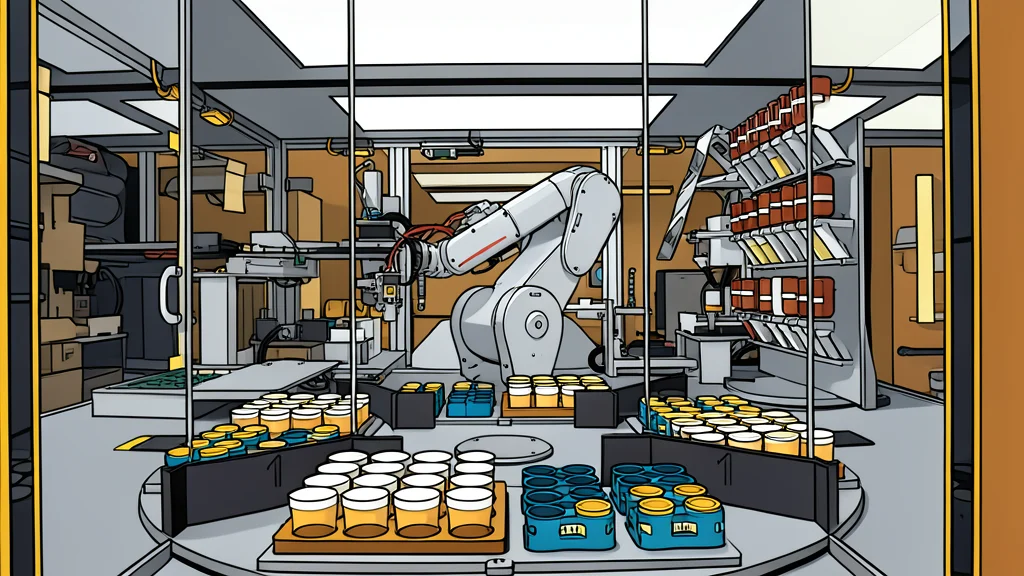
Efforts to automate labs face significant technical and economic hurdles. Biomedical experts point out that current automated systems are limited to specific chemical reactions. Extending this automation to more complex biological processes, such as those involving animals, remains extremely difficult. The models required to simulate these larger, more complex experiments need vast amounts of data that are currently scarce.
Furthermore, deploying robots to handle physical materials introduces safety questions that software developers did not anticipate. The existing automated labs are also prohibitively expensive for most research institutions. This economic barrier prevents widespread adoption, leaving most scientists reliant on manual methods for their experimental phases. The gap between digital speed and physical reality remains a major obstacle.
Lack of definitive ground truth
Economists suggest the root cause is the nature of the questions being asked. AI excels in domains where there is a clear, verifiable ground truth, such as in logic or coding. In most of medicine and biology, there is no such definitive answer. Outcomes are probabilistic, context-dependent, and often influenced by variables that are difficult to quantify. This ambiguity makes it hard for AI to provide reliable, actionable results without extensive human oversight.
According to GN technics/ai (en-US), this fundamental difference in task structure explains why AI is moving quickly in some scientific fields while lagging in others. Until methods are developed to verify biological predictions with the same ease as mathematical proofs, the acceleration of lab-based research will remain limited. The future of scientific discovery may depend on bridging this gap between digital inference and physical validation.