Hardware that Computes Like a Brain Without Software
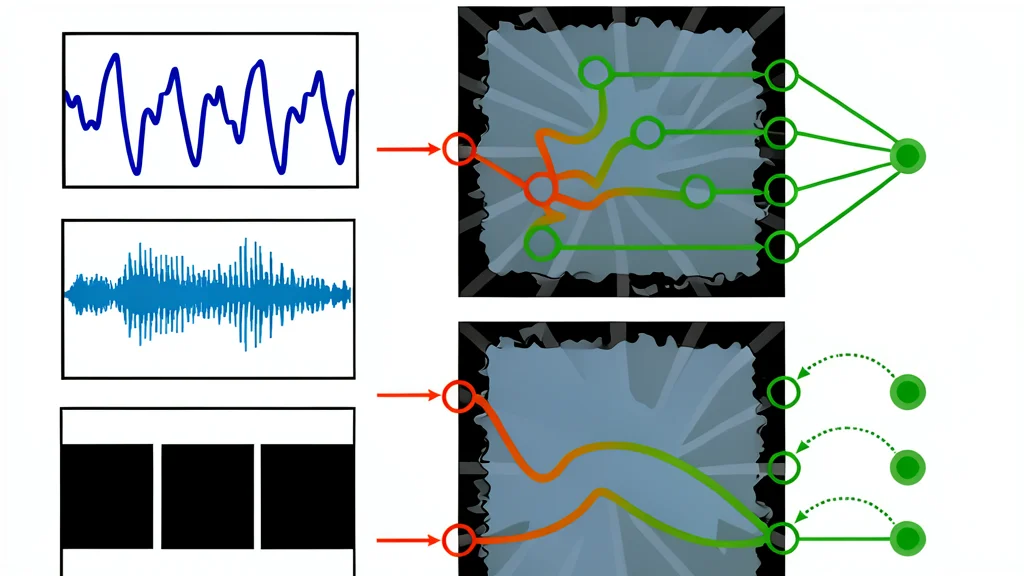
UCLA researchers are exploring a method where the physical structure of the material performs the computation, reducing the need for external processing power.
Traditional digital computing relies on silicon chips to execute software instructions, a model that has driven the growth of artificial intelligence but at a steep cost in energy and infrastructure. As AI models grow larger, the demand for power and water escalates, creating a bottleneck for applications that need to process data locally. A new approach, highlighted in a recent review by UCLA, suggests that the hardware itself can act as the neural network, eliminating the separation between the software model and the physical device.
This technique, known as physical AI, uses self-organizing networks of nanowires or nanoparticles to perform calculations directly within the material's structure. Rather than loading a neural network into a computer, the system exploits the natural collective behavior of these microscopic connections. This allows for real-time processing of complex data with significantly lower power consumption, offering a potential solution for devices with limited energy resources.
The material acts as the processor
In conventional systems, sensors generate raw data that must be digitized and sent to a central processor for analysis. This process is inefficient at the edge, where bandwidth and energy are scarce. The new approach changes this dynamic by allowing the physical network to adapt and evolve as it processes information. Adam Stieg, a research scientist at UCLA, notes that the model evolves in the physical network itself, meaning the hardware adapts to the data rather than just executing fixed code.
This method is inspired by the human brain’s cortex, which processes perception and reasoning with remarkable efficiency. By mimicking these biological principles, the nanowire networks can handle tasks like speech and image recognition in real time. The key difference is that the computation happens through the physical behavior of the material, bypassing the need for traditional algorithmic steps that require substantial computational power.
Applications in low-power environments
The primary advantage of this technology lies in its suitability for edge computing, where devices operate independently of cloud infrastructure. Satellites, autonomous vehicles, and industrial robots often face constraints on energy and connectivity. By processing data locally within the sensor hardware, these systems can filter out irrelevant information and extract only what is useful, drastically reducing the amount of data that needs to be transmitted or stored.
Current AI systems often rely on transmitting vast amounts of raw sensor data to remote servers for processing, a method that is costly and slow. The self-organizing networks offer a way to make decisions at the source. This is particularly relevant for distributed sensor networks where the volume of data generated far exceeds the capacity of existing communication channels to handle it efficiently.
Trade-offs and practical limitations
While the energy efficiency is a significant benefit, this approach is not intended to replace general-purpose digital computing. It is a complementary technology best suited for specific tasks where low power and real-time response are critical. The physical nature of the network means it may lack the precise control and flexibility of software-defined systems, making it less suitable for complex, general-purpose logic that requires high-level abstraction.
According to GN auto tech/hardware, the implementation of these nanowire networks is still in the research phase. Scaling this technology for mass production and integrating it seamlessly with existing digital infrastructure presents significant engineering challenges. However, the potential to reduce the environmental footprint of AI processing in critical applications makes it a promising area for future development.