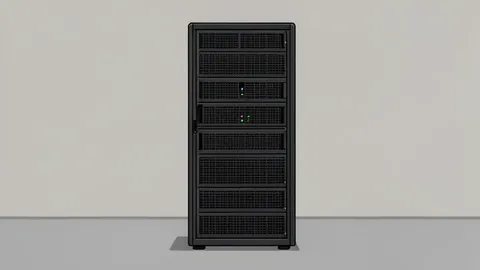
AMD Hits $1 Trillion Market Cap as Data Center Revenue Surges

AMD joins an elite club of US chipmakers, driven by a 107% jump in data center sales.
Key points
- AMD became the fourth US chipmaker to reach a $1 trillion market cap in 2026.
- Data center revenue surged 107% to $6.7 billion, representing 58% of total quarterly sales.
- Consumer hardware launches have slowed as the company prioritizes AI infrastructure and enterprise solutions.
Advanced Micro Devices has officially crossed the one-trillion-dollar market capitalization threshold for the first time in its history. The milestone was reached after shares climbed to an intraday high of $615.52, placing AMD in the same tier as major competitors like NVIDIA, Broadcom, and Micron. This achievement marks a significant shift in the semiconductor landscape, validating the company’s aggressive pivot toward enterprise infrastructure.
The surge reflects a broader market appetite for artificial intelligence infrastructure rather than traditional personal computing. According to coverage by TweakTown, AMD’s stock has risen more than 180 percent this year, fueled by strong earnings reports and a sustained winning streak. The company’s financial performance now relies heavily on its ability to serve large-scale data centers, a sector that has become the primary engine for growth in the tech industry.
Data Center Drives Financial Growth
The financial engine behind this valuation is the rapid expansion of AMD’s data center division. In the second quarter of 2026, revenue from this sector reached $6.7 billion, a 107 percent increase year over year. This segment now accounts for 58 percent of the company’s total quarterly revenue, signaling a decisive move away from reliance on consumer products. CEO Lisa Su has indicated that the company expects to double these sales figures by 2027, underscoring the strategic importance of this vertical.
While the overall revenue for the quarter hit $11.54 billion, the distribution of that income highlights the changing nature of the business. Client and gaming segments combined for only $3.8 billion, a stark contrast to the data center numbers. This imbalance suggests that while the consumer market remains a part of AMD’s portfolio, it is no longer the primary driver of shareholder value or long-term strategic planning.
Consumer Hardware Remains Quiet
For personal computer builders and gamers, 2026 has been a period of relative silence. AMD has not launched its anticipated Zen 6 Ryzen processors or a new Radeon graphics architecture during this period. Instead, recent announcements at industry events leaned heavily on existing technology, such as the Ryzen 7 7700X3D and the Radeon RX 9070 GRE. These updates rely on older architectural foundations, offering incremental improvements rather than generational leaps.
The company’s public attention has clearly shifted toward enterprise solutions. Keynotes now focus predominantly on Instinct accelerators, EPYC server chips, and rack-scale systems designed for AI workloads. Consumer-facing announcements have been delegated to other executives, reflecting a priority shift in internal resources. This trade-off means that while enterprise clients gain access to cutting-edge infrastructure, consumers may face longer wait times for significant hardware refreshes.
Challenges in AI Competition
Despite reaching the one-trillion-dollar mark, AMD remains far behind its primary rival in the AI sector. NVIDIA, which dominates the market for AI data center chips, is valued at more than five times AMD’s current market capitalization. This gap highlights the intense competition in the high-performance computing space, where brand dominance and software ecosystem strength are critical barriers to entry.
Reaching this valuation is nonetheless a historic achievement for a company that was once viewed primarily as a consumer alternative. The success stems from delivering AI infrastructure at scale, meeting the urgent demands of the tech industry. However, the sustainability of this growth depends on AMD’s ability to maintain its lead in data center sales while eventually re-engaging the consumer market with next-generation technology.