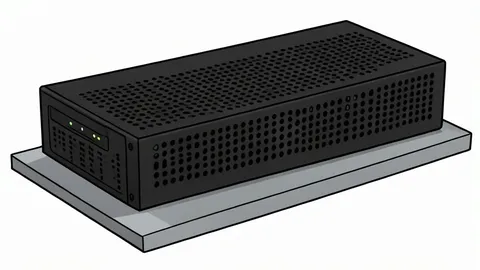
Bloom Energy Targets AI Power Gap with Fast-Deploy Fuel Cells
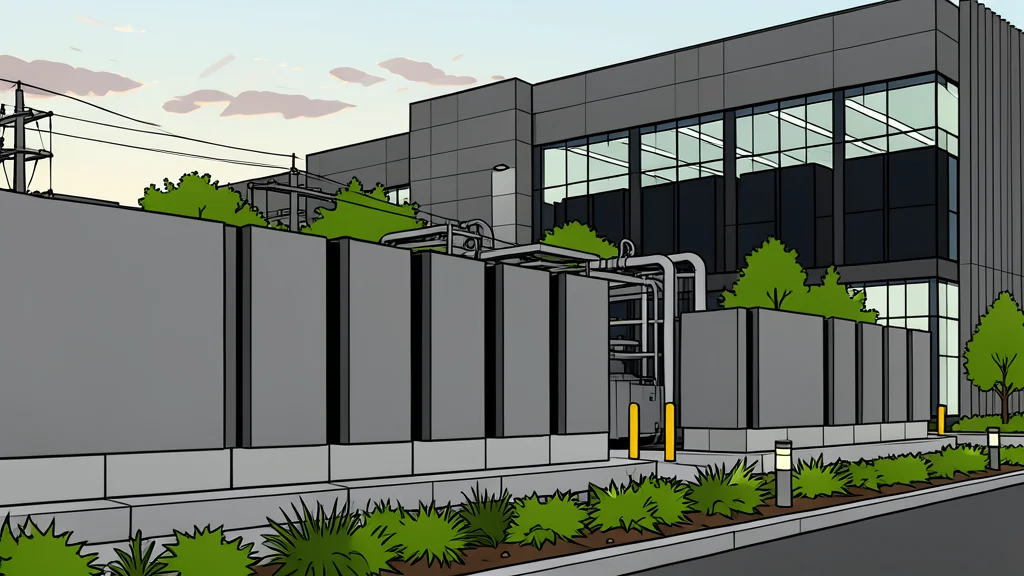
Bloom Energy leverages a $20 billion backlog to supply fuel cells that bypass multi-year grid delays for AI data centers.
Key points
- Bloom Energy ended 2025 with a $20 billion backlog, driven by demand from major hyperscalers and neoclouds for immediate power capacity.
- The company's fuel cells can be deployed in months, bypassing the five-to-seven-year delays associated with new grid interconnections.
- Bloom is targeting 800-volt DC data center architectures to reduce conversion losses, potentially saving billions in infrastructure costs.
The rapid expansion of artificial intelligence infrastructure has created a critical infrastructure gap: a severe shortage of reliable electricity. As GPU clusters demand continuous, high-density power, the traditional electrical grid is struggling to keep pace. Interconnection delays and equipment lead times that stretch into years are now capping the growth of AI capabilities, turning energy availability into a primary constraint for the industry.
Bloom Energy has positioned itself as a key solution to this bottleneck by offering solid oxide fuel cells that can be deployed in months rather than years. According to analysis from TradingView, the company ended 2025 with approximately $20 billion in order backlog, signaling strong demand from major hyperscalers and emerging cloud providers who need immediate power capacity to sustain their AI buildouts.
Bypassing Grid Delays With On-Site Generation
New grid capacity typically requires five to seven years to come online, a timeline that is incompatible with the pace of AI development. To circumvent this, data center operators are adopting a "bring-your-own-power" strategy, co-locating facilities near their power sources. Bloom’s technology fits this model by providing modular power generation units that can be installed quickly, reducing the dependency on slow-moving public infrastructure upgrades.
This approach allows companies to secure power immediately while waiting for long-term grid connections. The trade-off is that this solution does not increase overall national power capacity; it merely redistributes existing generation capabilities. However, for operators facing immediate compute demands, the ability to bypass interconnection queues is a decisive competitive advantage.
Efficiency Gains From Direct Current Delivery
Beyond speed, Bloom is aligning its technology with the shift toward 800-volt direct current (DC) architectures in next-generation data centers. Traditional systems rely on alternating current (AC) that must be converted to DC, a process that incurs energy losses and requires additional equipment. By delivering DC power more directly, Bloom aims to reduce conversion losses and simplify electrical infrastructure.
The company estimates this efficiency improvement could save billions of dollars in large-scale projects by lowering equipment costs and energy waste. This positions Bloom’s fuel cells as a potentially more efficient alternative to conventional fossil-fuel generation, particularly when considering the total cost of ownership for high-density AI workloads.
Environmental Trade-Offs And Hydrogen Potential
While Bloom’s solid oxide fuel cells produce lower carbon intensity and fewer pollutants than traditional combustion engines when using natural gas, they are not yet zero-emission. The environmental benefit depends heavily on the fuel source. When powered by hydrogen, however, the systems can generate electricity without carbon emissions at the point of use, offering a cleaner long-term pathway.
The catch remains the reliance on external fuel supply chains and the current cost premium of hydrogen compared to natural gas. For many operators, the immediate priority is securing power capacity to maintain AI service levels, making the speed and reliability of Bloom’s deployment a more pressing factor than the ultimate carbon footprint of the energy source.