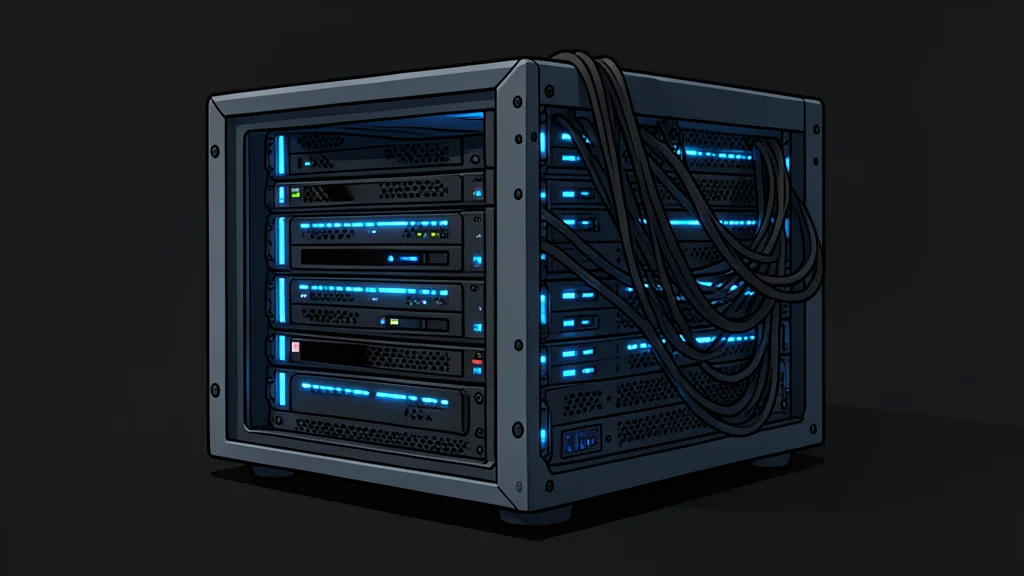
Huawei Ties AI Data Centers Directly to Power Grids
Huawei is redefining how AI data centers manage energy by integrating them directly into the power grid, aiming to balance massive compute demands with renewable energy fluctuations.
At HUAWEI CONNECT 2026 in Shanghai, the company unveiled a new grid-interactive solution for AI data centers. The core objective is to maximize the number of AI tokens generated per watt of electricity, addressing the growing strain that intensive computing places on power infrastructure. This approach moves beyond traditional setups where data centers are passive consumers of energy, instead positioning them as active participants in the power system.
The solution targets critical bottlenecks in power acquisition, quality, and heat dissipation. By treating energy management as a foundational element of AI architecture, Huawei aims to reduce the cost per token while ensuring stable operations. This shift is driven by the reality that AI workloads create rapid, severe fluctuations in power demand, which traditional grids are not always equipped to handle smoothly.
Integrating Storage and Cooling Systems
The new architecture employs a multi-layer hybrid energy storage system to absorb local power fluctuations. This setup includes grid-friendly uninterruptible power supplies and intelligent lithium batteries that help smooth out the spikes in demand caused by AI processing. Additionally, the solution features an AI-powered liquid cooling system designed to predict the health of working fluids, enabling proactive maintenance and reducing the risk of thermal failures.
According to executives at Huawei Digital Power, this integration allows data centers to adapt to and support the power grid simultaneously. By coordinating compute and energy infrastructure, the system ensures that the data center does not just draw power but helps stabilize the local electrical environment. This is particularly important as the share of renewable energy in the grid increases, introducing more variability to power supply.
Redefining Data Center Power Roles
Industry partners emphasize that traditional data centers have limited interaction with the power grid, which can lead to operational issues like disconnections or unstable oscillations. Josh Chen of VNET Group suggests redefining power sources and building structures to enable mutual support. This creates a new power system centered on direct green power connections and active microgrids, ensuring reliable supply for gigawatt-level AI facilities.
Xia Qin from Huawei’s Computing Strategy Planning team notes that energy is fundamental to modern infrastructure. An energy system that is reliable, efficient, and rapidly deployable is essential for keeping hyperscale AI clusters operational. This foundation supports large-scale training and inference tasks, which are becoming increasingly complex in the era of agentic AI.
Trade-offs in Modular Deployment Speed
The solution also focuses on construction innovation, utilizing modular and prefabricated components to shorten delivery times. This product-based delivery model aims to accelerate the deployment of AI infrastructure, which is a significant competitive advantage in a rapidly evolving market. However, this speed comes with the trade-off of relying heavily on standardized components, which may limit customization for specific, non-standard use cases.
Huawei claims its unique advantage lies in combining end-to-end energy capabilities with full-stack AI expertise. By aligning the electrical architecture with the computational needs, the company seeks to establish a solid foundation for the AI era. The ultimate goal is to create a system where the cost efficiency of compute factories is driven by the seamless synergy between electricity and processing power.