Webb Telescope Data Hints at Dark Matter-Powered Stars
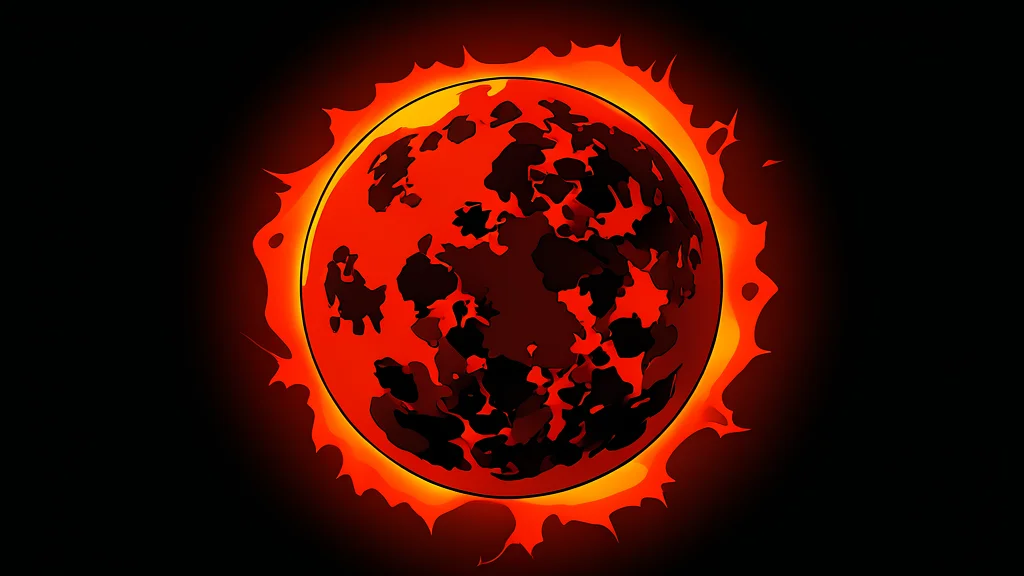
New analysis of James Webb Space Telescope data suggests the discovery of ancient objects that could be the first stars, fueled not by nuclear fusion but by dark matter annihilation.
Astronomers analyzing data from the James Webb Space Telescope have identified a handful of distant objects that may represent a new class of celestial bodies known as dark stars. These hypothetical objects are theorized to be the very first stars to form in the universe, emerging roughly two hundred million years after the Big Bang. Unlike the stars that dominate our night sky today, which shine due to nuclear fusion in their cores, dark stars would have been heated by the annihilation of dark matter particles within collapsing clouds of hydrogen and helium.
According to a report by GN technics/space, these stars would not be dark in appearance; in fact, they could be incredibly bright. Because they do not rely on high-temperature fusion reactions, their surfaces remain relatively cool, similar to the surface of our Sun. This lower temperature prevents them from blowing away their surrounding gas, allowing them to grow to immense sizes. A single dark star could potentially reach one million times the mass of the Sun and shine with the brightness of an entire early galaxy.
Energy from Invisible Matter
The mechanism behind these stars involves a specific type of dark matter that can interact with itself. In the dense centers of early proto-galaxies, clouds of gas collapsed under gravity while sitting in a rich pool of dark matter. As the gas contracted, dark matter particles collided and annihilated, releasing energy in the form of photons and other particles. This energy was trapped within the gas cloud, heating it up and providing the pressure needed to support the structure against gravity. Although the star contains only about 0.1% dark matter by mass, this small fraction acts as the primary fuel source.
The cool temperature of these stars is a critical factor in their growth. Standard stars heat up rapidly as they collapse, which creates outward pressure that halts further accretion of material. Dark stars, however, remain cool enough to continue growing for millions or even billions of years. This extended lifespan allows them to accumulate massive amounts of hydrogen and helium, resulting in objects that are both enormous and luminous without the extreme temperatures typically associated with stellar formation.
Implications for Black Hole Origins
The existence of dark stars could help explain a long-standing mystery in astrophysics: the presence of supermassive black holes in the early universe. Observations have revealed giant black holes that formed much earlier than current models of standard stellar evolution predict. If dark stars collapse into black holes with masses around one million times that of the Sun, they provide massive seeds that can merge to form supermassive black holes quickly. This process offers a plausible pathway to explain how such colossal objects existed so soon after the Big Bang.
However, distinguishing a dark star from a normal early galaxy remains a significant challenge. Standard galaxies contain a variety of chemical elements formed by previous generations of stars, which leaves distinct signatures in their light. Dark stars, being composed almost entirely of hydrogen and helium, should lack these complex elemental fingerprints. Current telescopes struggle to resolve the shape of these distant objects, making them appear as single points of light, which complicates the differentiation process.
Limitations of Current Evidence
While the hypothesis is compelling, the evidence is still preliminary. Among roughly 700 candidate objects identified in Webb’s 2022 data, only a small fraction have had their spectra measured with sufficient precision to draw conclusions. Of those, only five have publicly available data. One of these has been confirmed as a standard early galaxy, while three others remain ambiguous. The current data quality is not yet high enough to definitively rule out standard stellar processes, meaning the dark star theory remains a promising but unproven explanation for these specific observations.