Lawmakers Admit AI Risks Lack Quick Fixes
Top US House leaders agree artificial intelligence poses growing dangers but refuse to commit to specific regulations or timelines, citing competitive risks with China.
The highest-ranking Republican and Democrat in the US House of Representatives have reached a rare consensus on one point: artificial intelligence presents escalating risks that require legislative attention. However, both leaders stopped short of outlining concrete safety measures or setting a deadline for action. This hesitation highlights a significant gap between acknowledging the danger and implementing the political machinery needed to manage it.
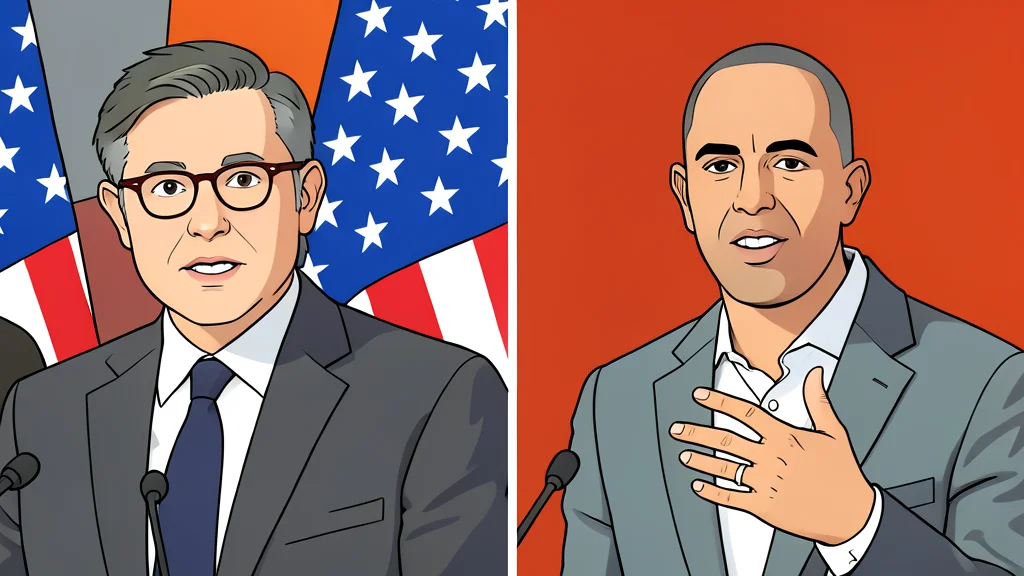
The impasse stems from conflicting priorities regarding economic competitiveness and safety. Speaker Mike Johnson emphasized the need to avoid regulations that could disadvantage American firms against Chinese competitors. Meanwhile, Minority Leader Hakeem Jeffries called for decisive action but declined to specify what those actions would entail. The result is a legislative environment where the urgency of the technology is recognized, but the path to regulation remains undefined.
Competitive fears drive caution
Speaker Mike Johnson, a Republican from Louisiana, argued in recent interviews that the House must proceed with extreme caution. He warned that hastily passing legislation could harm the country by giving China an advantage in the global AI race. Johnson’s stance reflects a broader concern among some lawmakers that strict rules might stifle innovation or allow foreign competitors to outpace US capabilities. This perspective prioritizes market position over immediate regulatory clarity.
This approach creates a trade-off where speed in regulation is sacrificed for potential economic gains. By refusing to commit to specific policies, Johnson leaves a vacuum that allows the technology to develop without a unified federal framework. Critics argue that this delay could allow dangerous applications to emerge before safeguards are established, but supporters contend that premature rules could lock in inefficiencies or cede technological leadership.
Vague promises replace concrete plans
Representative Hakeem Jeffries, the Democratic minority leader, criticized the Speaker for moving too slowly. Jeffries stated that the House should take decisive action to address AI dangers. However, when pressed to identify specific restrictions he would support, Jeffries offered no details. He indicated that discussions would occur upon the return of the full chamber, but provided no substantive proposal or draft language to guide those talks.
Timeline makes rapid change unlikely
The political calendar offers little room for swift legislative change. The House is scheduled for its final week of session before the November midterm elections, a timeline that makes it nearly impossible to adopt a comprehensive regulatory framework. According to coverage from GN technics/ai (en-US), this short window effectively precludes the kind of detailed debate and drafting required for meaningful AI laws. Lawmakers are thus left to manage the issue through incremental measures or deference to future sessions.
For readers, the stakes are clear: the absence of a quick fix means that AI governance will likely remain fragmented and reactive rather than proactive. Without agreed-upon rules, the burden of managing AI risks falls on individual companies, state governments, and users. The current legislative stalemate suggests that the public may have to wait for a new political majority or a significant incident before seeing robust federal oversight.