Offline Stem Separation Arrives in Guitar Hardware
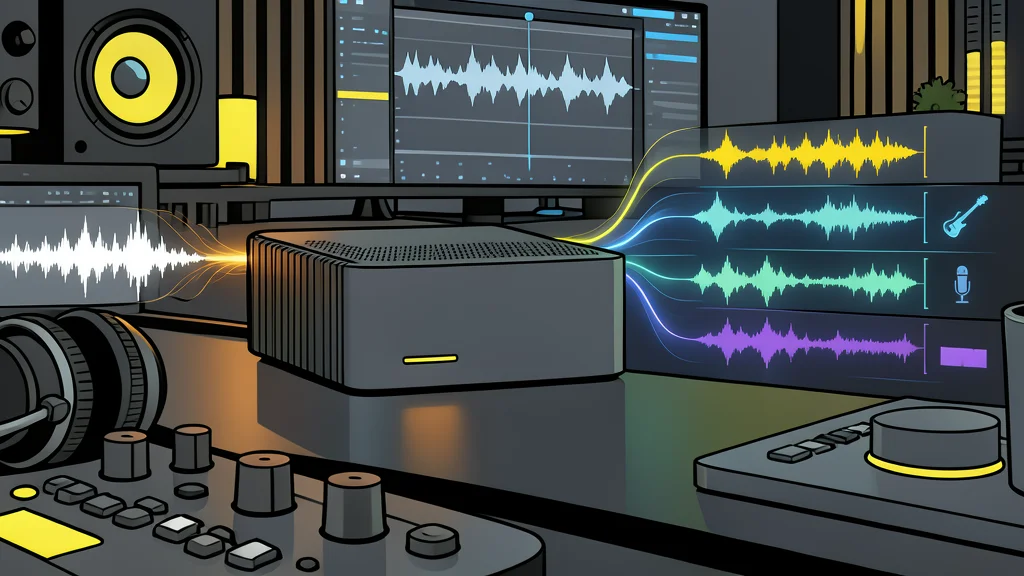
A new wireless device allows guitarists to split audio tracks into individual stems instantly, without relying on cloud servers.
Audio processing is moving out of the browser and into physical devices. LALAL.AI has integrated its real-time stem separation engine into Neko, a compact wireless studio built for guitar players. This integration, revealed by GN technics/hardware (en-US), allows musicians to split a single audio track into vocals, drums, bass, and guitar instantly. The process happens entirely on the device, removing the need for an internet connection.
The shift to local processing addresses specific pain points for live performers. By running the AI engine on the hardware, the device eliminates cloud latency and recurring inference costs. Users no longer need to upload audio files to external servers to get results, making the tool viable for live playing where network reliability is inconsistent. The company describes this as a different kind of product decision, signaling that high-quality separation does not require a cloud dependency.
Local Processing Removes Cloud Latency
The primary advantage of this architecture is speed and privacy. Because the data never leaves the user's system, there is no risk of data exposure to third-party servers. For studios with strict confidentiality requirements, this is a critical feature. LALAL.AI also offers a plugin version that runs locally within digital audio workstations like Ableton Live and Reaper. This allows professionals to process sensitive material without compromising security protocols.
However, the trade-off for local processing is hardware dependency. The AI model must be optimized to run efficiently on the specific chip inside the device. This limits the flexibility of using the technology on different platforms or operating systems. The company is betting that the convenience of instant, offline access outweighs the limitation of being tied to specific hardware.
Applications Extend Beyond Live Performance
While the Neko device targets guitarists, the underlying technology serves a broader range of audio workflows. Broadcast and post-production teams can use the engine to extract dialogue from mixed tracks when separate stems are unavailable. It can also clean up location recordings affected by wind or traffic noise. These capabilities are useful for teams working in the field where uploading large files to the cloud is impractical or slow.
The system can also recover stems from finished mixes, which is helpful when original multitracks are lost or inaccessible. This is particularly relevant for localization and dubbing workflows, where precise control over audio elements is required. The ability to manipulate audio locally reduces the turnaround time for these tasks, allowing editors to iterate on mixes more quickly.
Pre-Order Pricing and Release Timeline
The LALAL.AI-powered Neko device is currently available for pre-order at $349. The company plans to launch a Kickstarter campaign in October 2026, with shipping scheduled to begin in 2027. This timeline suggests that while the technology is ready for demonstration, it is not yet widely available for purchase. Buyers who want immediate access must commit to the pre-order process.
The move to edge processing represents a significant shift in audio AI. It opens the door to live performance applications that were previously impossible due to latency and connectivity issues. The next challenge will be ensuring that these local models maintain professional quality consistently. If they can, the technology could become a standard tool for musicians and producers who need reliable, offline audio processing.