Teachers Use AI to Reduce Administrative Burden
Educators in the Bay Area are experimenting with artificial intelligence to handle routine paperwork, allowing them to dedicate more time to direct student interaction. This shift aims to simplify the administrative side of teaching while maintaining human oversight.
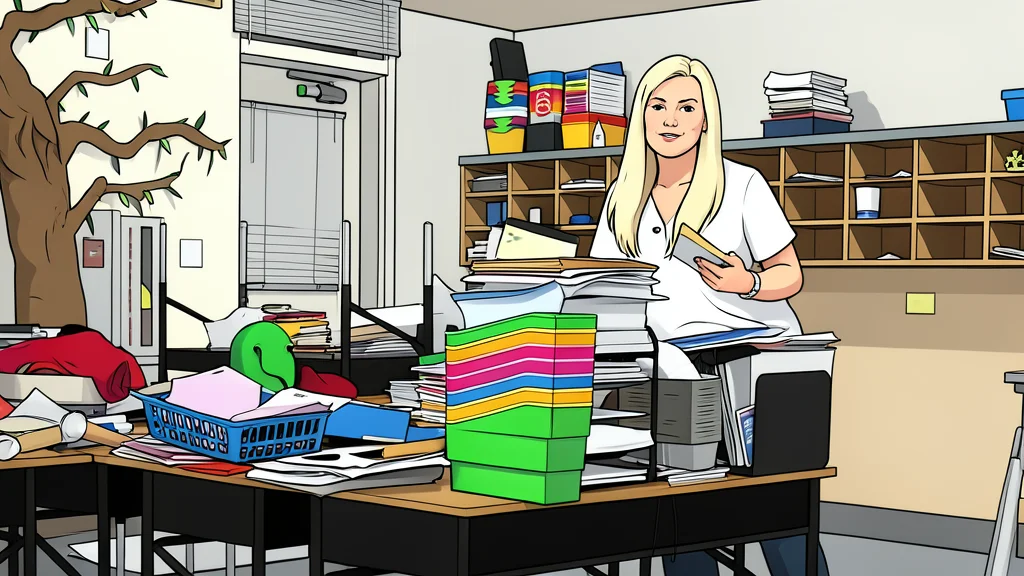
Amy Malay, an elementary school teacher in Atherton, California, describes her new classroom setup as a blend of traditional and modern tools. While the shelves are still stocked with physical books and crayons, she now relies on artificial intelligence to assist with planning. Malay views the technology as a supportive assistant rather than a replacement, noting that it helps her shift energy away from administrative duties and toward the core work of instruction.
The primary benefit cited by educators is the reduction of time spent on repetitive tasks such as drafting lesson outlines. By using AI to generate broad examples or structural suggestions, teachers can spend more time observing individual student needs. Malay emphasizes that while the AI provides a breadth of options, the final decision on how to adapt the lesson remains firmly with the teacher, ensuring the instruction is tailored to specific student personalities and interests.
New Tools Aim to Simplify Planning
Recognizing this growing trend, Anthropic recently launched a specialized version of its Claude Pro service for K-12 educators. This free offering is designed to support teachers in their daily workflows. Elizabeth Kelly, who leads beneficial deployments at Anthropic, explains that the company has spent months working directly with teachers to refine these tools. The goal is to remove the friction of administrative work, thereby creating more space for the one-on-one engagement that defines a high-quality learning experience.
The initiative reflects a broader industry move to support the teaching profession. By automating the creation of curriculum materials and administrative documents, the technology seeks to unlock more time for human connection. Kelly argues that this approach helps preserve the essence of effective teaching, which is the ability to adapt to student interests and engage with them as individuals, rather than just delivering content.
Concerns About Technology in Classrooms
Despite the potential benefits, there is significant skepticism among some education advocates. Leor Melamedov, a co-lead for the group Schools Beyond Screens, expresses concern that increased technology use might interfere with the fundamental relationships between teachers, students, and peers. She argues that for younger or less experienced educators, the process of testing ideas against real-time student feedback is crucial. Watching students' reactions and iterating based on that immediate human feedback is a skill that she believes technology should not replace.
Balancing Innovation With Pedagogical Skills
Malay acknowledges that the integration of AI is still a work in progress. She describes the current phase as a period of experimentation, where teachers are learning to dabble with these new capabilities without letting them drive the process. She notes that her school district is actively exploring best practices to ensure the technology amplifies learning rather than distracting from it.
The ultimate goal, according to Malay, is to foster critical thinking in students as AI becomes more integrated into society. She believes that by managing the administrative load, teachers can better teach students how to navigate a world where technology is a constant presence. The challenge lies in ensuring that the human element of education remains the primary focus, with AI serving merely as a tool in the background, as reported by GN technics/ai (en-US).