Trump Ditches AI Label, Promises U.S. Lead over China
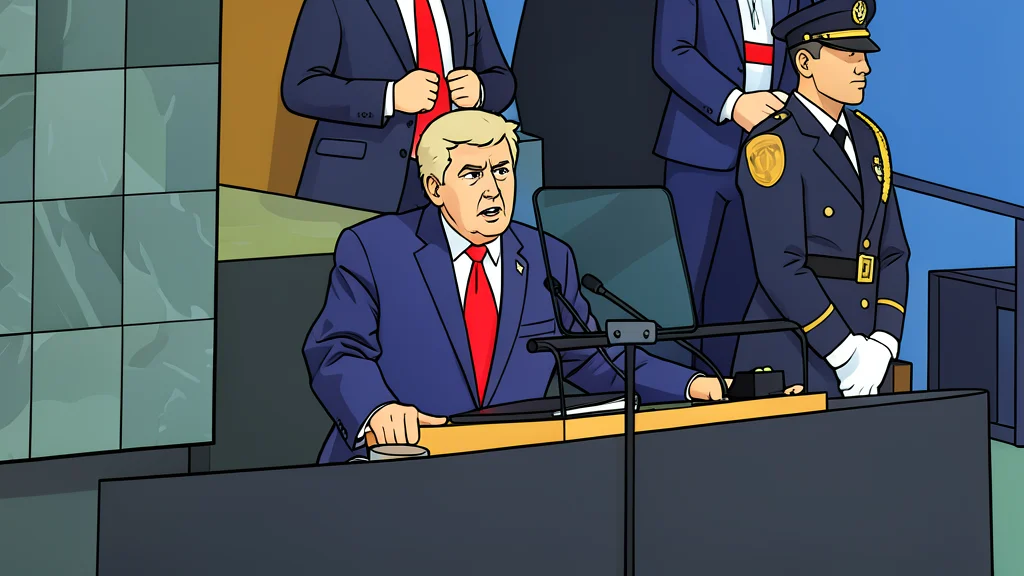
The U.S. President rejected international AI regulation at the UN, advocating for American dominance in what he calls superintelligence.
Key points
- Trump rejected global AI regulation at the UN, promoting the term superintelligence instead.
- The U.S. plans to maintain its technological lead over China through aggressive development.
- A potential AI communication hotline between the U.S. and China is under consideration.
President Donald Trump has formally rejected what he describes as a globalist scheme to regulate artificial intelligence, declaring that the United States will instead pursue a new category he calls superintelligence. Speaking to the United Nations General Assembly in New York, the President argued that Washington should not constrain the growth of this technology, which he views as a critical strategic advantage over rival nations.
By rebranding the field, the administration aims to frame the issue as a competitive race rather than a collaborative global effort. The President emphasized that the United States currently leads China in this sector and intends to maintain that advantage through aggressive development rather than restrictive oversight. This stance signals a significant shift in how the U.S. government approaches emerging technological frontiers.
Redefining the Technology as Superior
During his address, Trump explicitly distinguished between standard AI and what he termed superintelligence, arguing that the latter represents a more advanced and powerful class of computing. He stated that the United States will encourage the development of this technology rather than rein it in, comparing its potential impact to the industrial revolution or the internet. The President insisted that the nation has never retreated from a technological frontier, suggesting that regulatory hesitation would be a strategic error.
While rejecting international control mechanisms, the administration is not abandoning oversight entirely. Trump noted that the Department of Justice will help oversee the industry to ensure safety and responsibility. This approach allows the government to monitor risks without imposing the kind of global standardization that critics of the current policy might prefer. The strategy balances the desire for rapid innovation with a domestic safety net.
Diplomatic Tensions Ahead of Summit
These remarks come just days before a high-profile meeting between Trump and Chinese President Xi Jinping. The two leaders are expected to discuss artificial intelligence during their talks, with tech executives from major corporations like Nvidia, OpenAI, and Apple expected to attend a state dinner. According to reporting from foxbusiness.com, Treasury Secretary Scott Bessent is preparing to present a potential agreement for a direct communication hotline between the two countries.
The proposed hotline would facilitate direct communication on AI-related issues, including hacking, national security concerns, and rogue AI behavior. It is designed to function similarly to existing military communication lines, providing a structured channel for resolving disputes. Trump is expected to make a final decision on this agreement before meeting with Xi, highlighting the delicate balance between competition and necessary diplomatic contact.
Strategic Balance of Power
The core of the U.S. position is the belief that whoever wins the race in superintelligence will hold decisive geopolitical power. Trump argued that the United States is currently leading China by a significant margin and intends to keep it that way. This perspective frames technology not just as an economic driver, but as a primary instrument of national security and global influence. The administration’s refusal to join international regulatory bodies reflects a broader strategy of leveraging technological superiority to maintain leverage in diplomatic negotiations.