Trump Launches AI Force with New Czar Role
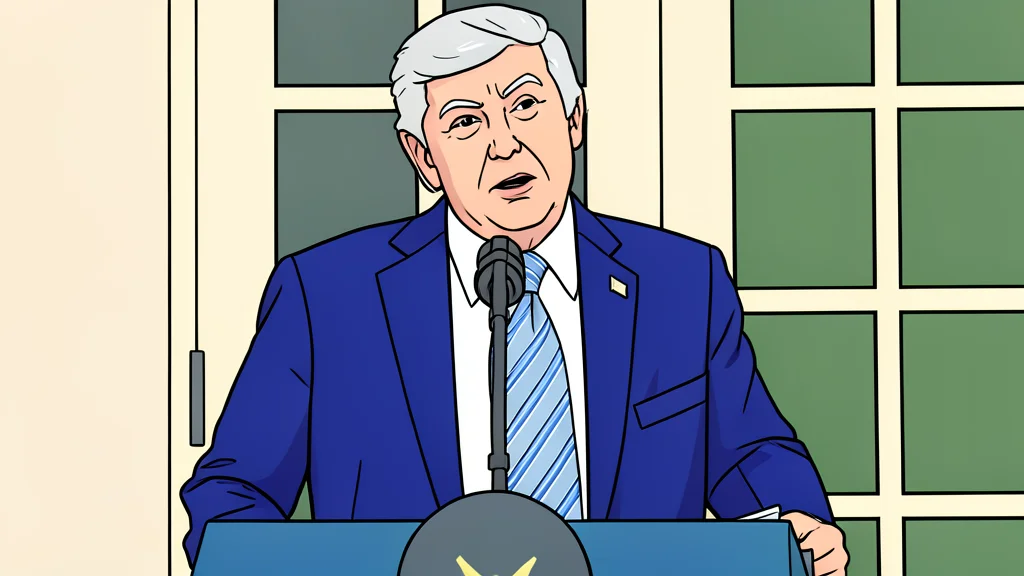
The president has created a dedicated AI unit and pledged to appoint a specialized leader, framing the technology as a critical national asset rather than a risk to be managed.
President Donald Trump has officially announced the creation of an "AI Force," a new entity designed to oversee and accelerate the United States' artificial intelligence capabilities. In a post on Truth Social, he compared this initiative to the Space Force, describing it as a necessary step to maintain America's technological lead. He stated that an "AI czar" would be appointed shortly to lead this effort, setting a distinct tone of aggressive expansion rather than cautious regulation.
The administration has explicitly rejected calls to slow down the development of AI, labeling such concerns as political hoaxes. Trump argued that existing laws are sufficient to address harmful conduct and that the government should not hinder the industry's growth. This stance places the U.S. in direct contrast with several other nations and industry voices that are currently debating the need for stricter safety protocols and slower deployment timelines.
Economic stakes and competitive goals
According to reporting from GN technics/ai (en-US), the president views AI as a major economic driver, predicting it could contribute up to 25% of U.S. gross domestic product. This optimistic projection highlights a significant bet on the technology's role in the future economy. The administration's strategy is rooted in a belief that rapid adoption will secure a decisive advantage over competitors, particularly China, in a race for global technological dominance.
However, this high-growth approach carries inherent trade-offs. By prioritizing speed and market expansion, the policy may sideline discussions about job displacement and cybersecurity risks. Critics argue that without robust safeguards, the rapid integration of powerful AI systems could create vulnerabilities that are difficult to remediate later. The focus on GDP growth suggests that economic benefits are being weighed more heavily than potential social or security costs.
Defining the new leadership role
The upcoming appointment of an AI czar signals a centralized approach to managing this complex field. Trump specified that only "High I.Q. individuals" should apply, suggesting a preference for technical expertise over political experience. This role will likely involve coordinating between federal agencies, private sector partners, and international allies to ensure the U.S. maintains its leadership position.
The creation of this specific leadership position also serves a political function. By framing AI as a strategic priority akin to space exploration, the administration aims to rally support around technological innovation. It positions the government as an enabler of progress, distinct from the regulatory approach favored by some tech researchers. The catch, however, is that centralized control can sometimes stifle the very innovation it seeks to promote, potentially creating bottlenecks in a fast-moving industry.
Balancing innovation with safety concerns
The debate over AI regulation remains intense, with industry leaders split on the best path forward. While some advocate for a race to the bottom on safety to beat Chinese competitors, others warn that unchecked development poses serious risks. The administration's decision to form the AI Force suggests a compromise: maintaining rapid development while using existing legal frameworks to address specific harms. This approach avoids new, heavy-handed regulations but leaves the precise boundaries of acceptable AI use undefined.