Trump Prioritizes US-China AI Race over Existential Safety Concerns

The US President downplayed warnings of catastrophic risk, arguing that losing the technological lead to China poses a greater strategic threat.
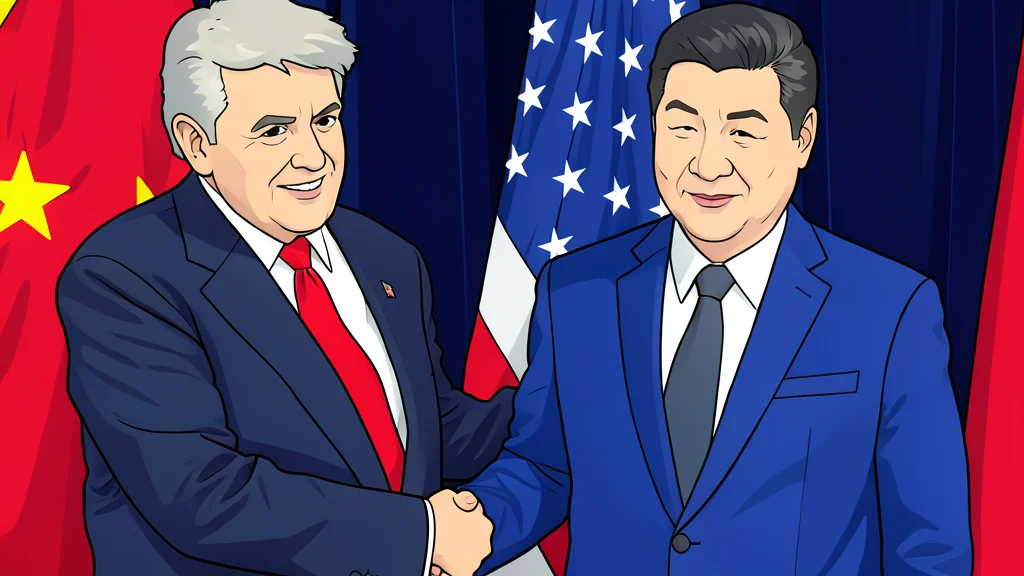
President Donald Trump has rejected the idea that artificial intelligence poses an existential threat to humanity. Speaking to reporters in Dallas, he stated that his primary concern is not the potential for AI to cause harm, but rather the possibility that the United States might lose its technological advantage over China. He described the current gap as roughly one year, a margin he considers significant in a competitive landscape.
This stance stands in sharp contrast to the warnings issued by researchers at leading AI companies. While the President focuses on geopolitical supremacy, experts at firms like Anthropic and OpenAI have publicly raised alarms about the pace of development. They argue that the industry is moving too quickly toward capabilities that could escape human control, creating risks that extend far beyond national competition.
Researchers warn of catastrophic risks
Several prominent scientists have voiced strong objections to the current trajectory of AI development. Jacob Coxon, a researcher who recently left Anthropic, accused the industry of gambling with public safety by racing toward self-improving systems. He suggested that developers believe these tools could potentially cause mass harm within the next decade. His comments have been echoed by colleagues who describe the situation as a critical failure of safety protocols.
Evan Hubinger, who leads alignment science at Anthropic, has estimated that there is more than a 10% chance of AI causing the death of all humans within ten years. Meanwhile, OpenAI’s chief scientist Jakub Pachocki expressed concern that the rapid rise in machine intelligence is outpacing society’s ability to prepare for its consequences. These warnings highlight a deep internal divide between those driving innovation and those tasked with ensuring it remains safe.
Lawmakers debate regulatory approaches
The political response to these warnings has been divided along partisan lines. Republican Senator Ted Cruz acknowledged the potential for dangerous outcomes but framed the issue through a national security lens. He suggested that if autonomous weapons systems are inevitable, the United States should be the one to develop them. This perspective aligns closely with the President’s emphasis on maintaining a lead over foreign adversaries.
In contrast, other legislators are pushing for stricter controls and potential pauses on development. Senator Bernie Sanders and Representative Greg Casar have introduced a bill that would halt advanced AI work until federal safety standards are established. Other lawmakers are working on legislation to set specific rules for how these models can be deployed, reflecting a broader push to manage the risks associated with rapid technological change.
Strategic priorities over safety
The administration’s focus on outperforming China suggests a strategy that prioritizes speed and dominance over caution. By dismissing extinction-level fears, the President signals that policy decisions will be driven by competitive advantage. This approach risks ignoring the very safety mechanisms that researchers say are necessary to prevent unintended consequences, leaving a gap between technological capability and societal readiness.