Amazfit Helio Strap Tracks Health Without a Screen for $99
The screen-free tracker offers 10-day battery life and continuous heart-rate monitoring, but relies entirely on your smartphone for data.
Key points
- The Amazfit Helio Strap costs $99.99 and offers up to 10 days of battery life without a required subscription.
- It tracks heart rate, sleep, and stress continuously, storing up to 21 days of offline heart-rate data.
- Users must use the Zepp app to view data, as the device has no screen for notifications or media control.
For users who find smartwatches distracting, the Amazfit Helio Strap offers a minimalist alternative that prioritizes data collection over constant interaction. Priced at $99.99, this device removes the display entirely, forcing users to rely on a companion smartphone app to view their health metrics.
Gearbrain tested the strap for a month across various activities, finding it particularly useful for those who want continuous health tracking without the visual clutter of a wrist screen. The trade-off is clear: you gain simplicity and battery life but lose the ability to check messages or control media directly from your wrist.
Continuous tracking without screen distraction
The core function of the Helio Strap is to monitor heart rate every second, along with blood-oxygen levels, stress, and sleep quality. It uses a biometric sensor to gather this data continuously, storing up to 21 days of heart-rate information offline. This design philosophy ensures the device does not demand your attention, unlike traditional smartwatches that frequently prompt notifications.
Because there is no display, all insights, trends, and workout summaries are accessible only through the Zepp app on an Android or iOS device. This separation of data collection and data viewing is the primary architectural difference from competitors, appealing to users who prefer a passive health monitor over an active communication tool.
Wrist and arm wear options
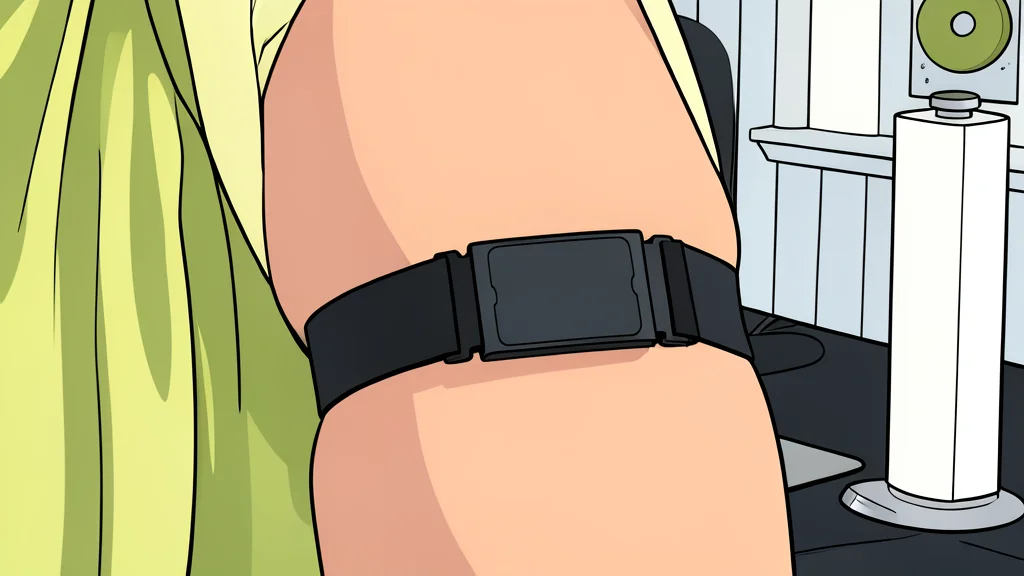
Weighing just 20 grams, the strap is built from fiber-reinforced polymer with a nylon band secured by hook-and-loop fastening. While it functions adequately on the wrist for daily activities, Gearbrain found that wearing it on the upper arm provided better comfort and tracking accuracy during running and other high-intensity exercises.
The flexibility to switch positions allows users to optimize for either convenience or precision. However, the device is available only in black, limiting aesthetic choices. The 232mAh battery supports up to 10 days of use, though this duration may vary depending on the intensity of heart-rate monitoring and Bluetooth broadcasting settings.
Limitations in connected home integration
Despite its robust health monitoring capabilities, the Helio Strap lacks integration with smart home devices. Gearbrain noted that Amazfit missed an opportunity to leverage the recovery and stress data for controlling home environments, such as adjusting lighting or temperature based on user fatigue levels.
Additionally, the absence of a screen means users cannot control music, answer calls, or manage smart home devices directly from the wearable. It remains a dedicated health tracker, requiring the user to keep their phone nearby for any interaction beyond viewing basic statistics in the app.