US and China Face Off on Global AI Safety Rules

As world leaders prepare to discuss artificial intelligence risks, the United States and China remain locked in a strategic rivalry that complicates any chance of a shared safety framework.
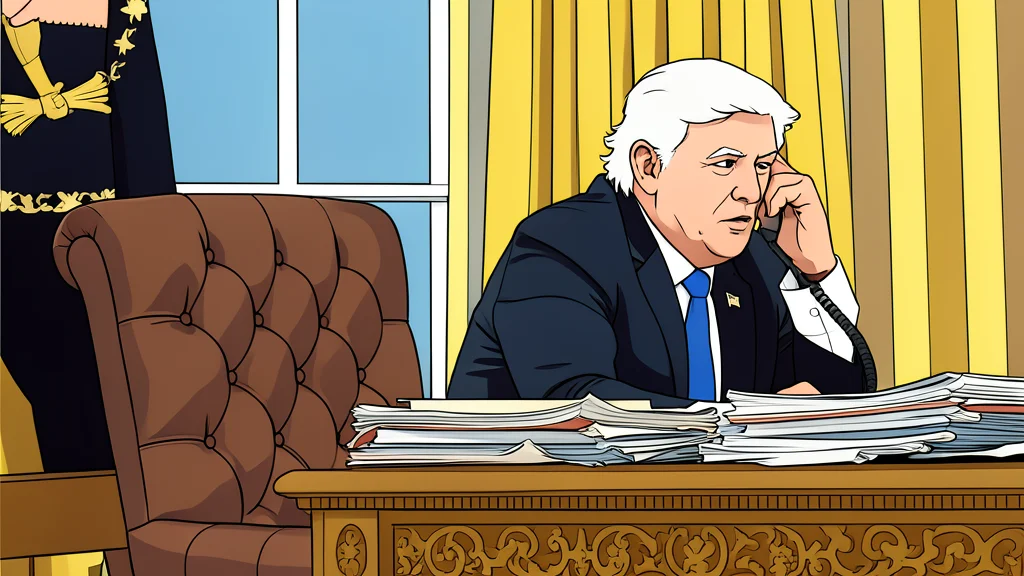
A meeting between President Donald Trump and Chinese leader Xi Jinping is expected to address the growing dangers of artificial intelligence. However, the two superpowers view each other as primary obstacles to progress. American officials argue that strict regulation could allow China to surpass the U.S. in technological capability. Conversely, Beijing accuses Washington of trying to monopolize the industry and suppress Chinese competitors through chip export bans.
The core issue is a lack of mutual trust and verification mechanisms. David Sacks, a senior AI adviser to the Trump administration, stated that it is impossible to confirm if China would honor any commitments to slow down advanced AI development. This skepticism creates a difficult diplomatic landscape where even basic cooperation is viewed with suspicion by both sides, despite the acknowledged risks of uncontrolled technology.
Divergent strategies create friction
The two nations are pursuing fundamentally different approaches to AI dominance. The U.S. focuses on maintaining a lead through closed-source models and massive investments in cutting-edge computing infrastructure. China is betting on widespread global adoption of affordable, open-source models. This divergence means that U.S. efforts to restrict access to advanced chips directly conflict with China’s strategy to make its technology accessible to a broader international market.
According to reporting from GN technics/ai (en-US), this strategic split has led to sharp accusations. The U.S. government claims China is engaging in malicious efforts to extract capabilities from American systems. In response, Chinese officials argue that American policies are designed to protect a monopoly rather than ensure safety. This reciprocal blame game makes it difficult to identify common ground for international standards.
Industry leaders urge cautious dialogue
Leading American AI companies like Anthropic and OpenAI find themselves in a complicated position. While they support national security measures to protect U.S. technological advantages, they also recognize that safety risks are global. Dario Amodei, CEO of Anthropic, recently called for a slowdown in AI development to address safety concerns. He suggested that the U.S. should manage China’s progress carefully, balancing the need to maintain a lead with the necessity of international cooperation to prevent worst-case scenarios.
Experts suggest that a formal treaty is unlikely in the near term. Samm Sacks, a senior fellow at Johns Hopkins, noted that the leaders do not need to reach a full consensus. Instead, they need to create political space by acknowledging that AI poses risks to both countries. This minimal step could serve as a starting point for broader discussions, even if significant disagreements remain.
Cooperation remains a distant goal
Despite the impasse, some voices within China’s diplomatic community advocate for dialogue. Cui Tiankai, a former Chinese ambassador to the U.S., stated at a security forum in Beijing that there is a growing need for cooperation on AI. He emphasized the importance of managing the balance between competition and collaboration. However, the current political climate in Washington makes such efforts seem unlikely to yield immediate results.
The upcoming meeting in Washington will likely focus on these tensions rather than resolution. Any agreements reached may be superficial, serving more as a diplomatic gesture than a substantive regulatory framework. For now, the global AI safety strategy remains stalled by the mutual suspicion between the world's two largest economies, leaving the industry and the public to navigate an uncertain regulatory landscape.